Greenland Affirms Sovereignty Amidst Renewed U.S. Overtures, Declares Allegiance to Denmark
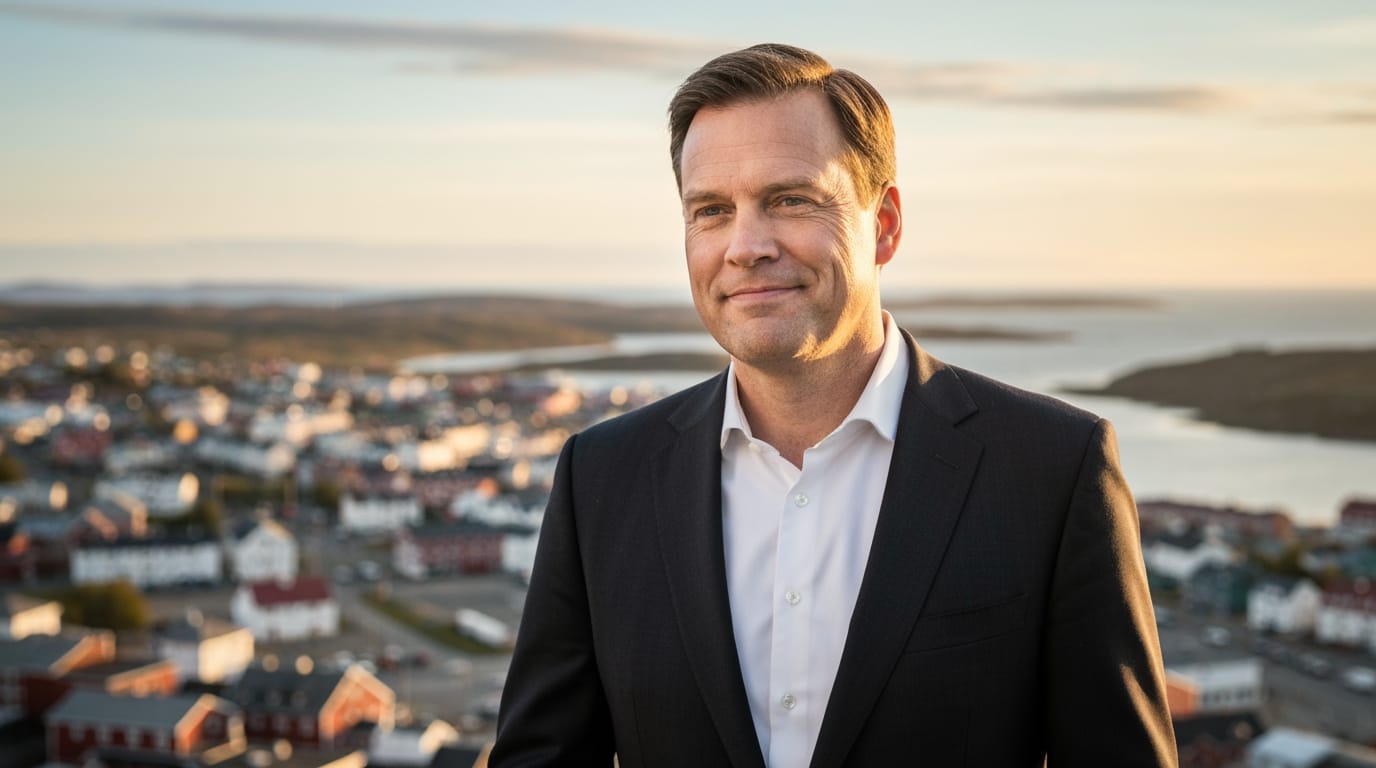
NUUK, Greenland – Greenland's Prime Minister Jens-Frederik Nielsen has issued a definitive statement underscoring the autonomous territory's commitment to its partnership with Denmark, firmly rejecting persistent American interest in acquiring the vast Arctic island. Speaking on January 13, 2026, Nielsen declared that Greenland "chooses Denmark over the US," a powerful assertion made as renewed U.S. efforts to secure the strategically vital land gained momentum. This declaration, coming amidst escalating geopolitical competition in the Arctic, highlights Greenland's steadfast resolve to self-determination and signals a complex balancing act in its international relations.
A Resolute Rejection of Acquisition
Prime Minister Nielsen's unambiguous statement in Copenhagen, delivered alongside Danish Prime Minister Mette Frederiksen, leaves little room for interpretation regarding Greenland's future. The Greenlandic leader emphasized that the territory is "not for sale" and explicitly stated that Greenland does not wish to be "owned," "governed," or "part of" the United States. This followed a joint statement issued by all five of Greenland's political parties just days prior, unequivocally stating, "We do not want to be Americans, we do not want to be Danes, we want to be Greenlanders." The collective message from Nuuk underscores a deep-seated belief that Greenland's destiny must be determined solely by its own people, firmly rebuffing overtures from Washington. Danish Prime Minister Frederiksen has strongly supported this stance, warning that any American military move to seize control of Greenland would severely strain the NATO alliance, to which Denmark and, by extension, Greenland belong.
Enduring American Ambitions in the Arctic
American interest in Greenland is not a new phenomenon, with historical records indicating U.S. strategic considerations dating back to the 19th century and formal recognition of Danish sovereignty in 1916. The Thule Air Base, now Pituffik Space Base, has served as a critical U.S. military installation since 1951, playing a vital role in missile early warning and space surveillance. However, interest intensified dramatically in 2019 when former President Donald Trump publicly expressed a desire to purchase Greenland. This sentiment has recently resurfaced with renewed vigor, with President Trump reportedly reiterating his intention to "take control" of the territory "one way or the other" and suggesting that acquiring Greenland is a national security priority. U.S. policymakers and officials cite several motivations, including gaining control over key Arctic shipping lanes, accessing Greenland's vast reserves of critical rare earth minerals to reduce dependence on China, and countering the growing influence of Russia and China in the Arctic region. Recent legislative attempts, such as the "Greenland Annexation and Statehood Act" introduced by Congressman Fine, further illustrate the persistent American ambition.
A Relationship Rooted in Autonomy and Interdependence
Greenland exists as an autonomous territory within the Kingdom of Denmark, a relationship formalized through the 1979 Home Rule Act and the 2009 Self-Government Act, which explicitly grants Greenlanders the right to self-determination and eventual independence. While Greenland exercises extensive self-governance over domestic affairs, including education, health, and resource management, Denmark retains responsibility for foreign policy, defense, and monetary policy. A significant aspect of this relationship is the substantial annual block grant provided by Denmark, which constituted around $600 million in 2017 and accounts for approximately half of Greenland's self-rule government revenues.
Despite the financial support and close ties, Greenland's leaders, including Prime Minister Nielsen, advocate for increased economic self-sufficiency to reduce reliance on Danish subsidies. The island's rich mineral resources, including rare earth elements, uranium, and other valuable deposits, are seen as a potential pathway to greater economic independence. This aspiration for greater autonomy occasionally introduces complexities into the Danish-Greenlandic relationship, with some Greenlandic politicians expressing a desire for more direct engagement with international partners, bypassing Copenhagen. Nevertheless, the recent pronouncement reaffirms the current framework, underscoring Greenland's decision to maintain its existing constitutional ties.
Greenland: A Crucial Chess Piece in Arctic Geopolitics
Greenland's immense geopolitical importance stems from its strategic location, situated between North America and Europe, and its oversight of critical maritime choke points like the Greenland–Iceland–United Kingdom (GIUK) Gap. As climate change accelerates the melting of Arctic ice, previously inaccessible northern shipping routes are becoming increasingly viable, transforming Greenland into a pivotal control point for global trade and security.
The island's vast, largely untapped natural resources, particularly critical minerals essential for modern technologies and the green transition, further amplify its global significance. Major global powers, including the United States, Russia, and China, are keenly interested in the region's resources and strategic advantages, transforming the Arctic into a new arena for geopolitical competition. For NATO, Greenland's position within the Kingdom of Denmark is vital for Arctic security and defense. Prime Minister Nielsen's leadership comes at a time when Greenland is navigating these complex international waters, seeking to balance its economic aspirations with environmental concerns and the preservation of its cultural identity, all while asserting its sovereign right to choose its partnerships.
The declaration by Prime Minister Nielsen sends a clear message to the international community: Greenland is not a commodity to be traded or acquired. While acknowledging the ongoing strategic interests of major global players in the Arctic, the decision firmly entrenches Greenland's commitment to its current relationship with Denmark. This stance reaffirms the principle of self-determination, positioning Greenland as an active and discerning participant in the unfolding geopolitical landscape of the High North, rather than a passive territory awaiting external influence. The intricate dance between historical ties, economic aspirations, and burgeoning geopolitical significance will undoubtedly continue to shape Greenland's trajectory on the world stage.


