Greens Secure Narrow Victory in Baden-Württemberg, Özdemir Poised to Lead
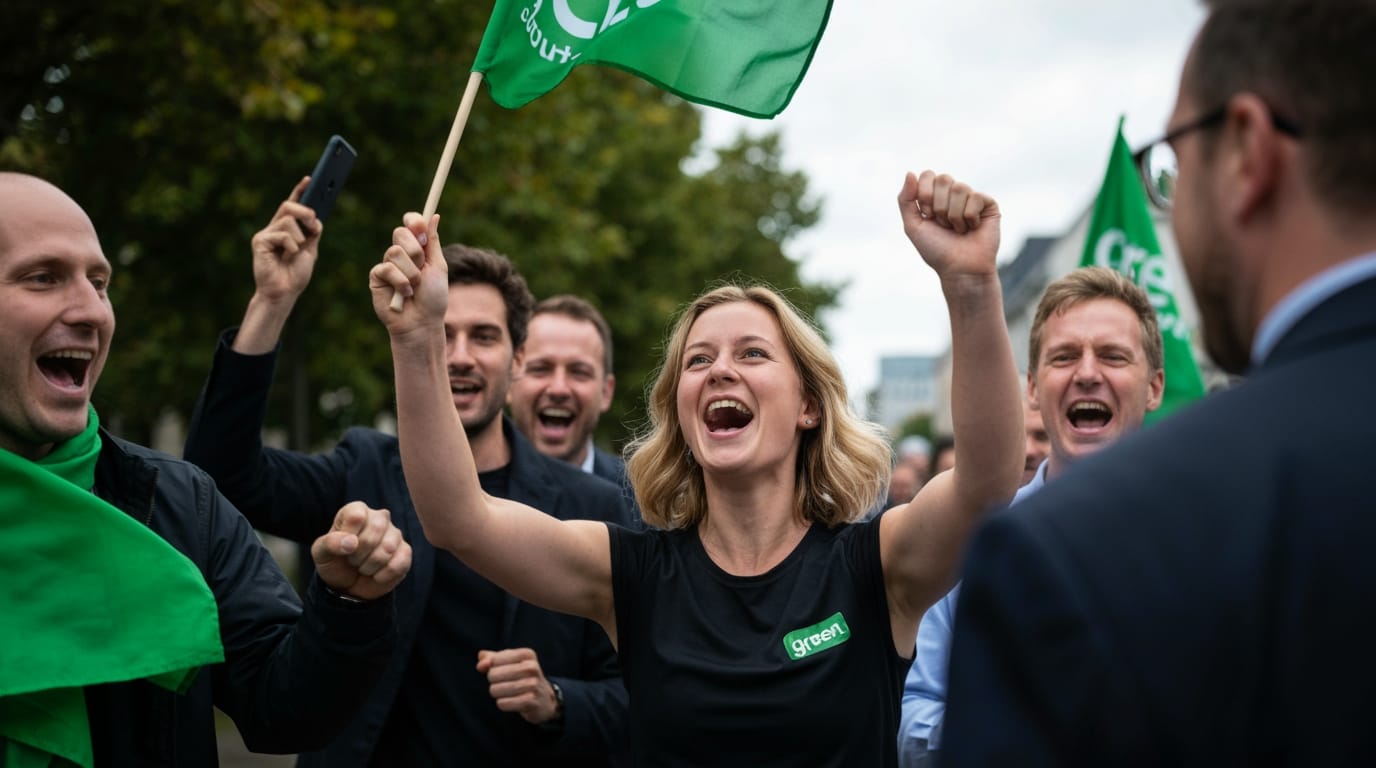
STUTTGART, GERMANY – The Green Party has once again claimed victory in the fiercely contested Baden-Württemberg state election, marking a significant moment in German regional politics. Despite a slight decrease in their overall vote share compared to the previous election, the Greens, led by Cem Özdemir, emerged as the narrow front-runner over the Christian Democratic Union (CDU), setting the stage for a probable continuation of their governing coalition and positioning Özdemir to become the state's next Minister-President. The election, held amidst a shifting political landscape, saw notable gains for the far-right Alternative for Germany (AfD) and historic losses for the Social Democratic Party (SPD).
A Tight Race and a Green Mandate
The provisional results released Monday morning indicate that the Greens secured approximately 30.2% of the vote, closely trailed by the CDU with 29.7%. Projections from various sources placed the Greens between 30.4% and 31.8%, just ahead of the CDU. This result ensures the Greens maintain their leading position in the southwestern German state, a stronghold they have held since Winfried Kretschmann first became Minister-President in 2011. While the Greens' percentage was slightly lower than their 32.6% in the 2021 election, their ability to remain the strongest political force underscores their sustained appeal in Baden-Württemberg. The 2026 election also saw a notable increase in voter turnout, reaching 70.2% to 71.5%, up from 63.8% in 2021. For the first time, 16- and 17-year-olds were eligible to cast their ballots, alongside a new electoral law granting citizens two votes, similar to federal elections.
The Rise of Özdemir and Pragmatic Politics
Central to the Greens' success was the charismatic campaign of Cem Özdemir, who is now poised to succeed Winfried Kretschmann, the long-serving and highly popular Green Minister-President who did not seek re-election. Özdemir, a former federal co-leader of the Green Party, ran a disciplined and pragmatic campaign that emphasized regional concerns and state-specific policy priorities. His approach resonated with voters, allowing him to consolidate the progressive vote and draw support from across the political spectrum. Özdemir, who is of Turkish heritage, is positioned to become the first Minister-President of a German state with Turkish roots, a fact that was not a primary focus of his campaign but highlights the evolving face of German politics. His campaign strategy combined a clear Green political identity with a strong emphasis on regional issues, helping to rebuild public confidence. He explicitly aimed to present himself as the natural successor to Kretschmann, who was known for his "green conservative" and pragmatic approach, successfully balancing environmental policies with economic interests in the state's industrial base.
Shifting Sands: Gains and Losses for Other Parties
The election saw dramatic shifts in the fortunes of other major parties. The far-right Alternative for Germany (AfD) emerged as the third-largest party, almost doubling its vote share from 9.7% in 2021 to between 17.7% and 18.8%. This strong performance by the AfD underlines the party's growing influence beyond its traditional strongholds in eastern Germany and signals a significant shift in voter sentiment in Baden-Württemberg. The party campaigned heavily on security and immigration issues, capitalizing on voter anxieties about the economy.
Conversely, the Social Democratic Party (SPD) experienced a historic setback, plummeting to around 5.5% of the vote, down from 11% in 2021. This marks the SPD's worst-ever result in a Baden-Württemberg regional election, leading to the resignation announcement from lead candidate Andreas Stoch. The economically liberal Free Democratic Party (FDP) also fared poorly, failing to clear the 5% threshold required for parliamentary representation, with approximately 4.4% of the vote. This outcome means the FDP will not be represented in the state parliament for the first time, further indicating a national downward trend for the party. The Left Party also missed the 5% hurdle, securing around 4.4%.
Coalition Prospects and Future Governance
With the Greens securing the most votes, attention now turns to coalition negotiations. The most probable outcome is a continuation of the existing Green-CDU coalition, often referred to as "Green-Black". Given their stable and smooth governance in the past, this decision was widely anticipated. Cem Özdemir has already signaled his support for maintaining the alliance with the CDU, emphasizing that any renewed partnership should operate on a basis of equality between the two parties. The previous Green-CDU government, under Winfried Kretschmann, served as a model for potential federal coalitions between the two parties.
The incoming government will face significant challenges, with the economic situation, immigration, and housing shortages identified as key concerns for Baden-Württemberg residents during the election cycle. The state, a heartland of the German automotive industry, is navigating a painful economic transition, leading to anxieties among the workforce. The new government will need to address these issues while continuing to pursue the Greens' ambitious climate and innovation agenda, which has been a hallmark of their tenure.
The Greens' ability to maintain leadership in a major industrial state like Baden-Württemberg, particularly in the wake of the pandemic and economic uncertainties, reinforces their position as a significant force in German politics. This regional victory provides a strong impetus for the Greens nationally as Germany approaches future federal elections.


