Greta Thunberg Arrested Under UK Terrorism Act in London Protest
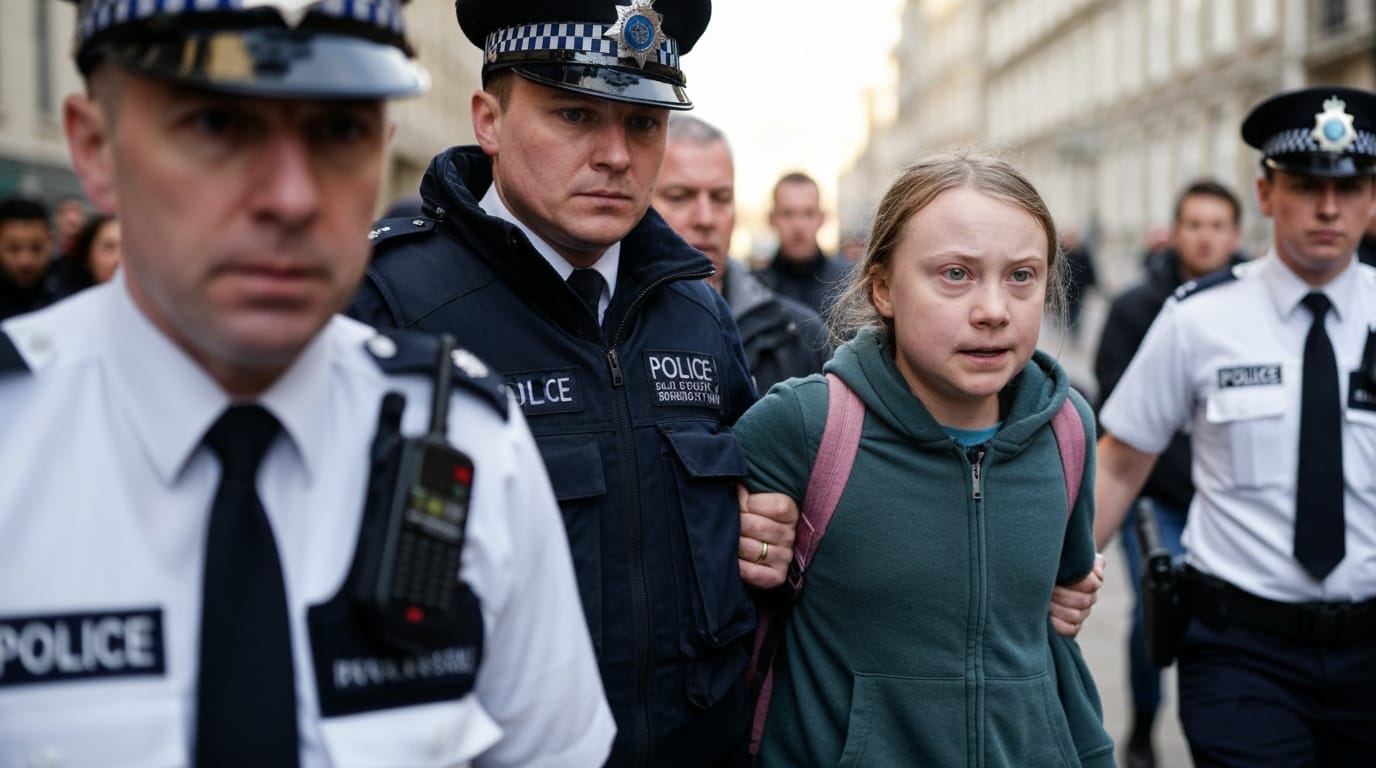
LONDON – Renowned climate activist Greta Thunberg was arrested today in central London under Section 13 of the UK’s Terrorism Act 2000, following her participation in a demonstration supporting members of the proscribed group Palestine Action. The high-profile detention marks a significant escalation in the use of anti-terror legislation against protesters and signals a widening scope for activists challenging geopolitical issues in the United Kingdom.
The 22-year-old Swedish activist was detained outside the offices of Aspen Insurance on Fenchurch Street, where she was holding a placard stating, “I support the Palestine Action prisoners. I oppose genocide.” Her arrest came as part of a larger protest organized by "Prisoners for Palestine" aimed at drawing attention to hunger-striking activists linked to Palestine Action, who are currently incarcerated pending trial for various alleged offenses. This incident places Thunberg at the forefront of a growing controversy surrounding freedom of expression and the application of stringent security laws in Britain.
The Fenchurch Street Demonstration
The protest began early Tuesday morning with two activists allegedly spraying red paint on the facade of the Aspen Insurance building. These individuals were subsequently arrested on suspicion of criminal damage and reportedly glued themselves to the building, requiring specialist police intervention. The demonstration’s organizers claimed Aspen Insurance was targeted due to its alleged provision of services to Elbit Systems, an Israeli-linked defense firm.
Greta Thunberg later joined the demonstration, sitting outside the building with her sign. City of London Police confirmed her arrest under Section 13 of the Terrorism Act 2000, which criminalizes the display of an item in support of a proscribed organization. Police statements indicated that "a 22-year-old woman also attended the scene. She has been arrested for displaying an item (in this case a placard) in support of a proscribed organisation (in this case Palestine Action) contrary to Section 13 of the Terrorism Act 2000." Her detention marks her as the most prominent individual arrested under these specific anti-terror provisions since Palestine Action’s recent proscription.
Palestine Action and the UK’s Proscription
Palestine Action, the group at the center of the protest, was officially proscribed by the UK government as a terrorist organization on July 5, 2025. This designation means that any public support, including displaying symbols or items associated with the group, can lead to charges under the Terrorism Act. The group describes itself as a direct-action network focused on disrupting and dismantling the operations of Israeli arms manufacturers and their supply chains in the UK. Its tactics have often involved property damage and protests at facilities linked to these companies.
The immediate catalyst for Tuesday's demonstration was the ongoing hunger strike by several Palestine Action members who are in prison awaiting trial. These individuals face charges related to alleged break-ins and criminal damage in actions undertaken before the group's proscription. Reports from "Prisoners for Palestine" indicate that some hunger strikers have been hospitalized due to their deteriorating health, with at least two individuals, Kamran Ahmed and Amu Gib, recently admitted to medical facilities. Gib, who has reportedly been on hunger strike for 51 days, is said to be in a critical condition. Legal representatives for the hunger strikers have reportedly initiated legal action against the Justice Secretary, David Lammy, over the conditions and ongoing detention of their clients.
Legal and Civil Liberties Implications
The application of the Terrorism Act 2000 in this context has raised considerable concerns among civil liberties advocates and human rights organizations. Critics argue that using anti-terror legislation against protesters, particularly for displaying a placard, represents a concerning expansion of state powers and could have a chilling effect on freedom of expression and assembly.
Previous instances have seen the Terrorism Act used in contentious ways, including against journalists and activists whose actions were not directly linked to violent extremism. The proscription of Palestine Action itself was a move that legal experts and activists have questioned, arguing it blurs the lines between legitimate protest and terrorism, potentially setting a dangerous precedent for direct-action groups. The European Convention on Human Rights, specifically Articles 10 (freedom of expression) and 11 (freedom of assembly), are often cited by those who believe such proscriptions and arrests infringe upon fundamental rights.
Thunberg's Evolving Activism and Broader Impact
Greta Thunberg, globally recognized for her climate activism, has increasingly lent her platform to broader human rights and geopolitical causes. While she gained international prominence through weekly climate strikes and impassioned speeches about environmental urgency, her recent actions reflect an expansion of her advocacy beyond solely ecological issues.
Her arrest today underscores a growing intersectionality in global activism, where environmental concerns often intertwine with issues of human rights, social justice, and international conflict. Thunberg’s involvement could draw unprecedented international attention to the UK’s protest laws and the specific plight of Palestine Action members. This event is likely to galvanize supporters and spark further debate on the balance between national security and democratic rights in the UK and beyond. It also highlights the increasing risks faced by high-profile activists who engage in demonstrations deemed controversial or aligned with proscribed groups by national governments.
A Defining Moment for UK Protest Rights
Greta Thunberg’s arrest under the Terrorism Act marks a potentially defining moment for protest rights in the United Kingdom. It brings to the forefront the government’s stringent stance on certain forms of activism, particularly those with a pro-Palestinian orientation, and the controversial application of broad security legislation.
The incident is set to intensify public and legal scrutiny over the scope of the Terrorism Act 2000 and the implications of proscribing activist groups for activities traditionally considered civil disobedience. As the legal proceedings unfold, this case will undoubtedly fuel an ongoing debate about the boundaries of protest, the protection of civil liberties, and the evolving landscape of activism in an increasingly interconnected and politically charged world. The international community will be watching closely to see how this high-profile arrest influences future policy and protest movements.


