Guinea-Bissau Grapples with Political Instability as President Stays Course
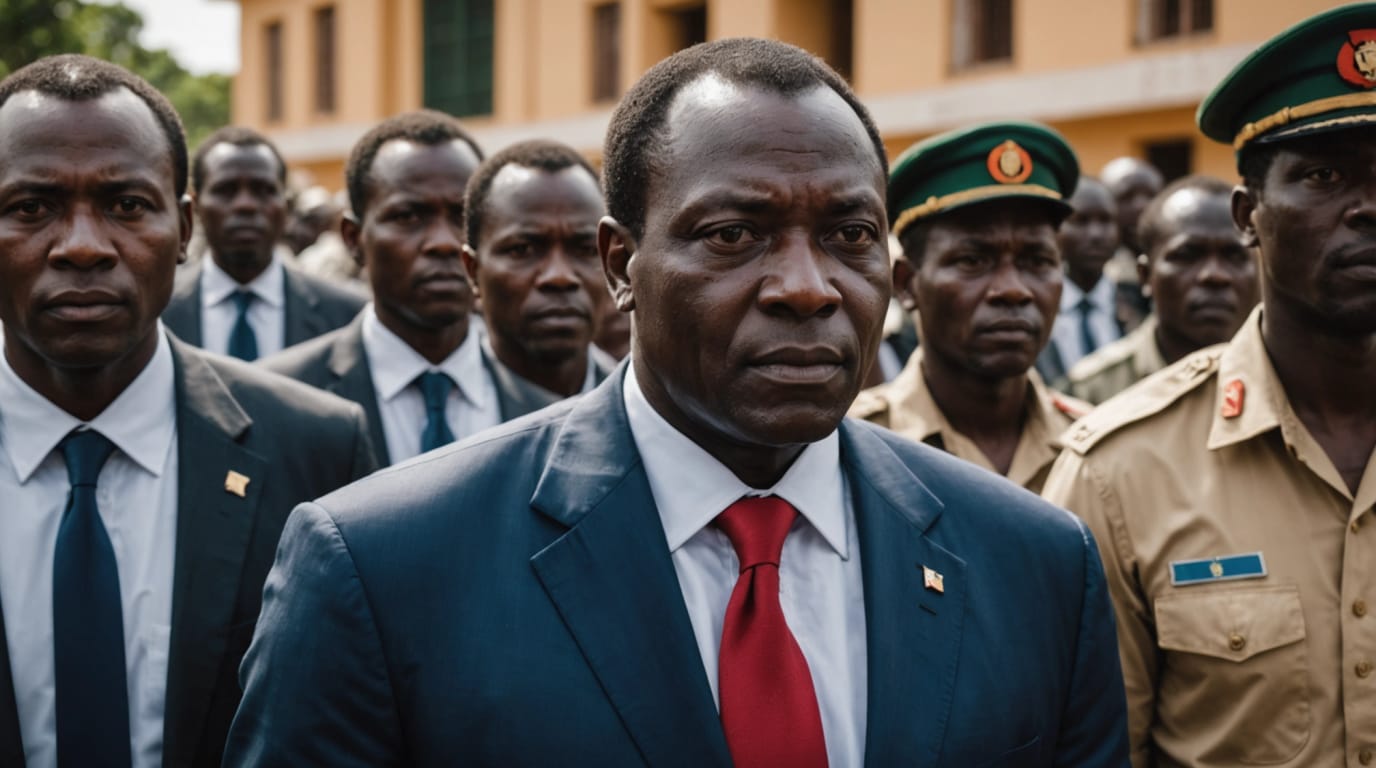
BISSAU – Guinea-Bissau, a West African nation plagued by a history of political turmoil, faces a deepening institutional crisis as President Umaro Sissoco Embaló signals his intent to remain in power despite mounting opposition and questions surrounding the legitimacy of his tenure. The country, which has endured multiple coups and attempted coups since gaining independence from Portugal in 1974, is navigating a complex political landscape marked by postponed elections, dissolved parliaments, and a struggle to restrain executive power.
A History of Instability
Guinea-Bissau's journey as an independent nation has been marred by persistent instability. The World Bank notes the country is one of the most coup-prone in the world, having experienced four successful coups and numerous other attempts. This history of political upheaval has created a fragile environment characterized by a proliferation of political parties, a lack of trust among them, and shifting motivations. The politicization of the military and security services has further fueled this volatility, with these institutions often used by political leaders to protect their interests, sometimes leading to military leaders mounting coups.
Election Postponement and Constitutional Crisis
The latest chapter in Guinea-Bissau's political saga unfolded in November 2024 when President Embaló indefinitely postponed the presidential and legislative elections initially scheduled for December. This decision, justified with opacity, has been widely challenged by the opposition as unconstitutional. Critics argue that Embaló's mandate ended on February 27, 2025, and that elections should have been held before then. Embaló, however, contends that his term extends until September, allowing for elections in November. This disagreement over the election timeline has deepened the existing political divide and fueled uncertainty about the future of the country's leadership.
Adding to the turmoil, Embaló has twice dissolved parliament, preventing representatives from entering the National Assembly. This move, coupled with the controversial appointment of Rui Duarte de Barros as prime minister in December 2023, sparked protests and clashes with security forces, further destabilizing the nation.
Competing Visions of Power
At the heart of Guinea-Bissau's governance dysfunction lies a fundamental disagreement over the role of the executive branch. The country operates under a semi-presidential system, where the president serves as head of state, while the prime minister, selected by parliament, acts as head of government. This system, established in the 1993 Constitution, aimed to create a separation of powers and prevent the concentration of authority within the executive, as had occurred under the 19-year rule of President João Bernardo Vieira. However, competing interpretations of the constitution have led to power struggles and institutional gridlock, with both Presidents Vaz and Embaló accused of attempting to monopolize the appointment of prime ministers.
Embaló's Second Term Bid
Adding another layer of complexity to the situation, President Embaló recently announced his intention to run for a second term in the upcoming elections. This decision marks a reversal of his earlier vows to step down and has the potential to further escalate tensions with the opposition, which refuses to recognize him as the legitimate president. The opposition argues that Embaló's current term has already expired, rendering his candidacy invalid.
Implications and the Path Forward
The ongoing political crisis in Guinea-Bissau has significant implications for the country's stability and development. The uncertainty surrounding the elections and the legitimacy of the government undermines investor confidence, hinders economic growth, and impacts the quality of life for its citizens. Improving health and education services, key priorities for the population, are likely to be overshadowed by the political turmoil.
Despite the challenges, Guinea-Bissau has a history of relatively competitive elections and peaceful transfers of power. The National Electoral Commission (NEC) has generally been viewed as professional, contributing to the credibility of past elections. However, the current crisis requires a concerted effort from all stakeholders to restore institutional legitimacy and ensure a free, fair, and transparent electoral process.
To prevent further deterioration of the political situation, analysts suggest that Embaló should engage in dialogue with political and institutional actors to reach a broad consensus on restoring institutional normalcy. This includes addressing the concerns surrounding the election timeline and ensuring the independence and impartiality of the electoral commission. The Economic Community of West African States (ECOWAS) and other international partners can play a crucial role in facilitating dialogue and providing technical assistance to support the electoral process. However, President Embaló has stated that the ECOWAS mission has been sent away and "will never return".
Guinea-Bissau stands at a critical juncture. The choices made by its leaders in the coming months will determine whether the country can break free from its cycle of political instability and embark on a path towards sustainable peace, democracy, and development. The bigger electoral story in Guinea-Bissau in 2025 will be about how to build and sustain momentum for a stable system of government and institutional guardrails against the abuse of executive power.


