Guinea-Bissau: The Enduring Shadow of Drug Cartels
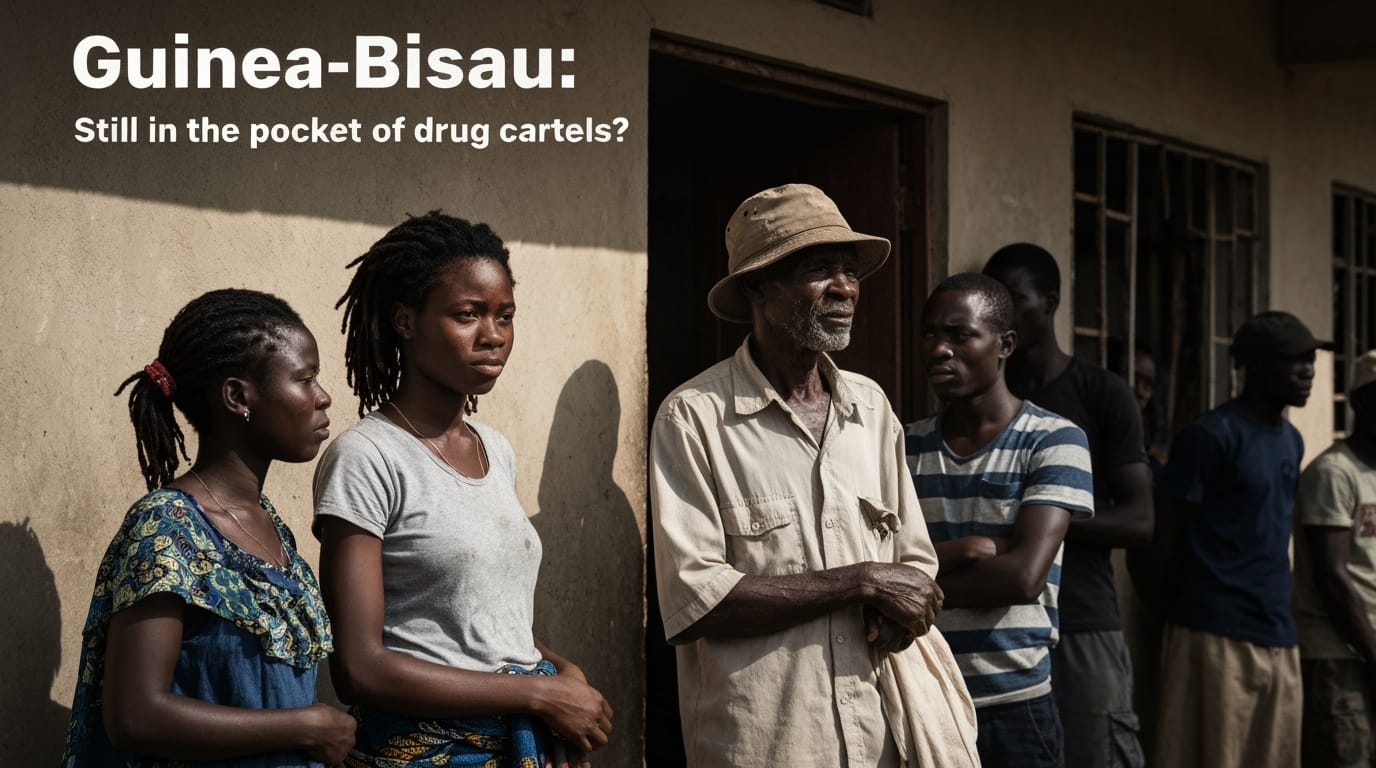
BISSAU, Guinea-Bissau – A quarter-century after earning the grim moniker "Africa's first narco-state," the small West African nation of Guinea-Bissau remains caught in the insidious grip of international drug cartels, a pervasive influence that continues to undermine its fragile governance, fuel political instability, and deepen the plight of its impoverished population. Despite sporadic crackdowns and international interventions, the illicit cocaine trade thrives, transforming the nation into a critical transit hub between South America and Europe, and leaving a trail of corruption, violence, and despair in its wake.
The Genesis of a "Narco-State" Legacy
Guinea-Bissau’s entanglement with the global drug trade intensified in the early 2000s, a period when the United Nations and other international bodies began to label it as a "narco-state." This dubious distinction arose from a confluence of factors: a fragile internal environment, pervasive poverty, chronic political instability, and a strategic geographical location. West Africa, positioned directly across the Atlantic from South America, offered an attractive alternative route for drug traffickers seeking to avoid heightened policing in traditional transit zones like Jamaica and Panama. Guinea-Bissau, with its extensive, poorly patrolled coastline, numerous islands, and a history of weak state institutions, proved particularly vulnerable.
The nation's post-independence history has been marred by political turmoil, including multiple successful coups and numerous failed attempts. This chronic instability created a fertile ground for drug cartels, who capitalized on the breakdown of law and order and the susceptibility of underpaid or corrupt officials. The drug trade became inextricably linked to the country's political fabric, leading to what analysts termed "cocaine coups," where shifts in power were often driven by factions vying for control over lucrative trafficking routes. A stark example is the 2009 assassination of then-President João Bernardo Vieira by his own soldiers, an event many connected to the drug trade, which subsequently saw the cocaine trade intensify under a new military strongman. The United States Drug Enforcement Agency (DEA) noted that the logical route for cartels was the shortest ocean crossing to West Africa, utilizing the many airstrips and countless bays available in Guinea-Bissau.
A Persistent Pipeline: Modus Operandi and Scale
Today, the dynamics of drug trafficking in Guinea-Bissau remain alarmingly similar to its origins, though perhaps more entrenched. The country continues to serve as a vital transshipment point for vast quantities of cocaine originating from South America, destined primarily for the European market. Drugs arrive via both air and sea, exploiting the country's permeable borders and vast, often uninhabited, coastal areas and islands, which stretch across the Bijagós Archipelago. Reports indicate that the capital, Bissau, is once again experiencing a booming cocaine market, with a noticeable presence of Colombian traffickers in high-end hotels and a reduction in retail cocaine prices.
The modus operandi involves sophisticated networks. Cartels from Latin America (predominantly Colombia and Brazil) and distribution networks from Europe (including Balkan syndicates from Montenegro, Serbia, and Albania) collaborate with local intermediaries. These intermediaries often include dual-nationality criminal entrepreneurs who exploit their connections and knowledge of the local landscape. The lack of effective law enforcement, critical equipment shortages for police forces like the Policia Judiciaria (PJ), and systemic corruption across governmental and military ranks provide an ideal environment for these illicit operations. Seaports like Bissau often lack meaningful security, allowing containers to pass without inspection, while members of the customs service and police routinely accept bribes.
While the overall trend points to an ongoing drug influx, there have been notable, albeit often isolated, successes in combating the trade. In September 2019, "Operation Navara" resulted in the seizure of over 4,000 pounds of cocaine, along with numerous vehicles and significant financial assets. More recently, in September 2024, "Operation Landing" led to the seizure of 2.6 tons of cocaine and the arrest of five individuals, four of whom were later extradited to the United States in April 2025. These operations underscore the persistence of the problem while also demonstrating the potential impact of targeted law enforcement efforts when coupled with international cooperation.
The Corrosive Grip: Political and Economic Fallout
The pervasive influence of drug cartels has had a devastating, multi-faceted impact on Guinea-Bissau. Politically, the illicit trade continues to be a primary driver of instability, undermining democratic institutions and entrenching a cycle of corruption. The military, often seen as a kingmaker in the country's turbulent politics, has been repeatedly implicated in the drug trade, with senior figures accused of direct involvement. The intertwining of criminal, political, and military interests means that drug money often serves as a key source of revenue for those in power, further complicating efforts to establish genuine rule of law. Allegations of drug lords plotting against the state have even been used to justify military coups.
Economically, the drug trade creates a phantom economy that benefits a select few while offering little to the vast majority of the population. Guinea-Bissau consistently ranks among the poorest nations globally, with nearly 70% of its citizens living below the poverty line. The staggering profits generated by drug trafficking, estimated to sometimes exceed the country's annual GDP, flow into the pockets of corrupt officials and traffickers, rather than contributing to national development or public services. This disparity is starkly visible, with impoverished locals living alongside drug lords driving luxury vehicles and acquiring lavish villas with no visible income.
Socially, the consequences are equally dire. High unemployment rates and widespread poverty make the allure of quick money from drug trafficking particularly strong for a large population of uneducated and unemployed youth. The lack of continuous governmental structure has severely impacted national living standards, leading to a profound absence of basic services like reliable electricity, water, and functional public infrastructure. Furthermore, drug abuse is reported to be a growing problem within the country, adding another layer of social challenge.
International Scrutiny and the Road Ahead
The international community has long recognized the critical threat posed by drug trafficking in Guinea-Bissau. Organizations such as the United Nations Office on Drugs and Crime (UNODC), the UN Integrated Peace-Building Office in Guinea-Bissau (UNIOGBIS), and regional bodies like ECOWAS have engaged in efforts to strengthen national capacity, promote security sector reform, and combat organized crime. Bilateral assistance has also been provided by countries including the United States, European Union member states like Portugal and Spain, and Brazil.
However, these efforts have often been hampered by a lack of sustained funding, insufficient political will within Guinea-Bissau, and the deeply entrenched nature of corruption. The UNODC, for instance, was forced to downsize its activities due to limited funds. Nevertheless, recent developments offer a glimmer of hope. The 2025 extradition of convicted South American drug traffickers to the United States following "Operation Landing" signifies a potentially enhanced judicial partnership and a strengthened resolve by the Guinea-Bissau government to cooperate in the global fight against organized crime. This landmark move is seen as a crucial step for the country to shed its "narco-state" image and establish itself as a reliable partner.
The debate continues as to whether Guinea-Bissau is a true "narco-state" where traffickers have completely captured state institutions, or rather a "weak state" where criminal networks exploit systemic fragilities to benefit a corrupt elite without outright control. Regardless of the precise label, the intertwined nature of crime, politics, and military power presents an enormous challenge. The road ahead for Guinea-Bissau requires not only sustained international support but also a profound internal commitment to governance reform, judicial independence, and addressing the root causes of poverty and unemployment that make its citizens vulnerable to the allure of illicit gains. Only then can the nation hope to fully emerge from the shadow of drug cartels and reclaim its sovereignty.


