Gulf States Accelerate Strategic Push to Bypass Vulnerable Strait of Hormuz
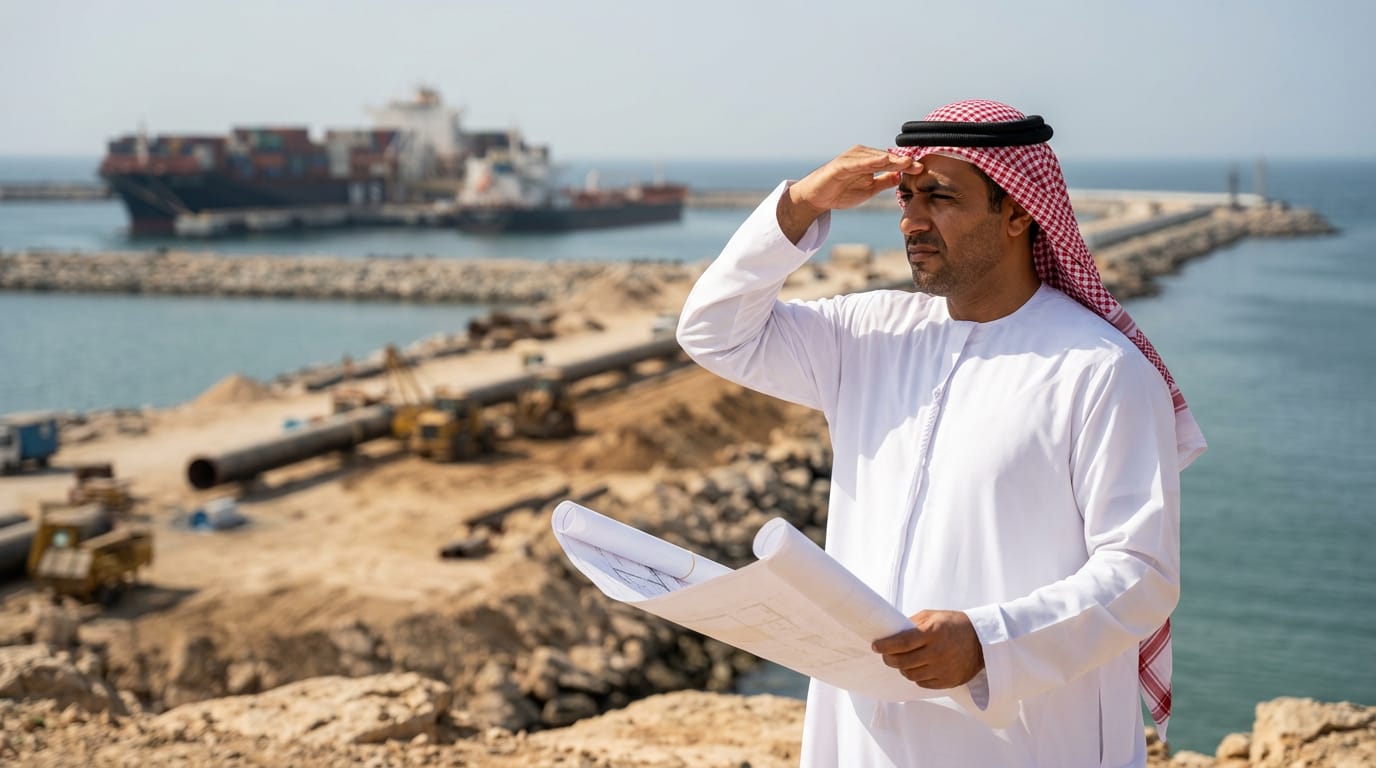
DUBAI – Amid persistent regional instability and a heightened sense of vulnerability surrounding the Strait of Hormuz, Gulf states are aggressively pursuing and expanding alternative routes for their vital energy exports. The long-standing ambition to reduce reliance on the world's most critical maritime chokepoint has gained renewed urgency, with nations like Saudi Arabia and the United Arab Emirates fast-tracking multi-billion dollar pipeline projects and exploring new logistical corridors to ensure uninterrupted access to global markets. This strategic pivot aims to mitigate geopolitical risks and safeguard economic lifelines that are essential for both regional stability and global energy security.
The Strait of Hormuz, a narrow waterway connecting the Persian Gulf to the open ocean, remains an indispensable conduit for a substantial portion of the world's energy trade. Approximately 20-25% of the world's seaborne oil and 19-20% of its liquefied natural gas (LNG) transit through this strategic passage annually. Its geographical confines, coupled with historical and ongoing geopolitical tensions, render it susceptible to disruptions that can trigger significant increases in shipping costs, insurance premiums, and delivery times, exposing interconnected vulnerabilities across global trade. The imperative to diversify export pathways has become a cornerstone of long-term energy planning for Gulf producers, transforming what were once theoretical concepts into tangible, operational realities.
The Unwavering Dominance and Lingering Peril of the Strait
For decades, the Strait of Hormuz has served as the primary, and often sole, maritime gateway for the immense hydrocarbon resources of the Persian Gulf. Its efficiency and strategic location facilitated the region's rise as a global energy powerhouse. However, this critical function is simultaneously its greatest vulnerability. Episodes of regional conflict, maritime incidents, and geopolitical standoffs have repeatedly underscored the fragility of relying on a single chokepoint for such a significant volume of global trade. Recent disruptions have seen commercial ship transits significantly reduced, and export volumes, particularly of natural gas, plummeting drastically, with a staggering 95% drop recorded in natural gas exports during one period. This vulnerability translates directly into economic risk, driving up freight rates and forcing a reassessment of international trade routes. The consensus among Gulf states is clear: "no one wants to be held hostage" by potential disruptions in the Strait.
Saudi Arabia's Petroline: A Veteran Bypass Expands
Saudi Arabia, the world's largest oil exporter, pioneered an overland alternative decades ago with its East-West Crude Oil Pipeline, commonly known as Petroline. Constructed in the 1980s during the Iran-Iraq "tanker war," the 1,200-kilometer (746-mile) pipeline spans the Arabian Peninsula, linking the kingdom's eastern oil fields to the Red Sea port of Yanbu. This strategic asset was designed to provide an alternative export route, thereby reducing the kingdom's dependence on the Strait of Hormuz.
Initially capable of transporting 5 million barrels per day (bpd), Petroline's capacity has been significantly boosted. As of 2026, by converting accompanying natural gas liquids pipelines to carry crude oil, its full operating capacity has reached approximately 7 million bpd. This expansion became particularly critical in March 2026 when Saudi Aramco reportedly ramped up the pipeline to its maximum capacity in response to the effective closure of the Strait of Hormuz, diverting crude flows overland to Yanbu. While Petroline has proven invaluable in providing export flexibility, it has also faced challenges, including drone attacks that highlight the persistent security risks to energy infrastructure in the region. Further expansions and the construction of new export terminals along the Red Sea are reportedly under consideration.
The UAE's Multi-Billion Dollar Corridor to the Gulf of Oman
The United Arab Emirates (UAE) has similarly invested heavily in bypassing the Strait, primarily through the Abu Dhabi Crude Oil Pipeline (ADCOP), also known as the Habshan-Fujairah pipeline. Commissioned in 2012, this 360-406 kilometer pipeline connects the Habshan onshore oil fields in Abu Dhabi directly to the port of Fujairah on the Gulf of Oman, effectively allowing the UAE to export oil without traversing the Strait of Hormuz. Built at an estimated cost of $3.3 to $4.2 billion, ADCOP currently has a capacity of 1.5 million bpd, representing over half of the UAE's daily crude oil exports to Fujairah's facilities.
The UAE's commitment to this strategy is deepening. Plans are underway to increase ADCOP's capacity to 1.8 million bpd, and in May 2026, the Abu Dhabi National Oil Company (ADNOC) announced a new parallel pipeline, "West-East 1." This new project is set to double the UAE's Strait-free export capacity to 3.6 million bpd by 2027, further solidifying Fujairah's role as a major energy export hub outside the Persian Gulf. This accelerated development underscores the country's proactive approach to enhancing energy security and ensuring uninterrupted exports amid regional tensions.
A Patchwork of Projects and Persistent Challenges
Beyond these major pipeline initiatives, other Gulf states are exploring various options, though not all possess the same logistical advantages. Oman is actively building overland alternatives and has engaged in cross-border freight deals with Saudi Arabia, aimed at diversifying trade routes away from chokepoints. Projects like the "web of corridors" linking Iraqi oil fields to the Mediterranean via Jordan or Turkey, and integrated energy links within the India-Middle East-Europe Economic Corridor (IMEC), are also being explored. The recently inaugurated Saudi-Türkiye Hejaz railway project also aims to provide an alternative route reaching the Gulf of Oman from Turkish territory. These initiatives signify a broader regional shift towards resilient infrastructure.
However, the quest to fully bypass Hormuz faces significant financial, technical, and political hurdles. While existing pipelines offer partial mitigation, they cannot yet match the sheer volume or flexibility of the Strait. Countries like Qatar and Kuwait, which heavily depend on Hormuz for their significant LNG exports, face particular challenges, lacking viable alternative routes within their own territories. Constructing new pipelines through neighboring states, or even ambitious projects like a potential Musandam Canal, would entail immense costs—potentially hundreds of billions of dollars—and significant engineering and environmental challenges. Such undertakings require not only colossal investment but also complex geopolitical cooperation that can be fraught with rivalry and competition among Gulf nations. Furthermore, diverting routes can introduce new secondary chokepoints, such as Bab al-Mandeb, maintaining a degree of vulnerability for global shipping.
Conclusion: Reshaping the Geopolitical Landscape
The accelerating efforts by Gulf states to establish alternatives to the Strait of Hormuz represent a profound strategic recalibration driven by both economic necessity and geopolitical realities. While a complete bypass of the Strait's capacity remains a distant prospect, the expansion of existing pipelines and the development of new land and sea corridors are incrementally reducing dependence on the vulnerable chokepoint. This push is not intended to render Hormuz irrelevant, but rather to diminish the leverage of any single actor over the region's energy exports and enhance overall energy security.
The long-term implications are substantial, promising to reshape the geopolitical and economic geography of the Middle East. As these alternative routes gain capacity and reliability, they are expected to foster greater energy security for producing nations and consuming markets alike, potentially leading to more stable global energy prices and reduced insurance costs for shippers. The continuous investment in infrastructure, despite the significant challenges, signals a firm commitment by Gulf states to safeguard their economic futures and assert greater control over their destiny in an increasingly volatile world. The scramble for alternatives underscores a fundamental shift in regional strategy, moving towards a future where energy resilience is paramount.


