Gulf States Surge Billions into Africa, Reshaping Continental Development and Global Dynamics
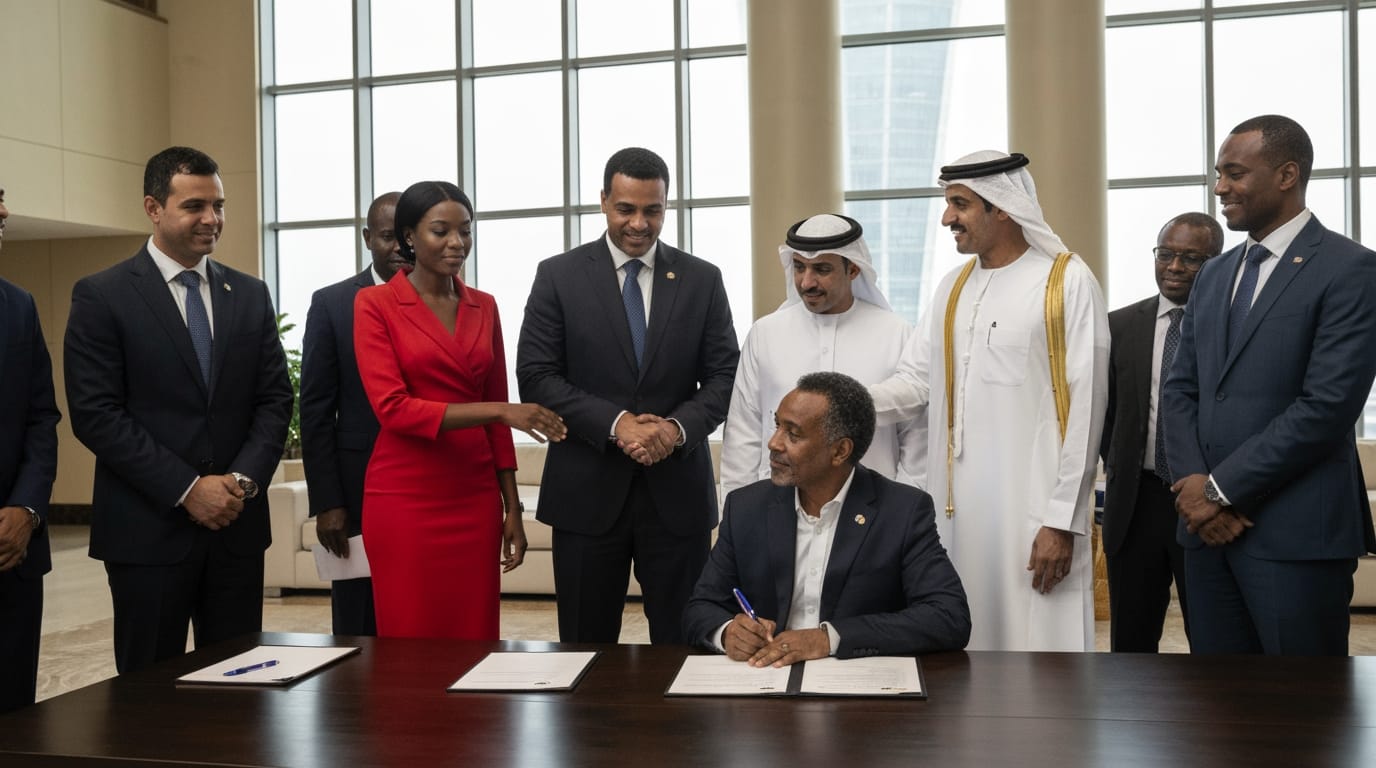
A monumental shift in global economic partnerships is underway as Gulf Cooperation Council (GCC) states increasingly channel billions of dollars into Africa, fundamentally reshaping the continent's development trajectory and fostering a new era of geopolitical and economic alignment. This concerted financial offensive, spearheaded by the United Arab Emirates (UAE), Saudi Arabia, and Qatar, extends far beyond traditional aid, marking a strategic pivot driven by ambitious economic diversification agendas, the quest for enhanced food security, and a burgeoning desire for geopolitical influence. With investments exceeding $100 billion over the past decade and significant pledges for the future, Gulf capital is rapidly becoming a pivotal force in Africa's infrastructure, energy, and resources sectors, filling a financing vacuum left by other global players.
A Strategic Pivot: Diversification and Influence Driving Gulf Engagement
The surge in Gulf investment into Africa is rooted in fundamental shifts within the economies of the GCC states. Faced with fluctuating global oil prices and the long-term imperative to reduce reliance on hydrocarbons, nations like the UAE and Saudi Arabia have embarked on aggressive economic diversification strategies, such as Saudi Vision 2030 and the UAE's "We the UAE 2031". Africa, with its vast untapped potential, burgeoning markets, and abundant natural resources, presents a logical and attractive frontier for these diversification efforts.
Beyond economic imperatives, a strategic desire to expand geopolitical influence and fill gaps in Africa's development financing landscape plays a significant role. As traditional Western financial flows have slowed and Chinese lending has tempered, Gulf states have identified an opportunity to bolster their standing on the global stage. This "geoeconomic turn" in Gulf foreign policy, particularly since the late 2010s, has seen energy and infrastructure emerge as central pillars of their engagement, sectors where Africa's needs are most acute. The UAE, for instance, has cemented its position as Africa's fourth-largest foreign direct investor, trailing only China, the European Union, and the United States.
Investing in Africa's Future: Key Sectors and Regions of Focus
Gulf capital is flowing into a diverse array of sectors critical to Africa's growth, with a clear emphasis on infrastructure, energy, agriculture, and critical minerals. Infrastructure development, including ports, logistics hubs, and transport corridors, stands out as a primary target. Companies like DP World, which now operates six African ports and logistics facilities, and Abu Dhabi Ports, with concessions in Egypt, Angola, and the Republic of Congo, are instrumental in bolstering connectivity and facilitating trade across the continent. Ethiopia's planned international airport near Addis Ababa and major road projects in the Democratic Republic of Congo have also attracted significant interest from Qatari investors, highlighting the focus on improving regional transport networks.
The energy sector, particularly renewable energy, has become a major pillar of these investments. Gulf states possess significant capital and a strong desire to invest in new technologies, including renewables, aligning with Africa's urgent need for power access for its over half a billion people currently without reliable electricity. The UAE alone pledged $4.5 billion to support energy transition efforts in Africa in 2021. State-backed entities such as Masdar (UAE) and ACWA Power (Saudi Arabia) are actively developing solar and wind projects across sub-Saharan Africa, viewing the continent as an ideal testing ground to expand their renewable energy expertise and develop scalable green technology capacities.
Moreover, the race for critical minerals, essential for the global energy transition and digital transformation, has drawn substantial Gulf investment. African nations hold approximately 30% of the world's critical mineral reserves, including vast deposits of copper, cobalt, lithium, and manganese. Saudi Arabia's Manara Minerals and Abu Dhabi's International Resources Holding have acquired significant stakes in mines in Zambia and the Democratic Republic of Congo, securing upstream access to resources vital for their domestic industrial ambitions.
Geographically, investments span across the continent. East Africa, including Ethiopia, Sudan, Djibouti, and Uganda, has historically received substantial attention, particularly from the UAE. North Africa, especially Egypt, has also seen significant inflows, exemplified by ADQ's $35 billion Ras El-Hekma development. Southern African nations like the Democratic Republic of Congo, Zambia, Mozambique, Botswana, and Burundi have recently become major recipients of pledges, notably Qatar's $103 billion commitment.
The Quest for Food Security and Green Energy
Two particularly potent drivers for Gulf investments are the intertwined goals of enhancing food security and advancing green energy initiatives. Gulf states are among the world's largest food importers, with countries like the UAE relying on imports for approximately 90% of their domestic food requirements. This dependence has spurred a proactive strategy of acquiring and investing in agricultural land and agribusiness across Africa to secure vital food supplies. Ethiopia, Sudan, and Ghana have been key targets for agricultural investments by Saudi Arabia, the UAE, and Qatar, effectively externalizing food production onto African soil. This approach aims to leverage Africa's abundant arable land and agricultural potential to feed both continents, though it also raises complex questions about land tenure and local food systems.
Simultaneously, the pursuit of green energy expertise is a cornerstone of the Gulf's diversification efforts. With their vast financial resources, Gulf states are not merely financing projects but are actively developing their own renewable energy industries and seeking to become leaders in the global energy transition. Africa, with its immense solar and wind resources, provides an unparalleled environment for Gulf companies to deploy, test, and scale green technologies. The $4.5 billion pledge by the UAE for Africa's energy transition underscores this commitment, involving projects spanning solar, wind, geothermal, battery storage, and green hydrogen. These investments address Africa's critical energy deficit while simultaneously advancing the Gulf's strategic objective of becoming global players in the green economy.
Opportunities and Complexities: Africa's Evolving Partnerships
For African nations, the influx of Gulf capital presents both significant opportunities and inherent complexities. On one hand, these investments provide much-needed financing for critical infrastructure, energy, and industrial projects that are essential for economic growth, job creation, and poverty reduction. The Africa Continental Free Trade Area (AfCFTA) further enhances Africa's attractiveness, creating a vast integrated market that Gulf investors are eager to tap into. African leaders are increasingly leveraging this diversified interest to gain stronger negotiating positions and attract investment without the heavy political conditions sometimes associated with traditional partners.
However, the nature of these investments also raises concerns. Analysts point to potentially asymmetric investment patterns, where Gulf capital primarily targets strategic sectors that serve Gulf interests (such as resource extraction and control over trade routes) rather than fostering broad-based local value creation and comprehensive African development. The significant involvement of state-backed entities and sovereign wealth funds means that these investments are often aligned with the strategic national interests of the Gulf states, raising questions about potential economic dependence and external political interference in African affairs. Critics also highlight issues surrounding weak governance constraints in some African nations, which could limit local benefits and reinforce existing structural vulnerabilities.
Moreover, geopolitical tensions, such as those in the wider Middle East, introduce an element of risk. While analysts suggest that long-term strategic reasons are likely to sustain Gulf investments in Africa, especially in renewable energy, heightened regional instability could potentially lead Gulf governments to re-evaluate overseas commitments in favor of domestic security and economic protection.
In conclusion, the deepening economic relationship between Gulf states and Africa signifies a profound transformation in global capital flows. Driven by a confluence of economic diversification, food security ambitions, and geopolitical strategies, Gulf nations are committing unprecedented levels of investment across Africa's most vital sectors. This engagement offers African economies a crucial alternative source of financing and partnership, yet it also necessitates careful management to ensure that these investments contribute to sustainable, inclusive development and avoid reinforcing historical patterns of external economic dependence. As this new corridor of cooperation matures, its long-term implications for both continents, and the broader global economic order, will be closely watched.


