'Helmet of Remembrance' Sparks Olympic Controversy, Ukrainian Athlete Defies Ban
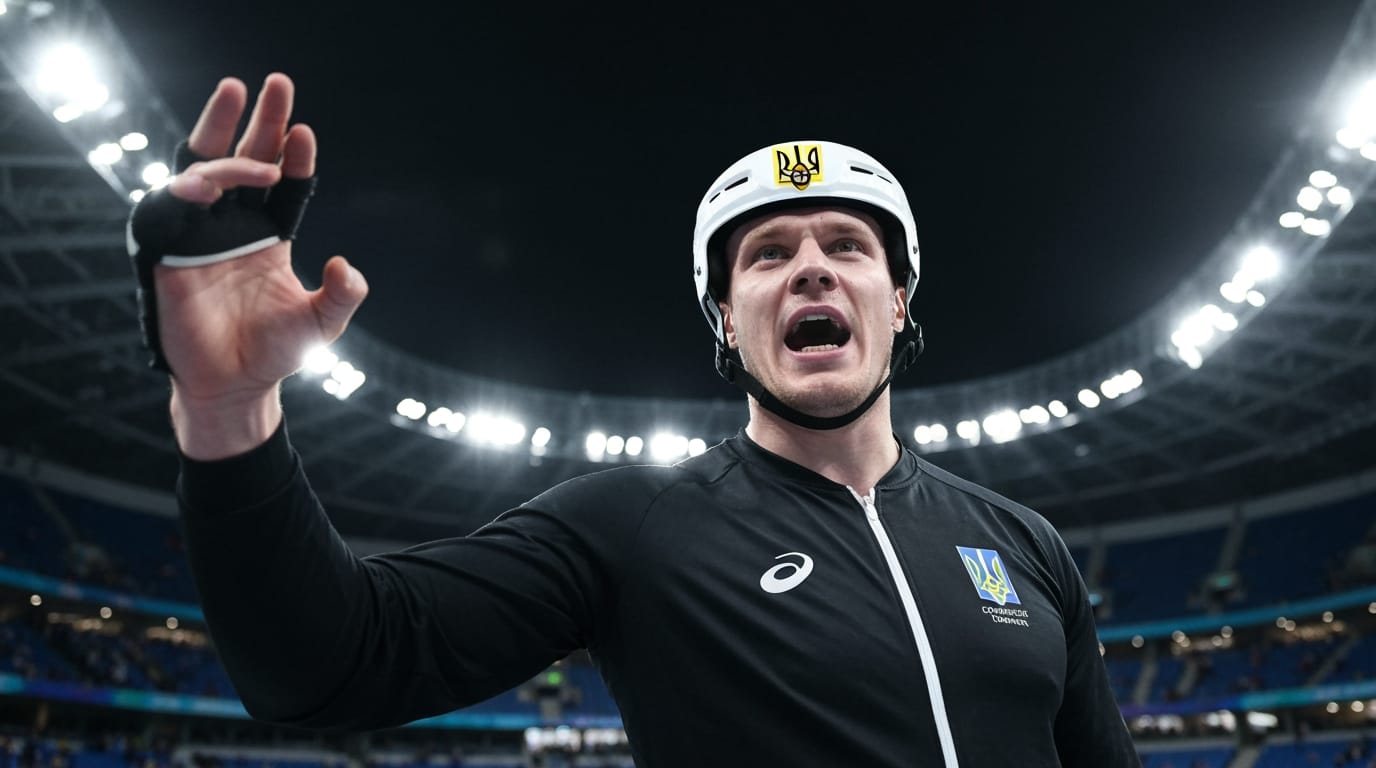
CORTINA D'AMPEZZO, ITALY – Ukrainian skeleton racer Vladyslav Heraskevych finds himself at the center of a poignant Olympic dispute after the International Olympic Committee (IOC) prohibited him from wearing a specially designed "helmet of remembrance" at the Winter Games. The helmet, adorned with images of Ukrainian athletes killed in the ongoing war with Russia, was intended as a solemn tribute, but the IOC deemed it a violation of its long-standing rule against political demonstrations. This decision has ignited a fierce debate about the intersection of sport, remembrance, and political neutrality on the world's biggest athletic stage.
A Tribute Amidst Conflict
Heraskevych's helmet bears the faces of several Ukrainian athletes, some of whom were personal friends, who have lost their lives in the conflict that followed Russia's 2022 invasion of Ukraine. Among those honored are teenage weightlifter Alina Perehudova, boxer Pavlo Ischenko, ice hockey player Oleksiy Loginov, actor and athlete Ivan Kononenko, diver and coach Mykyta Kozubenko, shooter Oleksiy Habarov, and dancer Daria Kurdel. For Heraskevych, the helmet is not a political statement but a deeply personal act of remembrance and a means to highlight the devastating human cost of the war. He emphasized that he seeks to respect Olympic rules while ensuring Ukraine's plight remains visible during the Games.
The Ukrainian Olympic Committee echoed this sentiment, stating that the helmet was created to honor fallen athletes and fully complies with safety requirements and IOC rules, asserting that it contains no advertising, political slogans, or discriminatory elements. Heraskevych, who served as Ukraine's flag bearer, had been wearing the helmet during training sessions prior to the official competition, awaiting a ruling from the IOC.
IOC's Stance and Rule 50 Enforcement
The International Olympic Committee, through spokesman Mark Adams, acknowledged understanding the desire of athletes to remember friends lost in the conflict. However, the IOC ultimately ruled against the helmet, citing Rule 50.2 of the Olympic Charter, which stipulates that "No kind of demonstration or political, religious or racial propaganda is permitted in any Olympic sites, venues or other areas." Adams explained that while athletes are free to express their views elsewhere, such as on social media, the "field of play must stay neutral" to preserve the purity of competition.
As a compromise, the IOC offered Heraskevych the option to wear a plain black armband during the competition to commemorate the fallen, an offer Heraskevych described as "unfair treatment." He firmly believes the helmet does not violate Rule 50, arguing it is neither discriminatory nor political propaganda. The IOC's decision drew criticism, with Heraskevych himself accusing the committee of "betrayal" for not allowing a tribute to those who sacrificed their lives.
This is not Heraskevych's first engagement with Olympic regulations concerning displays of conscience. At the Beijing 2022 Olympics, days before the full-scale Russian invasion, he held up a "No War in Ukraine" sign. At that time, the IOC opted not to sanction him, interpreting his action as a "general call for peace." This prior instance adds another layer of complexity to the current ruling, prompting questions about the consistency of Rule 50's application.
Athlete Activism and Olympic Neutrality
The debate surrounding Heraskevych's helmet reignites a long-standing tension between the Olympic movement's insistence on political neutrality and athletes' desire to use their global platforms for social and humanitarian causes. Rule 50 is designed to ensure the Games remain focused on sport, free from external political, religious, or racial agendas. Historically, the IOC has strictly enforced this rule, leading to significant repercussions for athletes who defied it, such as Tommie Smith and John Carlos's Black Power salute at the 1968 Mexico City Olympics.
In recent years, the IOC has attempted to navigate the increasing calls for athlete free speech by slightly softening its stance. In 2021, revisions to Rule 50 permitted athletes to express their views before the start of competitions or to wear apparel with inclusive messaging like "peace" or "solidarity," provided these expressions were not disruptive or targeted. However, the core prohibition against demonstrations on the field of play, on podiums, or during official ceremonies remains firmly in place. The IOC’s Athlete’s Commission conducted extensive consultations, reporting that a majority of athletes favored maintaining neutrality on the field of play and during ceremonies. This framework highlights the delicate balancing act the IOC attempts to perform: acknowledging athletes' rights to expression while upholding what it perceives as the Olympic Games' neutral and unifying spirit.
The Unyielding Stance
Despite the IOC's ruling and the offer of a black armband, Heraskevych has indicated a strong resolve to defy the ban. He continued to wear the disputed helmet during subsequent training sessions and expressed his intention to compete with it, emphasizing that the truth is on his side. He stated, "Because of their [the dead athletes'] sacrifice, we are able to compete here as a team. I will not betray them."
This defiant stance has garnered significant support from his home country. Ukraine's President Volodymyr Zelenskyy publicly praised Heraskevych, stating that the helmet "reminds the world of the price of our struggle" and that "this truth cannot be awkward, inappropriate or called political action." Zelenskyy further asserted that it highlights "the global role of sport" and the Olympic movement's historic mission for peace. The German Olympic Sports Confederation (DOSB) chief, Thomas Weikert, urged Heraskevych to comply with regulations, underscoring the ongoing debate.
Conclusion
The controversy surrounding Vladyslav Heraskevych's 'helmet of remembrance' at the Winter Olympics encapsulates the complex and often conflicting ideals of the modern Olympic movement. While the IOC strives to maintain a neutral stage for global athletic competition, the realities of international conflicts and athletes' deeply personal experiences inevitably converge with sporting events. Heraskevych's act, seen by him as a solemn tribute to fallen compatriots and by the IOC as a breach of political neutrality, forces a re-evaluation of what constitutes a "political statement" and where the boundaries of athlete expression should lie. This incident underscores the enduring challenge for the Olympics: how to honor its tradition of unity and peace in a world frequently marked by division and war, while also respecting the conscience and humanitarian calls of its participants.