High-Profile Resignation Rocks German Politics Amid Surrogacy Controversy
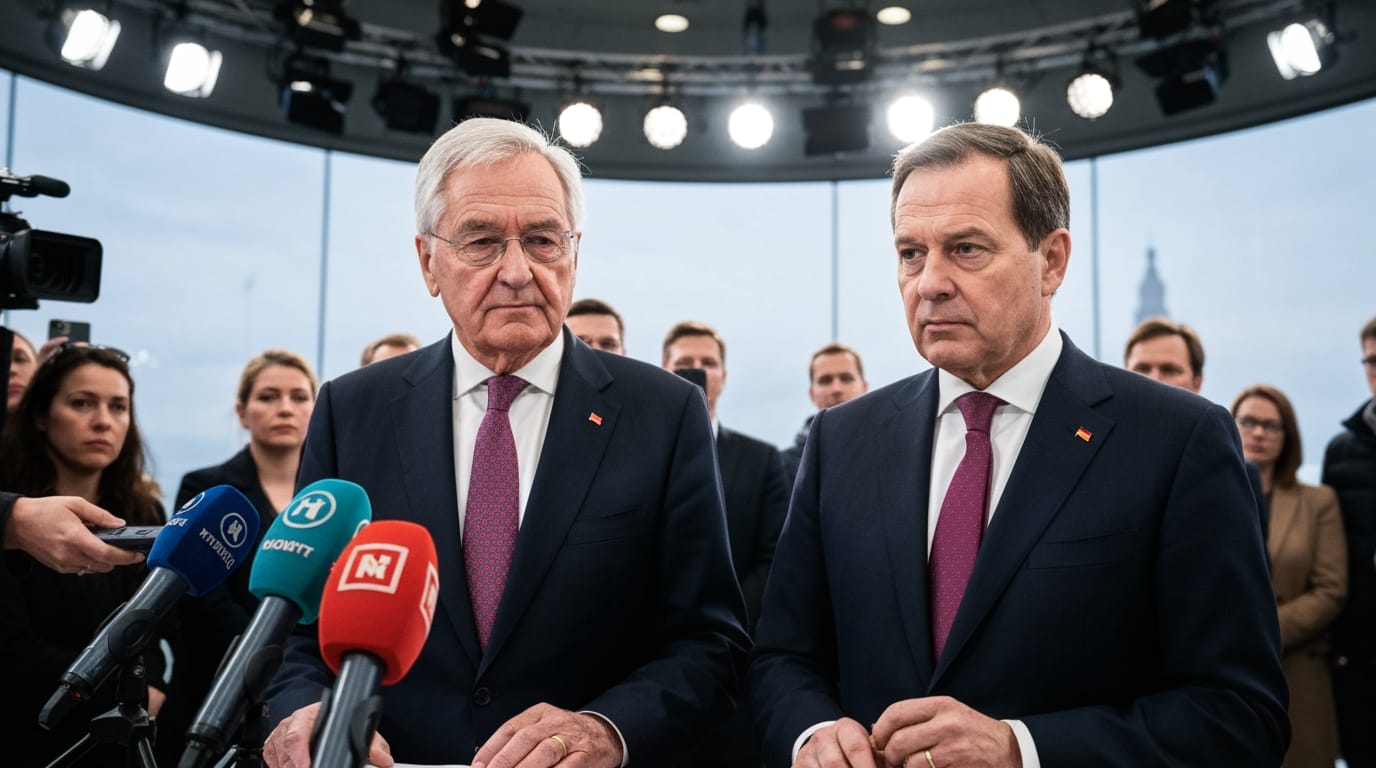
Berlin, Germany – A significant shake-up has hit the German political landscape with the resignation of Jens Spahn, a prominent figure and parliamentary leader of the Christian Democratic Union (CDU) and its Bavarian sister party, the Christian Social Union (CSU). The departure on July 18, 2026, followed intense scrutiny and widespread accusations of hypocrisy after Spahn and his husband announced they had become parents to a son, Georg, through a surrogate mother in the United States. Chancellor Friedrich Merz, leader of the CDU, swiftly moved to appoint Thorsten Frei, a close confidant and the current chief of Merz's chancellery, as Spahn's successor, emphasizing the paramount importance of political credibility.
The controversy has exposed deep fissures within the conservative alliance and ignited a broader debate across Germany concerning reproductive rights, family values, and the consistency of political leadership. Spahn's actions directly contradicted the CDU's long-standing and explicitly reaffirmed opposition to surrogacy, a practice that remains illegal under German law. His resignation marks a pivotal moment for Chancellor Merz as he navigates internal party dynamics and seeks to project a unified and principled image for the ruling conservatives.
The Storm of Hypocrisy: A Personal Decision Meets Party Doctrine
News of Jens Spahn and his husband, Daniel Funke, welcoming their son via a U.S. surrogate broke on July 15, 2026, immediately triggering a firestorm of criticism both within and outside the CDU/CSU. Spahn, 46, a former health minister and a leading voice on the CDU's right wing, had previously articulated strong reservations about surrogacy. In a 2015 article, he famously stated that "as a gay man and a Christian, I find it personally very hard to warm to the idea of a rented womb." Furthermore, during his tenure as health minister in 2020, his department actively resisted efforts to relax Germany's surrogacy ban.
The stark contrast between his private choice and his public and party-line stances led to swift and intense backlash. Critics within his own party, such as Marion Rosin of the Women's Union, argued that "politicians who set standards for others must be measured by them too," suggesting that a loss of credibility necessitated resignation. The CDU branch in Brilon, Chancellor Merz's hometown, publicly called for Spahn's removal, asserting that his decision sent a damaging signal about the party's integrity. Despite initially attempting to defend his decision, telling German newspaper Bild that he had "wrestled with myself for a long time" before proceeding, the pressure became untenable. In his resignation letter, Spahn acknowledged that the "balancing act between my private decision... and the understandable expectations placed on me as chairman of our parliamentary group has proven more difficult than I had anticipated."
Germany's Legal and Ethical Stance on Surrogacy
Surrogacy is explicitly prohibited in Germany under the 1990 Embryo Protection Act (EschG), a law that restricts reproductive technologies that could lead to surrogacy and makes it punishable with up to three years' imprisonment or a fine. This legislation broadly considers the woman who gives birth to be the legal mother, irrespective of genetic ties. Doctors are forbidden from performing procedures intended for surrogate pregnancies, and agencies are prohibited from arranging such agreements within the country.
The CDU has consistently championed this ban, viewing surrogacy as raising significant ethical concerns regarding the commercialization of pregnancy, the rights of the gestational mother, and the welfare and legal status of children born through such arrangements. As recently as February 2026, the CDU reaffirmed its opposition to legalizing surrogacy at a party conference. This party vote occurred when the surrogate mother carrying Spahn's child was reportedly already four months pregnant, further intensifying the perception of inconsistency.
While prohibited domestically, German law does not criminalize citizens who pursue surrogacy abroad and subsequently bring their children back to Germany. This legal nuance allows for the complex scenario that led to Spahn's predicament, highlighting a gap between national prohibitions and the realities of international reproductive practices.
Merz's Decisive Action and the Ascent of a Trusted Ally
Chancellor Friedrich Merz, while personally congratulating Spahn on becoming a parent, maintained a firm stance on the political implications of the matter. He described Spahn's resignation as "right and unavoidable," underscoring that "credibility is the most valuable asset in politics." Merz also publicly stated that he saw "no reason" to alter Germany's laws on surrogacy or the CDU's long-held opposition.
The swift appointment of Thorsten Frei, 51, as the new parliamentary group leader on July 22, 2026, signals Merz's intent to consolidate his leadership and restore stability. Frei is not only the head of Merz's chancellery but also holds the title of Minister for Special Tasks, making him a deeply trusted ally. His selection is seen as a move to reinforce Merz's authority within the party and to ensure that the parliamentary faction aligns closely with the chancellor's agenda. Merz credited Frei with playing "a decisive role" in the government's successes and ensuring "stability" within the coalition. The CDU/CSU parliamentary group is scheduled to formally elect Frei at a special meeting next week, a decision widely expected to pass without opposition given Merz's endorsement.
Broader Implications for the CDU and German Society
The surrogacy scandal and its aftermath come at a sensitive time for Germany's ruling conservatives. The incident occurs just weeks before challenging state elections in September in Saxony-Anhalt, Berlin, and Mecklenburg-Western Pomerania. The CDU is battling to maintain its electoral strength amidst the rising popularity of the right-wing Alternative for Germany (AfD), which hopes to secure its first state premiership. This episode risks distracting from core campaign messages and potentially alienating segments of the electorate who value political consistency and traditional family values.
Beyond the immediate political ramifications, Spahn's resignation has reignited the societal debate over surrogacy in Germany. Lawmakers and commentators are once again discussing the viability of the current ban, particularly in light of modern family structures and the increasing number of German couples seeking surrogacy abroad. The episode underscores the tension between established legal and ethical frameworks and evolving personal realities. While Merz has indicated no immediate plans to change the law, the high-profile nature of this case could intensify calls for a re-evaluation of Germany's approach to reproductive technologies and family formation in the 21st century.
Conclusion
Jens Spahn's resignation as CDU/CSU parliamentary leader marks a significant moment for German politics, driven by a deeply personal decision that clashed irreconcilably with his party's public stance and his past pronouncements. Chancellor Friedrich Merz's swift action in replacing Spahn with Thorsten Frei demonstrates a clear commitment to maintaining party discipline and emphasizing credibility as a cornerstone of his leadership.
The controversy serves as a poignant reminder of the intricate balance between private life and public office, particularly in matters touching upon deeply held ethical and moral convictions. While the immediate crisis for the CDU has been addressed through Spahn's departure and Frei's appointment, the broader societal debate on surrogacy in Germany is likely to continue, prompting ongoing discussions about law, ethics, and the evolving definition of family in modern society. The episode will undoubtedly test Merz's leadership and the CDU's ability to navigate complex social issues while maintaining its conservative identity in the run-up to crucial regional elections.


