High-Stakes Diplomacy: Israel and Lebanon Convene New US-Hosted Talks Amid Regional Tensions
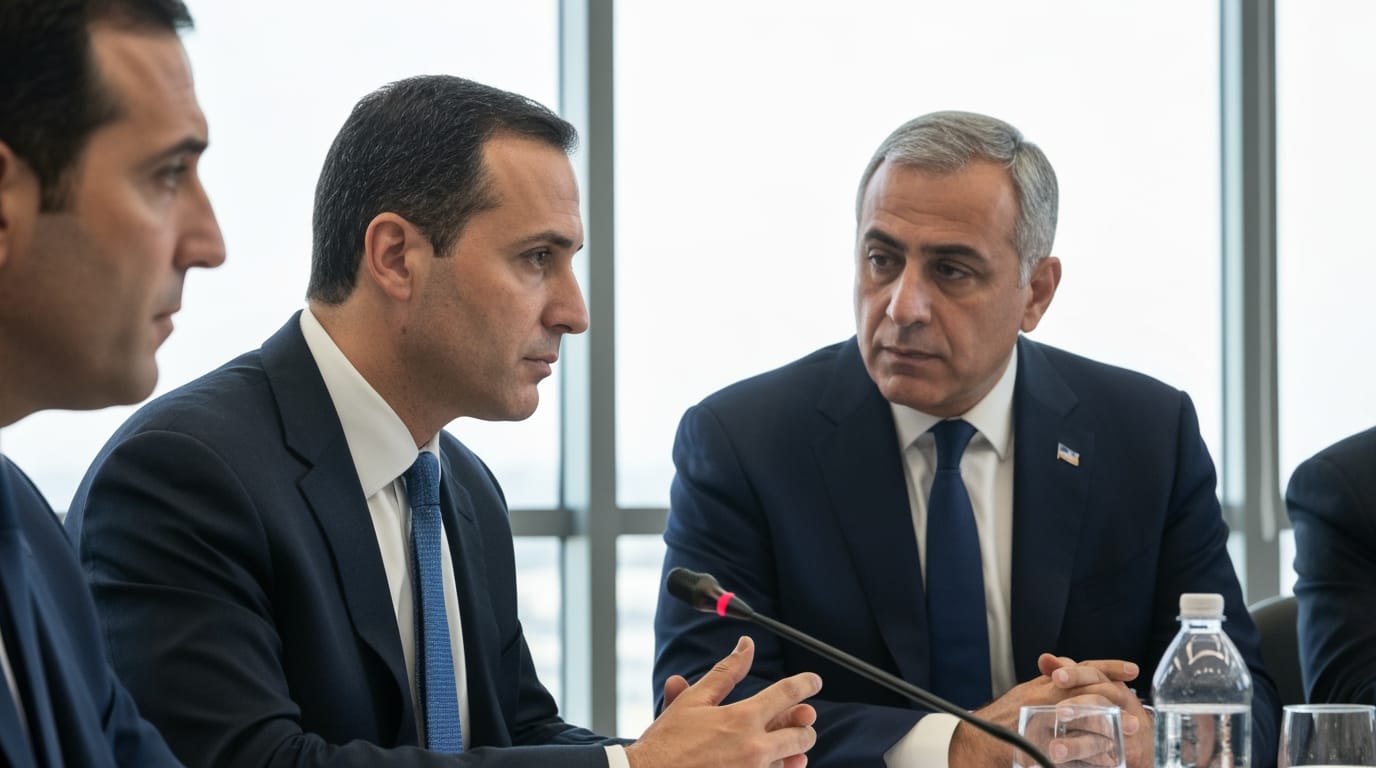
Washington D.C. - In a critical diplomatic endeavor, delegations from Israel and Lebanon are gathering in Washington D.C. this week for a new round of US-hosted talks, aimed at de-escalating simmering border tensions and advancing security arrangements along their shared frontier. The discussions, taking place from Tuesday to Thursday at the State Department and the Pentagon, represent a concerted effort by the United States to foster stability between the two historically adversarial nations, even as the region grapples with persistent conflict and intricate geopolitical dynamics.
The American-mediated talks follow a period of heightened hostilities in southern Lebanon and build upon previous engagements, including a recently agreed, albeit fragile, ceasefire. The delegations, led by their respective ambassadors to the United States, Ambassador Yechiel Leiter for Israel and Ambassador Nada Hamadeh for Lebanon, are expected to delve into complex issues ranging from the disputed land border to the disarmament of non-state actors in southern Lebanon. The overarching goal is to solidify a framework for lasting peace and mutual security, a formidable challenge given decades of animosity and distrust.
Diplomacy in the Shadow of Conflict
This week's meetings unfold against a backdrop of continued military activity and an urgent need for de-escalation. Despite a ceasefire agreement reached earlier in June, Israeli strikes targeting alleged Hezbollah sites in southern and eastern Lebanon have persisted, reportedly resulting in significant casualties and damage to civilian infrastructure. Concurrently, Hezbollah has continued its own targeting of Israeli troops and has expressed strong opposition to direct negotiations with Israel, viewing them as legitimizing what it considers ongoing aggression.
The United States, represented by State Department Counselor Dan Holler and Assistant Secretary of Defense for International Security Affairs Dan Zimmerman, seeks to maintain the integrity of this direct diplomatic channel. US officials recognize the delicate balance required, particularly as these talks intersect with broader US diplomatic efforts concerning Iran, a key backer of Hezbollah. The US Central Command has even established a "monitoring mechanism" for fighting in Lebanon to provide real-time information to policymakers, distinct from a de-confliction mechanism that involves Qatar and Iran, highlighting the complexity of managing multiple security tracks. These talks in Washington are structured to include both joint political and military sessions, followed by separate military and political discussions, indicating the multifaceted nature of the issues at hand.
Bridging the "Blue Line": Land Border Disputes and Security Imperatives
A primary focus of the current negotiations is the long-standing dispute over the land border, often referred to as the "Blue Line." This demarcation line, established by the United Nations in 2000 following Israel's withdrawal from southern Lebanon, was intended to verify the withdrawal but was never formally recognized as an international boundary by both parties. There are reportedly 13 to 14 disputed points along this line, including sensitive areas like the village of Ghajar, the Shebaa Farms, and the Kfarchouba hills. Lebanon continues to assert that Israel occupies Lebanese lands, contributing to ongoing friction.
A significant aspect of the discussions centers on proposed "pilot zones" where responsibility for security would be transferred from the Israeli military to the Lebanese Armed Forces (LAF). This initiative involves a potential partial withdrawal of Israeli troops from areas within the "Yellow Line," an imaginary line set by Tel Aviv inside Lebanese territory. While Israel is reportedly considering this in response to US demands for a gradual withdrawal, Prime Minister Benjamin Netanyahu has publicly maintained that Israeli forces will remain in southern Lebanon for as long as necessary to protect its northern communities. The successful implementation of such a plan hinges on the LAF's capacity to deploy effectively and dismantle Hezbollah's military infrastructure, a key demand from Israel and a condition often tied to international aid for Lebanon.
Beyond the Maritime Success: Economic Imperatives and Regional Stakes
The current diplomatic push draws a parallel to the successful US-mediated agreement in October 2022 that resolved the maritime border dispute between Israel and Lebanon. That landmark deal, which delineated the boundaries of offshore gas fields, was hailed as a significant step, especially for Lebanon, offering an "escape route" from its severe economic crisis by paving the way for gas exploration. Lebanon has been in the throes of an unprecedented financial collapse since late 2019, marked by hyperinflation, massive currency devaluation, and widespread poverty, with the government defaulting on its debt in March 2020. The prospect of unlocking valuable gas resources in the Mediterranean remains a powerful incentive for Beirut to pursue stability.
For the United States, brokering these talks is part of a broader strategy to foster regional stability and economic development in the Eastern Mediterranean. The US has consistently supported the Lebanese army and views progress in these negotiations as crucial for strengthening Lebanon's sovereignty and preventing the resurgence of armed non-state groups. The diplomatic efforts also reflect a desire to address the humanitarian consequences of the conflict, which has displaced a significant portion of Lebanon's population, particularly from its southern Shiite areas.
Internal Divisions and External Pressures
The path to a comprehensive agreement is complicated by profound internal divisions within both Israel and Lebanon, as well as by the enduring influence of external actors. In Lebanon, the powerful role of Hezbollah presents a significant hurdle. While the Lebanese government seeks to assert its authority and end the conflict, Hezbollah has publicly rejected direct negotiations with Israel and opposes any security zone arrangements. The group's decision to engage in renewed hostilities in support of Iran has also reportedly fueled dissent within its own Shiite support base, which is increasingly burdened by the economic toll of the conflict.
On the Israeli side, political considerations and security concerns heavily shape the negotiation stance. The Israeli government's demand for the disarmament of Hezbollah and its insistence on maintaining a robust security presence in southern Lebanon are non-negotiable points for many. Furthermore, there are reports of growing differences between the United States and Israel regarding the Lebanese file, with Washington viewing it within a broader regional context linked to issues like the Iranian nuclear program and energy prices, while Israel primarily focuses on its immediate security concerns. This divergence can add another layer of complexity to the mediation efforts.
A Path Fraught with Peril, Yet Essential
The new round of US-hosted talks between Israel and Lebanon represents a vital, albeit challenging, diplomatic undertaking. The successful resolution of the maritime border dispute in 2022 provides a glimmer of hope, demonstrating that even between nations without formal diplomatic ties, pragmatic agreements are possible. However, the land border dispute carries deeper historical and security implications, directly impinging on sovereignty and the presence of armed groups.
The negotiations in Washington D.C. are a testament to the persistent need for dialogue in a region perpetually on edge. While significant obstacles remain, including Hezbollah's influence, Lebanon's dire economic situation, and Israel's security imperatives, the potential for reduced tensions, enhanced stability, and eventual progress towards a more peaceful coexistence underscores the critical importance of these ongoing diplomatic efforts. The world watches to see if this fresh round of talks can lay further groundwork for an enduring peace in a land long scarred by conflict.


