High-Stakes Diplomacy: Trump Launches Gaza 'Board of Peace' with Blair, Rubio at Helm
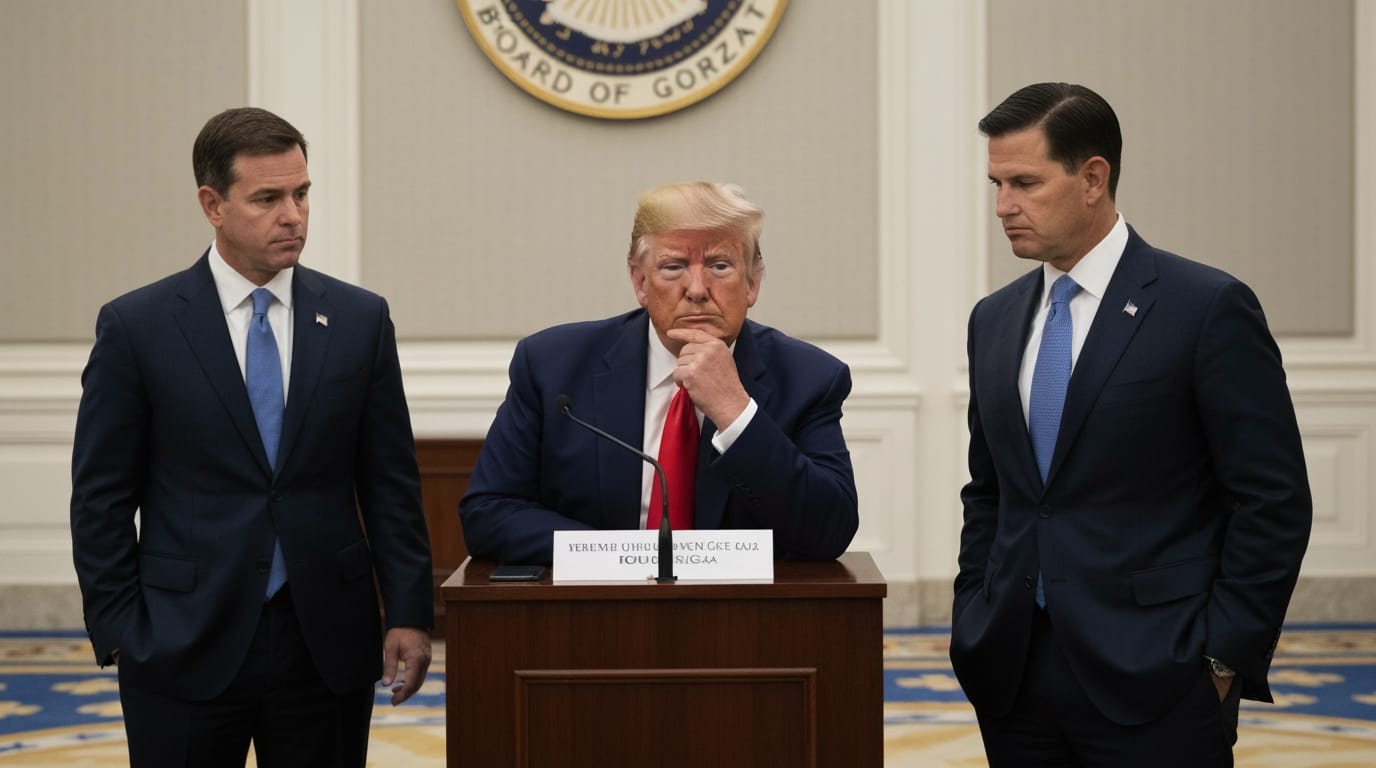
WASHINGTON D.C. – In a significant move aimed at shaping the post-conflict landscape of the Gaza Strip, former President Donald Trump has announced the formation of a high-profile "Board of Peace," naming former British Prime Minister Tony Blair and current U.S. Secretary of State Marco Rubio as founding members. The establishment of this seven-member executive board, chaired by Trump himself, marks a pivotal step in Phase Two of his administration's 20-Point Comprehensive Plan to End the Gaza Conflict, a roadmap designed to bring lasting stability and reconstruction to the war-torn region. The board is tasked with overseeing critical aspects of Gaza's transition, from governance and reconstruction to economic revitalization, amid ongoing complexities in the Israeli-Palestinian conflict.
A New Diplomatic Architecture for Gaza's Future
The announcement of the Gaza "Board of Peace" by President Trump on Friday, January 16, 2026, signals an ambitious diplomatic initiative to manage the intricate challenges of post-war Gaza. This board is designed to be the central governing body for Phase Two of the broader peace plan, which initially came into effect on October 10, 2025, following its signing on October 9 and UN Security Council endorsement on November 17 of the previous year. The plan, unveiled by Trump on September 29, 2025, alongside Israeli Prime Minister Benjamin Netanyahu, outlines a 20-point strategy for peace, stability, reconstruction, and prosperity.
The executive board, presided over by President Trump, includes a diverse array of influential figures. Alongside Secretary of State Marco Rubio and Tony Blair, other founding members comprise Special Envoy Steve Witkoff, Trump's son-in-law Jared Kushner, World Bank President Ajay Banga, CEO of Apollo Global Management Marc Rowan, and U.S. Deputy National Security Adviser Robert Gabriel. Aryeh Lightstone and Josh Gruenbaum have been appointed as senior advisors, charged with guiding the board's day-to-day strategy and operations. To ensure a direct link to the region, Nickolay Mladenov will serve as the High Representative for Gaza, functioning as the on-the-ground liaison between the Board of Peace and the newly established National Committee for the Administration of Gaza (NCAG). Additionally, Major General Jasper Jeffers has been named Commander of the International Stabilisation Force (ISF), responsible for security operations, comprehensive demilitarization, and facilitating humanitarian aid delivery and reconstruction efforts.
The Mandate and Mechanism of Peace
The core function of the Board of Peace is to provide strategic oversight, mobilize international resources, and ensure accountability as Gaza transitions from conflict to peace and development. Each executive board member will oversee a specific portfolio deemed critical to Gaza's stabilization and long-term success. These portfolios encompass crucial areas such as governance capacity-building, regional relations, reconstruction, investment attraction, large-scale funding, and capital mobilization.
Phase Two of the peace plan specifically emphasizes demilitarization and technocratic governance. A key element is the establishment of the National Committee for the Administration of Gaza (NCAG), a Palestinian technocratic government led by Ali Sha'ath, a respected leader tasked with restoring public services, rebuilding civil institutions, and stabilizing daily life in Gaza. The NCAG is envisioned as laying the groundwork for long-term, self-sustaining governance. The broader peace plan's objectives include an immediate ceasefire, the return of all hostages, prisoner exchanges, the demilitarization of the Gaza Strip, and a conditional pathway towards Palestinian self-determination and statehood. A comprehensive demilitarization agreement with Hamas is sought, requiring the surrender of weapons and dismantling of tunnel networks, with support from Egypt, Turkey, and Qatar.
Veteran Statesman and Shifting Diplomat: Profiles of Blair and Rubio
The appointment of Tony Blair and Marco Rubio to such a pivotal board brings with it a blend of extensive experience and inherent complexities. Tony Blair, the former British Prime Minister, is a figure with a long but controversial history in the Middle East. His involvement in the 2003 invasion of Iraq makes him a divisive choice in the region. Following his premiership, Blair served as the Middle East envoy for the Quartet—comprising the United Nations, the United States, the European Union, and Russia—from 2007 to 2015. His mandate during this period was to support the Palestinian people in building the institutions and economy of a viable, peaceful state. Critics, however, contend that despite his efforts in Palestinian economic development, he failed to prevent Israeli settler violence and illegal settlements and did not significantly advance Palestinian statehood. He was also perceived by some as being too aligned with Israeli interests during his tenure as envoy. Despite this, Blair has remained engaged in Middle Eastern affairs through his non-profit, the Tony Blair Institute for Global Change, and has previously voiced that President Trump's peace plan offers the "best chance" for resolving the Gaza conflict.
Marco Rubio, currently serving as the U.S. Secretary of State, brings a distinctly hawkish foreign policy perspective, particularly concerning the Middle East. His political career has been characterized by staunch support for Israel, which he views as fundamental to addressing regional issues. Rubio has consistently advocated for military and economic aid to Israel and endorsed policies that prioritize its security concerns, including supporting the decision to move the U.S. embassy to Jerusalem in 2018 during President Trump's first term. He is a vocal critic of the 2015 Iran nuclear deal and supports a policy of maximum economic pressure against Tehran, viewing strong ties with Gulf nations as essential to countering Iranian influence. Rubio's foreign policy stance has increasingly aligned with President Trump's approach in recent years. He has expressed a firm position on the Israel-Gaza conflict, opposing ceasefires and attributing blame for Palestinian casualties solely to Hamas, even defending Israel's right to operate in Rafah. His recent travel to Israel, Saudi Arabia, and the United Arab Emirates underscored his focus on advancing Phase Two of the Gaza ceasefire agreement and countering the Iranian regime. He has also stressed support for Israel's security and the disarmament of Hezbollah.
Navigating Complexities: Challenges and Prospects
The ambitious "Board of Peace" initiative faces numerous challenges inherent in the deeply entrenched Israeli-Palestinian conflict. The controversial nature of Tony Blair's past involvement in the Middle East, particularly his role in the Iraq War, could stir regional skepticism and opposition. Furthermore, the success of the peace plan hinges significantly on the demilitarization of the Gaza Strip, a demand that Hamas has yet to fully commit to publicly, having only agreed to release hostages and transfer administrative control to a technocratic body, not to disarm.
Despite the launch of Phase Two and the establishment of the Board, violence continues to plague the region. Reports indicate ongoing Israeli strikes resulting in casualties, highlighting the stark contrast between diplomatic efforts and persistent on-the-ground realities. Allegations of aid shortages and continued violence further complicate the humanitarian situation and the prospects for stabilization. The Board's ability to overcome these deeply rooted obstacles will depend on its capacity to garner broad regional and international buy-in, manage conflicting interests, and demonstrate tangible progress in improving the lives of Gazans. The support from key regional players like Egypt, Turkey, and Qatar for the demilitarization aspect of the plan offers a potential avenue for collaboration, yet the path forward remains fraught with significant political and logistical hurdles.
The formation of President Trump's Gaza "Board of Peace," with its high-profile appointments and comprehensive mandate, represents a determined effort to navigate the complex aftermath of the Gaza conflict. While the involvement of figures like Tony Blair and Marco Rubio brings both seasoned diplomatic experience and potential controversy, the board's stated aim is to meticulously steer Gaza through reconstruction, governance, and economic recovery. The success of this ambitious initiative will ultimately be measured by its ability to translate its strategic vision into tangible peace and lasting stability for a region long yearning for both.


