High Stakes in Brussels: Zelenskyy Joins EU Summit Amid Crucial Decisions on Ukraine's Future
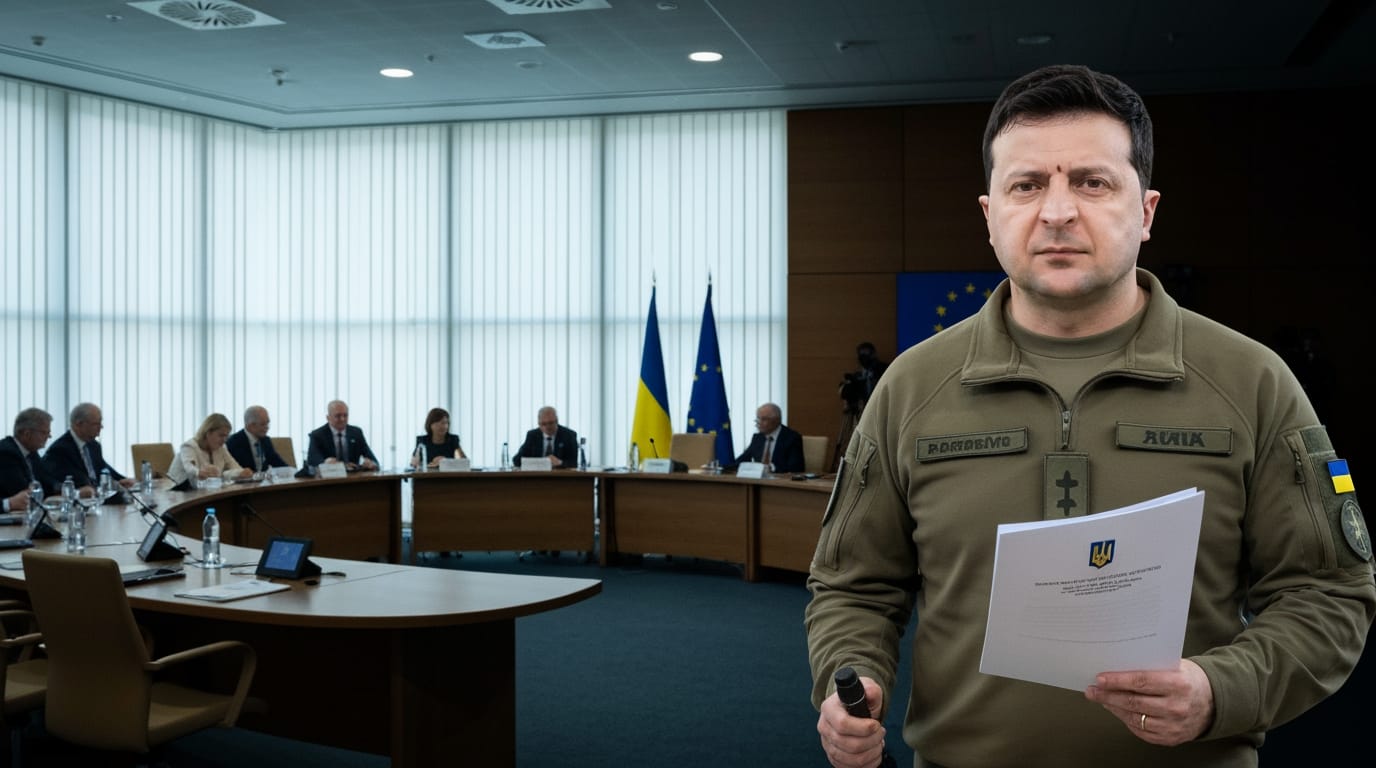
BRUSSELS – Ukrainian President Volodymyr Zelenskyy is set to participate in a pivotal European Union summit in Brussels this week, with the future of critical financial and military aid, as well as the intricate path toward EU membership, hanging in the balance. The two-day gathering, scheduled for December 18-19, 2025, is poised to address unprecedented measures aimed at bolstering Ukraine’s resilience against ongoing aggression, most notably a contentious proposal to utilize frozen Russian assets for Ukraine's reconstruction. Zelenskyy's presence, whether in person or via video link, underscores the profound importance of these discussions for Kyiv and the broader geopolitical landscape.
The summit unfolds against a backdrop of urgent Ukrainian needs and complex internal EU negotiations. Leaders from the 27 member states are grappling with how to sustain long-term support for Ukraine, as the conflict with Russia continues to demand substantial resources. Central to the agenda is the allocation of a "reparations loan" derived from immobilized Russian sovereign assets, a move that, if approved, would signify a groundbreaking step in international law and financial support for a nation at war.
Leveraging Frozen Assets: A Groundbreaking Proposal
At the forefront of the Brussels summit's agenda is the ambitious and legally intricate proposal to leverage billions in frozen Russian assets, primarily those belonging to the Russian Central Bank held within European financial institutions like Euroclear, headquartered in Belgium. This initiative aims to generate a substantial "reparations loan" for Ukraine, providing a crucial funding stream for its economic recovery and ongoing wartime expenses. While estimates suggest the EU and G7 partners collectively agreed in October 2024 to provide loans of $50 billion, with the EU contributing up to $20 billion, the first $10 billion of which was disbursed in 2025, the direct use of frozen assets as collateral presents novel legal and financial challenges.
The concept, though widely supported as a means to make Moscow contribute to the damage it has inflicted, faces significant hurdles. Belgium, as the primary custodian of these assets through Euroclear, has voiced reservations, seeking robust guarantees from other EU member states to mitigate potential legal repercussions or retaliatory actions from Russia. Euroclear itself harbors concerns about its reputation and the potential for international investors to seek alternative clearing houses if the legal framework for asset seizure is perceived as unstable. Russia has already initiated legal proceedings against Euroclear in a Moscow court, highlighting the complex legal battle ahead. Despite these complexities, EU leaders are prepared to take "unprecedented steps" to help Ukraine, acknowledging the critical need for sustained funding as Ukraine is projected to deplete current European financial resources in the first quarter of 2026.
Sustaining Vital Support: Financial and Military Commitments
Beyond the innovative financing mechanism of frozen assets, the summit will reinforce the European Union's steadfast commitment to providing comprehensive financial and military assistance to Ukraine. Since the onset of Russia's full-scale invasion, the EU and its member states have collectively mobilized over €216 billion in overall support, encompassing substantial financial aid and military provisions.
The "Ukraine Facility," a dedicated EU instrument established for the period 2024-2027, earmarks up to €50 billion in stable and predictable financial support to underpin Ukraine's recovery, reconstruction, and modernization efforts. In 2025 alone, the EU is set to provide Ukraine with €30.6 billion in financial aid, with €3.5 billion already disbursed under the Ukraine Facility and €7 billion under the G7 ERA initiative, backed by profits from immobilized Russian assets. This financial lifeline is crucial for Ukraine to maintain essential public services, pay wages and pensions, and ensure macroeconomic stability.
On the military front, the EU's commitment remains robust, with over $70 billion in military assistance provided, ranging from ammunition and air-defense systems to tanks and fighter jets. This includes significant contributions from the "European Peace Facility" and bilateral support from member states. An additional $5.4 billion was allocated in March 2024 for a dedicated Ukraine Assistance Fund. These multifaceted aid packages underscore the EU's determination to support Ukraine "for as long as it takes."
The European Path: Accession Talks and Obstacles
Another critical dimension of the summit discussions revolves around Ukraine's long-term aspiration for European Union membership. Ukraine was granted official EU candidate status in June 2022, and accession negotiations formally commenced in June 2024. In September 2025, Ukraine successfully completed its screening process, a thorough examination of its compliance with EU legislation and a key step towards integration.
Despite this progress, the path to full membership remains fraught with challenges. Just days before the summit, Hungary vetoed the EU's annual joint statement on enlargement, effectively stalling the formal start of accession talks. This decision by Budapest has raised concerns about the unanimity required for such critical steps and highlights the potential for internal disagreements to impede Ukraine's European trajectory. Ukrainian officials, however, remain committed, with Deputy Prime Minister Olha Stefanishyna announcing a roadmap for accession in 2025 and expressing hopes to provisionally conclude negotiations by the end of 2028. While the EU Commission acknowledges this ambition, it emphasizes the need for an accelerated pace of reforms, particularly in the rule of law.
A United Front Amidst Complexities
The EU summit represents a critical juncture for Ukraine and the European Union. While the exact format of President Zelenskyy's participation—whether in-person or via video conference—has seen conflicting reports due to logistical considerations and varying expectations for the summit's immediate outcomes, his involvement is undisputed.
The decisions made in Brussels will not only shape Ukraine's immediate future but also define the EU's role as a geopolitical actor and its capacity for collective action in times of crisis. The unity and resolve demonstrated by the EU and its member states have been central to supporting Ukraine's defense and its aspirations for a European future. However, the complexities surrounding the use of frozen Russian assets, the sheer scale of financial and military aid required, and internal political hurdles regarding accession underscore the delicate balance leaders must strike to navigate these high-stakes discussions successfully. The outcome of this summit will send a powerful signal about Europe's enduring commitment to Ukraine and its vision for a secure and integrated continent.


