Historic Coalition Forged in Baden-Württemberg: Greens and CDU Chart New Course
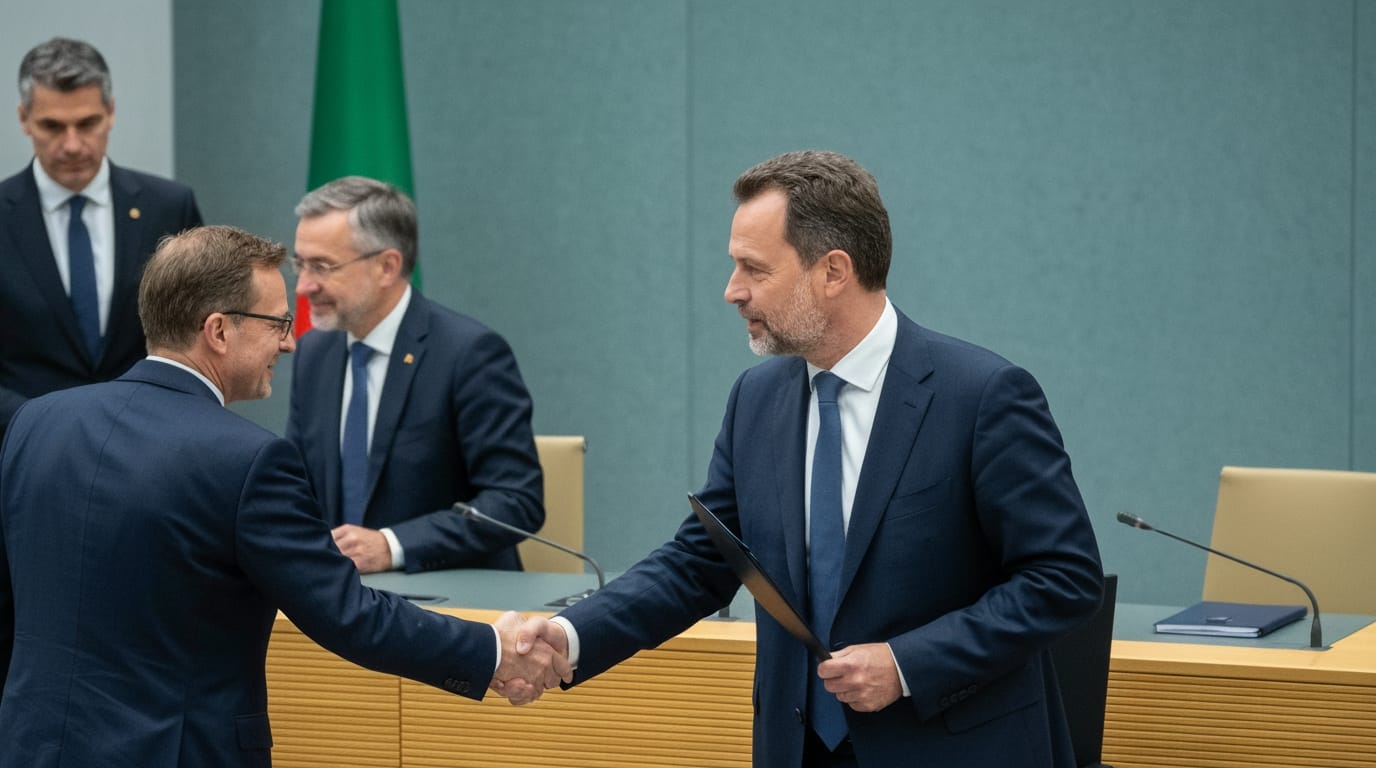
Stuttgart, Germany – After weeks of intensive negotiations, the Green Party and the Christian Democratic Union (CDU) have successfully finalized a coalition agreement in Baden-Württemberg, signaling a significant development in German state politics. This landmark accord paves the way for a continued partnership in the southwestern German state, with the Greens emerging from recent state elections as the stronger party. The agreement, still awaiting formal ratification by both parties, outlines a shared vision focused on balancing environmental protection with economic prosperity.
A Pivotal Electoral Outcome Shapes New Alliances
The path to this coalition began with a closely watched state election approximately eight weeks ago, where the Green Party, under the leadership of Cem Özdemir, secured a narrow victory with 30.2 percent of the vote. The CDU, led by Manuel Hagel, followed closely with 29.7 percent. The results created a unique scenario, with both parties achieving an equal number of 56 seats in the Stuttgart state parliament. This near dead heat underscored the necessity for cooperation to form a stable governing majority. With the Alternative for Germany (AfD) ruled out as a potential partner by both the Greens and the CDU, and the Social Democratic Party (SPD) experiencing its worst state election performance ever at 5.5 percent, the Green-CDU alliance emerged as the only viable option. The previous coalition, also a Green-CDU partnership, had governed Baden-Württemberg since 2016, but the latest electoral outcome shifted the power dynamic, placing the Greens in the lead.
Policy Priorities: Bridging Green Ambitions with Economic Realities
Details of the finalized agreement, while largely undisclosed at the time of announcement, are expected to reflect a commitment to integrated policy approaches. Both parties indicated an intention to move beyond mere compromise, aiming for a framework where climate protection and economic competitiveness are mutually reinforcing objectives rather than conflicting priorities.
Among the specific policy measures highlighted in an earlier, unusually detailed exploratory framework were the introduction of a compulsory and tuition-free final year of kindergarten, a continuation of existing climate targets, and targeted tax relief for families concerning property transfers. Additionally, the new administration plans to simplify procedures for business formation, signaling a commitment to fostering a dynamic economic environment within the state. This blend of ecological responsibility and economic pragmatism is anticipated to be a cornerstone of the new government's agenda.
Leadership and Political Landscape
The negotiation process saw key figures from both parties playing pivotal roles. Cem Özdemir, the Greens' lead candidate, is poised to become a significant figure in the new government. During the discussions, Özdemir notably rejected a proposal from CDU politicians for a dual leadership structure for the Minister-President position, asserting the importance of clear governance. His potential ascendance to the state's highest office would mark a historic moment, as he could become the first state minister-president in Germany with a migration background.
The formation of this coalition in Baden-Württemberg carries broader implications for the national political landscape. The state election results, particularly the weaker-than-expected showing for the CDU and the poor performance of the SPD, are likely to intensify internal tensions within the federal government's ruling coalition in Berlin. Christian Democrats may feel emboldened to push for significant economic reforms, potentially against the wishes of their federal SPD partners.
Navigating Challenges and Embracing Opportunities
The renewed Green-CDU alliance in Baden-Württemberg faces both inherent challenges and significant opportunities. The historical differences in core ideologies between a traditionally conservative party and an environmentally focused one will require ongoing cooperation and a pragmatic approach to governance. However, the experience of their previous coalition provides a foundation for navigating these divergences.
This partnership presents an opportunity to demonstrate how environmental and economic goals can be pursued in tandem, potentially serving as a model for other states and even national policy discussions. The focus on economic competitiveness alongside climate protection aligns with the state's industrial character, particularly its strong automotive and mechanical engineering sectors. As the agreement heads for ratification by party bodies, all eyes will be on Baden-Württemberg to observe how this "green-black" alliance addresses the complex demands of modern governance.
Conclusion
The coalition agreement between the Greens and the CDU in Baden-Württemberg marks a pivotal moment in German state politics, reflecting both a shift in electoral power and a renewed commitment to pragmatic governance. The unique electoral outcome necessitated this alliance, which promises a focus on integrating climate protection with economic development, alongside social policies. As the parties move towards ratification, this partnership holds the potential to influence political discourse beyond the state's borders, demonstrating a model of cooperation in an increasingly complex political environment.


