Historic Warship from Nelson Era Discovered in Copenhagen Harbor, Race Against Time Begins
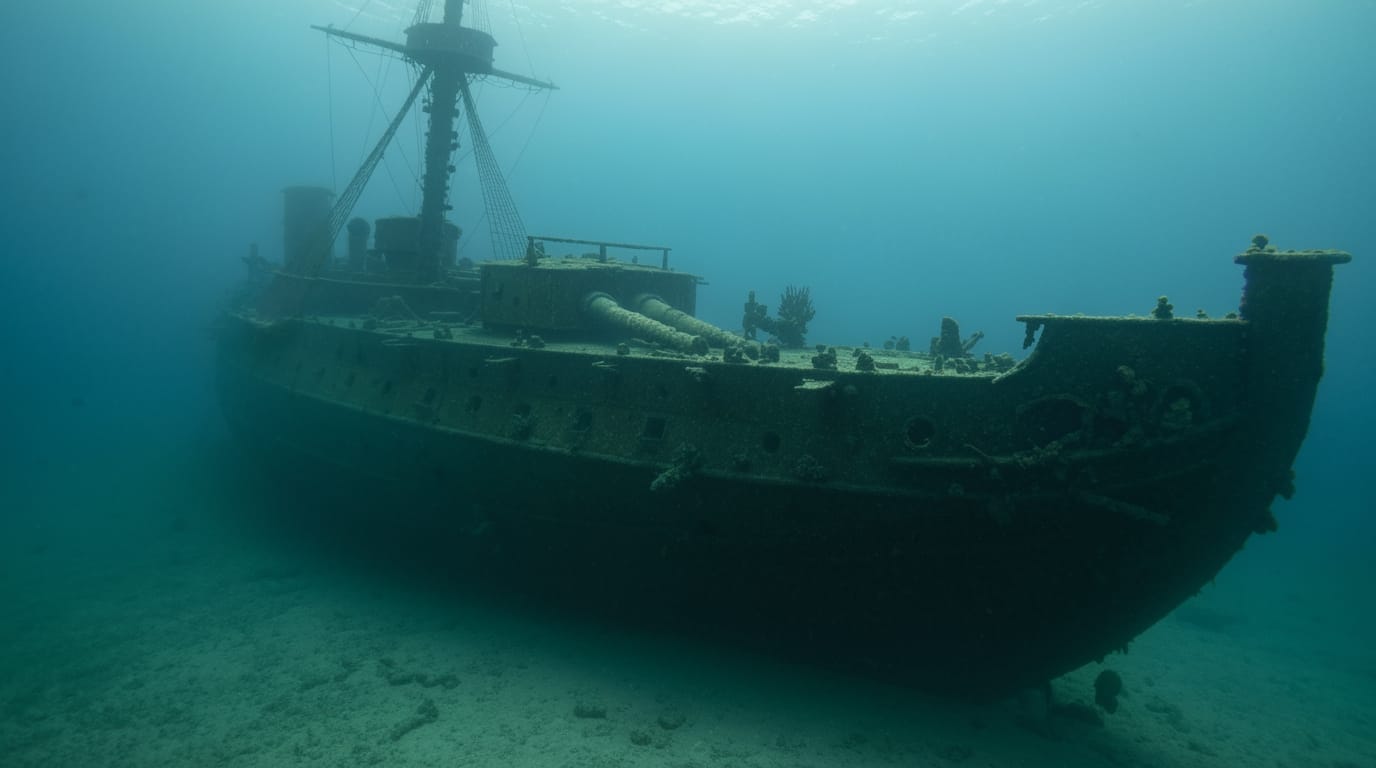
Copenhagen, Denmark – Marine archaeologists have announced the extraordinary discovery of the Dannebroge, the flagship of the Danish fleet famously sunk by Admiral Horatio Nelson's British forces during the Battle of Copenhagen in 1801. The announcement, made on Thursday, April 2, 2026, coincides precisely with the 225th anniversary of the pivotal naval engagement. Located 15 meters (49 feet) beneath the surface of Copenhagen Harbor, the wreck presents a unique window into a transformative period of maritime history, though its preservation is now a race against an impending urban development project.
A Glimpse into the Depths: The Discovery
The discovery of the Dannebroge was spearheaded by Denmark's Viking Ship Museum, which has been leading months-long underwater excavations in the harbor. Divers operate in challenging conditions, battling thick sediment and near-zero visibility to explore the remains of the 19th-century warship. Initial findings have been remarkable, including two cannons, fragments of uniforms, insignia, shoes, bottles, and even part of a sailor's lower jawbone. This human remains discovery is particularly poignant, potentially belonging to one of the 19 unaccounted-for crew members who perished when the ship exploded. Dendrochronological dating, which analyzes tree rings, has helped confirm the age of the wooden parts found, linking them to the ship's construction year. The ongoing excavation is critical, as the site is slated for development as part of the Lynetteholm megaproject, a new housing district planned for Copenhagen Harbor. Morten Johansen, head of maritime archaeology at the Viking Ship Museum, emphasized the wreck's importance, stating, "It's a big part of the Danish national feeling."
The Battle of Copenhagen: A Defining Moment
The Battle of Copenhagen, fought on April 2, 1801, stands as one of Admiral Horatio Nelson's "great battles" and a significant event in the Napoleonic Wars. The confrontation arose from British fears that the powerful Danish fleet would align with France, compounded by a breakdown in diplomatic relations. Britain, under the command of Admiral Sir Hyde Parker and his more aggressive second-in-command, Vice-Admiral Horatio Nelson, sought to dismantle the League of Armed Neutrality. This alliance, formed by Russia, Prussia, Sweden, and Denmark, aimed to protect neutral shipping rights but was perceived by Britain as a threat to its vital maritime trade routes, especially for timber and naval supplies from the Baltic.
On that fateful day, the British fleet advanced into Copenhagen Harbor, navigating treacherous shallow waters where the Danes had removed navigational markers as a defensive measure. Nelson's division, comprising shallower-draft ships, engaged the Danish-Norwegian fleet, which was anchored in a defensive line of warships and formidable land batteries. The battle was fierce and prolonged, marked by heavy casualties on both sides. It was during this intense engagement that Nelson famously disregarded a signal from his superior, Admiral Parker, to withdraw. Reportedly placing his telescope to his blind eye, Nelson claimed he could not see the signal, a moment that has since become legendary and is believed to have inspired the idiom "to turn a blind eye."
The Fate of the Dannebroge
At the heart of the Danish defense was the Dannebroge, a 48-meter (157-foot) warship commanded by Commodore Olfert Fischer. The Dannebroge became a primary target for Nelson's fleet. Cannon fire relentlessly tore through its upper deck, and incendiary shells ignited a devastating fire onboard. The ship was "shot to pieces by English warships." Accounts from the time describe the horror of being on such a vessel, where wooden splinters caused widespread injuries among the crew, akin to "grenade debris," according to modern archaeological insights. The stricken Dannebroge slowly drifted northward before a catastrophic explosion ripped through it. Historical records indicate the blast created a "deafening roar" that resonated across Copenhagen. The ferocity of the battle ultimately forced Denmark to negotiate a truce, leading to an armistice that ensured Danish neutrality for the remainder of the Napoleonic Wars.
Archaeological Insights and Future Prospects
The newly discovered wreck of the Dannebroge offers unparalleled opportunities for historical and archaeological research. While historical accounts and paintings have long depicted the Battle of Copenhagen, the physical remains of the flagship can provide tangible evidence of naval warfare tactics, ship construction, and the daily realities of life at sea in the early 19th century. Morten Johansen noted that while much has been written about the battle by "very enthusiastic spectators," the wreck can reveal "how it was to be onboard a ship being shot to pieces by English warships."
The recovered artifacts, such as cannons, uniforms, and personal items, offer direct connections to the individuals who served on the Dannebroge. These items can shed light on the equipment and conditions endured by Danish sailors. The presence of cannonballs at the dig site, a hazard for divers in the murky waters, also speaks to the intensity of the engagement. The limited time for excavation due to the Lynetteholm construction project means archaeologists are working against the clock to recover as much as possible before the site is permanently altered. This urgent effort underscores the delicate balance between urban development and the preservation of submerged cultural heritage.
A Legacy Resurfaces
The rediscovery of the Dannebroge powerfully connects modern Denmark to a crucial moment in its national narrative. The Battle of Copenhagen, deeply embedded in the country's history and depicted in countless books and artworks, now has a tangible link to its past. The wreck serves as a silent memorial to the thousands who fought and died in the brutal clash and to the resilience of the Danish people. As archaeologists continue their urgent work, the Dannebroge promises to yield new insights into a battle that shaped the geopolitical landscape of Europe and cemented Admiral Nelson's legendary status, offering a unique perspective on the human cost and strategic implications of a bygone era. The legacy of the Dannebroge, once lost to the depths, now resurfaces to tell its story.


