Historic Washington Accords Seek to End Decades of Conflict Between DR Congo and Rwanda Amidst Lingering Skepticism
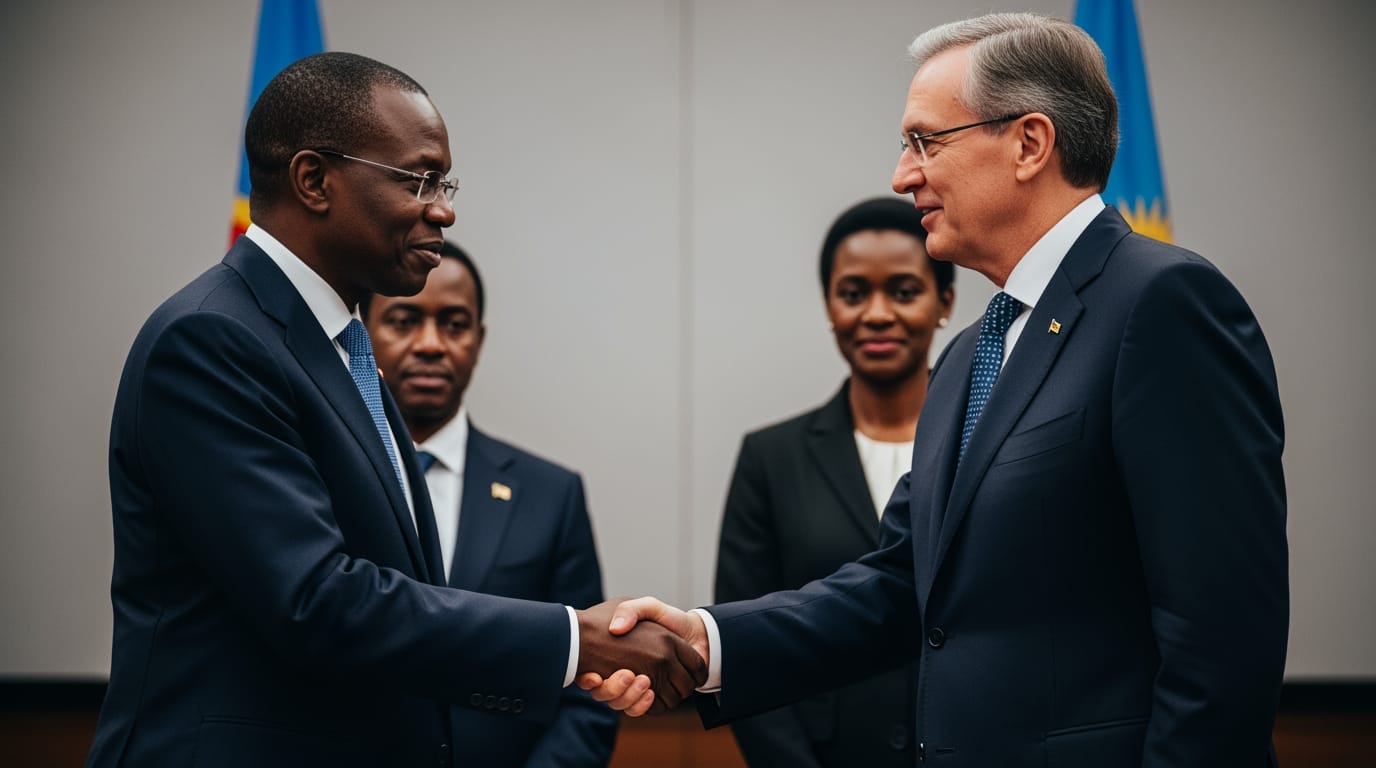
WASHINGTON D.C. – In a landmark diplomatic effort, the Democratic Republic of Congo (DRC) and Rwanda formally signed a U.S.-brokered peace agreement, dubbed the "Washington Accords," on December 4, 2025, aiming to quell a three-decade-long conflict that has destabilized Central Africa and claimed millions of lives. The ceremony, hosted by U.S. President Donald Trump, brought together DRC President Félix Tshisekedi and Rwandan President Paul Kagame, marking a pivotal moment in regional relations, even as reports of ongoing hostilities cast a shadow over the high-profile declaration.
The agreement, building on a preliminary deal signed by foreign ministers in June, seeks to foster peace, respect territorial integrity, and establish a framework for economic cooperation, particularly around the DRC's vast critical mineral resources. While praised by international observers as a crucial step, the accord faces significant challenges, notably the absence of the influential M23 rebel group from the primary negotiations and a history of failed peace initiatives in the region.
A New Chapter Forged in Washington
The signing of the Washington Accords at the newly christened Donald J. Trump Institute of Peace in Washington D.C. represented the culmination of months of intensive diplomatic efforts mediated by the United States and supported by Qatar. President Trump lauded the agreement as a "glorious triumph," emphasizing the U.S. commitment to ending a conflict responsible for immense human suffering. U.S. Secretary of State Marco Rubio and other senior officials played key roles in facilitating the negotiations that led to both the preliminary June agreement and the comprehensive December accords.
The conflict, primarily concentrated in the eastern DRC, has pitted the Congolese army and various armed groups against one another, with Rwanda frequently accused of supporting the M23 rebels. Decades of violence have led to widespread displacement and a humanitarian crisis, making the pursuit of a lasting peace paramount for regional stability. African leaders, including the presidents of Kenya, Angola, and Burundi, and the African Union Chairperson, welcomed the agreement, expressing hope for an end to the protracted instability.
The Core of the Accords: Peace and Prosperity
At its heart, the Washington Accords stipulate a commitment from both the DRC and Rwanda to cease all hostilities, fully respect each other's territorial integrity, and end support for non-state armed groups. Specifically, the deal calls for the withdrawal of Rwandan troops from eastern DRC and mandates the Congolese government to halt its backing of the Democratic Forces for the Liberation of Rwanda (FDLR) militia, a group Rwanda views as a security threat. Provisions also address the disarmament and potential reintegration of other non-state armed groups, as well as facilitating the safe return of refugees and humanitarian access.
A significant component of the agreement is the Regional Economic Integration Framework, initially agreed upon in November 2025. This framework seeks to leverage the DRC's vast reserves of critical minerals—including cobalt, coltan, lithium, and gold—for shared economic prosperity and regional integration. The U.S. has made clear its interest in facilitating American investment in these mineral supply chains, with President Trump stating that the deal would allow U.S. firms to access these resources and that "everybody's going to make a lot of money." Concurrently, bilateral agreements were signed, including a Strategic Partnership Agreement between the U.S. and DRC and a U.S.-Rwanda Framework for Shared Economic Prosperity.
Persistent Challenges and Skepticism on the Ground
Despite the fanfare surrounding the signing, significant hurdles remain. A key point of contention is the status of the M23 rebel group, which was not a direct party to the Washington Accords. While separate negotiations between the DRC government and M23 have been ongoing in Doha, Qatar, progress has been slow, and the group has historically asserted its independence from any deal Rwanda might make.
Adding to the skepticism, reports of renewed fighting and M23 advances in eastern DRC emerged even as the diplomatic ceremony unfolded in Washington. Analysts and some Congolese citizens have voiced concerns that the agreement's focus on economic interests, particularly U.S. access to minerals, might overshadow the complex security dynamics on the ground. There have also been acknowledged delays in implementing aspects of the earlier June peace deal and the subsequent economic framework, raising questions about the enforceability of the new accords. Both President Kagame and President Tshisekedi acknowledged the difficult road ahead, with Kagame noting that "there will be ups and downs" and Tshisekedi describing it as "a demanding path."
A Fraught Path to Lasting Peace
The Washington Accords represent a high-stakes gamble to transform a region scarred by decades of conflict through a blend of security commitments and ambitious economic incentives. While the formal signing on December 4, 2025, signals a renewed international push for peace, the true measure of its success will lie in its tangible impact on the lives of millions in eastern DRC. The agreement's ability to navigate deep-seated mistrust, ensure the disarmament of armed groups—including the powerful M23—and facilitate genuine regional cooperation will be critical. The international community, particularly the United States, will now be under scrutiny to ensure that the commitments made on paper translate into enduring peace and stability rather than merely another chapter in a long history of unfulfilled promises.


