Hong Kong Media Titan Faces Life Sentence, Signaling New Era for Freedoms
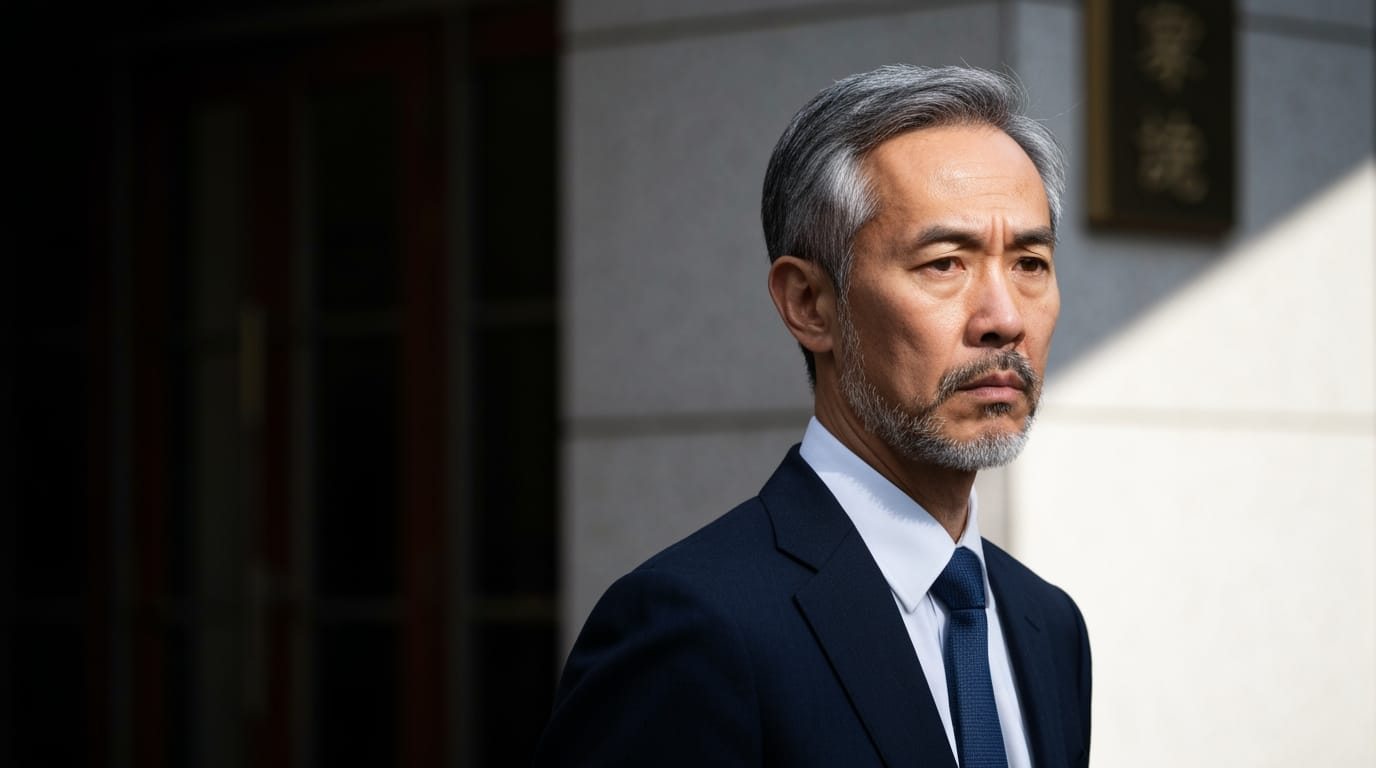
Hong Kong, a city once synonymous with vibrant free expression and robust judicial independence, stands at a critical juncture as media mogul Jimmy Lai, a prominent pro-democracy advocate, awaits sentencing on charges that could imprison him for the remainder of his life. Convicted in December 2025 on counts of conspiring with foreign forces under the sweeping National Security Law and conspiracy to publish seditious material, the 78-year-old founder of the now-defunct Apple Daily newspaper has become a symbol of the city's rapidly diminishing freedoms. The High Court concluded four days of mitigation hearings on January 15, 2026, setting the stage for a judgment that is widely seen as a defining moment for Hong Kong's legal system and its relationship with Beijing.
The international community, including the United States, Britain, and the European Union, has voiced strong condemnation, asserting that Lai's prosecution underscores a significant erosion of press freedom and judicial autonomy in the special administrative region. His case, the most high-profile under the National Security Law, reflects a broader crackdown on dissent that has reshaped Hong Kong's political and social landscape since the imposition of the controversial legislation in 2020. The impending sentence not only portends a harsh fate for one of the city's most outspoken critics but also sends a stark message about the permissible boundaries of expression and activism within the territory.
The Charges, the Trial, and the Verdict
Jimmy Lai's legal ordeal culminated in December 2025 when a panel of three judges, hand-picked by Hong Kong's Chief Executive, found him guilty of serious offenses. Specifically, he was convicted on two counts of conspiracy to collude with foreign forces, a grave charge under the National Security Law, and one count of conspiracy to publish seditious articles under a colonial-era statute. Prosecutors alleged that Lai leveraged his media empire, particularly Apple Daily, to foster a consistent campaign aimed at undermining the legitimacy of both the Chinese and Hong Kong governments. He was also accused of actively lobbying foreign governments to impose sanctions on Beijing and Hong Kong, actions purportedly taken both before and after the implementation of the National Security Law.
Throughout the lengthy trial, Lai steadfastly maintained his innocence, denying all charges brought against him. However, the judicial panel ultimately dismissed his defense, stating that his evidence was at times "contradictory, inconsistent, evasive and unreliable." Adding weight to the prosecution's case were testimonies from former Apple Daily staff members who had pleaded guilty to related charges and subsequently became prosecution witnesses. With the mitigation hearings now concluded, the Hong Kong High Court is poised to deliver a sentence that carries a maximum penalty of life imprisonment, a prospect that has intensified global scrutiny on the city's justice system.
The End of Apple Daily and a Life of Activism
Jimmy Lai's journey from a young immigrant to a media tycoon and fervent pro-democracy advocate is central to understanding the current legal battle. Born in mainland China, Lai arrived in Hong Kong as a stowaway and built a successful retail clothing empire before venturing into media. He founded Apple Daily in 1995, transforming it into a popular, tabloid-style newspaper known for its unapologetically pro-democracy stance and scathing criticism of Beijing. The newspaper quickly became a symbol of independent journalism in Hong Kong, reflecting Lai's personal commitment to freedom of expression and democratic ideals.
Lai's unwavering support for the pro-democracy movement put him on a collision course with authorities, particularly following the mass anti-government protests that swept Hong Kong in 2019. His arrest in August 2020, shortly after the National Security Law was enacted, marked a turning point, signaling the beginning of the end for Apple Daily. The newspaper was eventually forced to cease operations in June 2021 after its assets were frozen and its executives arrested, effectively silencing one of Hong Kong's last bastions of independent media. Lai's long-standing activism and his use of media as a platform for dissent have made him a prime target in the broader campaign to curb political opposition in the city. His lawyers have also highlighted his advanced age and the arduous conditions of his solitary confinement, now exceeding 1,800 days, arguing that these factors make any lengthy prison term particularly burdensome.
Hong Kong's National Security Law: A Shifting Legal Landscape
The National Security Law (NSL), imposed by Beijing on Hong Kong in June 2020, fundamentally altered the city's legal and political landscape. Enacted following the 2019 protests, the law criminalizes acts of secession, subversion, terrorism, and collusion with foreign forces, with penalties ranging up to life imprisonment. Critics argue that its broad and vaguely defined provisions have been used to stifle dissent, target political opposition, and systematically dismantle civil liberties that distinguished Hong Kong from mainland China.
The case against Jimmy Lai exemplifies the extensive reach of the NSL. His conviction for "collusion with foreign forces" and "seditious publications" demonstrates how expressions of opinion, even critical journalism or appeals to international bodies, can now be interpreted as threats to national security. Hong Kong authorities maintain that the NSL was necessary to restore stability and that Lai has received a fair trial. However, the absence of a jury in NSL cases and the selection of judges by the Chief Executive have fueled concerns about the fairness and independence of the judicial process. Critics argue that the law has effectively curtailed the autonomy promised to Hong Kong under the "One Country, Two Systems" framework, fundamentally transforming the city's legal and media environments.
Global Condemnation and Future Implications
The trial and impending sentencing of Jimmy Lai have triggered widespread international outcry, drawing condemnation from numerous governments and human rights organizations. The United States, the United Kingdom, and the European Union have consistently criticized the proceedings, viewing them as a direct assault on press freedom and fundamental human rights in Hong Kong. U.S. Secretary of State Marco Rubio, for instance, indicated that the verdict underscores the "enforcement of Beijing's laws to silence those who seek to protect freedom of speech and other fundamental rights." United Nations human rights experts have also called for Lai's immediate release on humanitarian grounds, citing a "dramatic decline in fundamental freedoms and judicial independence" in the city.
This international pressure underscores the profound diplomatic implications of the case, which continues to strain Beijing's relationships with Western powers. Lai, a British citizen, has garnered significant attention from his home country, while even former U.S. President Donald Trump reportedly raised his situation with Chinese President Xi Jinping. The case has transformed into a critical barometer of Hong Kong's autonomy and its adherence to international legal norms. Observers worry that a life sentence for Lai would not only mark a definitive end to independent media in the city but also set a dangerous precedent, further eroding civil liberties and judicial independence, potentially causing "irreparable damage to Hong Kong's reputation" on the global stage.
The culmination of Jimmy Lai's trial is more than just a legal proceeding; it is a profound commentary on the trajectory of Hong Kong. As the city awaits the final judgment, the world watches to see the extent of its transformation from a bastion of open society to a territory increasingly aligned with mainland China's authoritarian system. The potential life sentence for a prominent media figure serves as a stark warning about the shrinking space for dissent and independent thought, marking a somber milestone in the story of Hong Kong's freedoms. The outcome will resonate far beyond the courtroom, impacting not only Lai's personal fate but also the future of press freedom, human rights, and the very identity of Hong Kong.


