How Bulgaria Became a Global Leader in Battery Storage
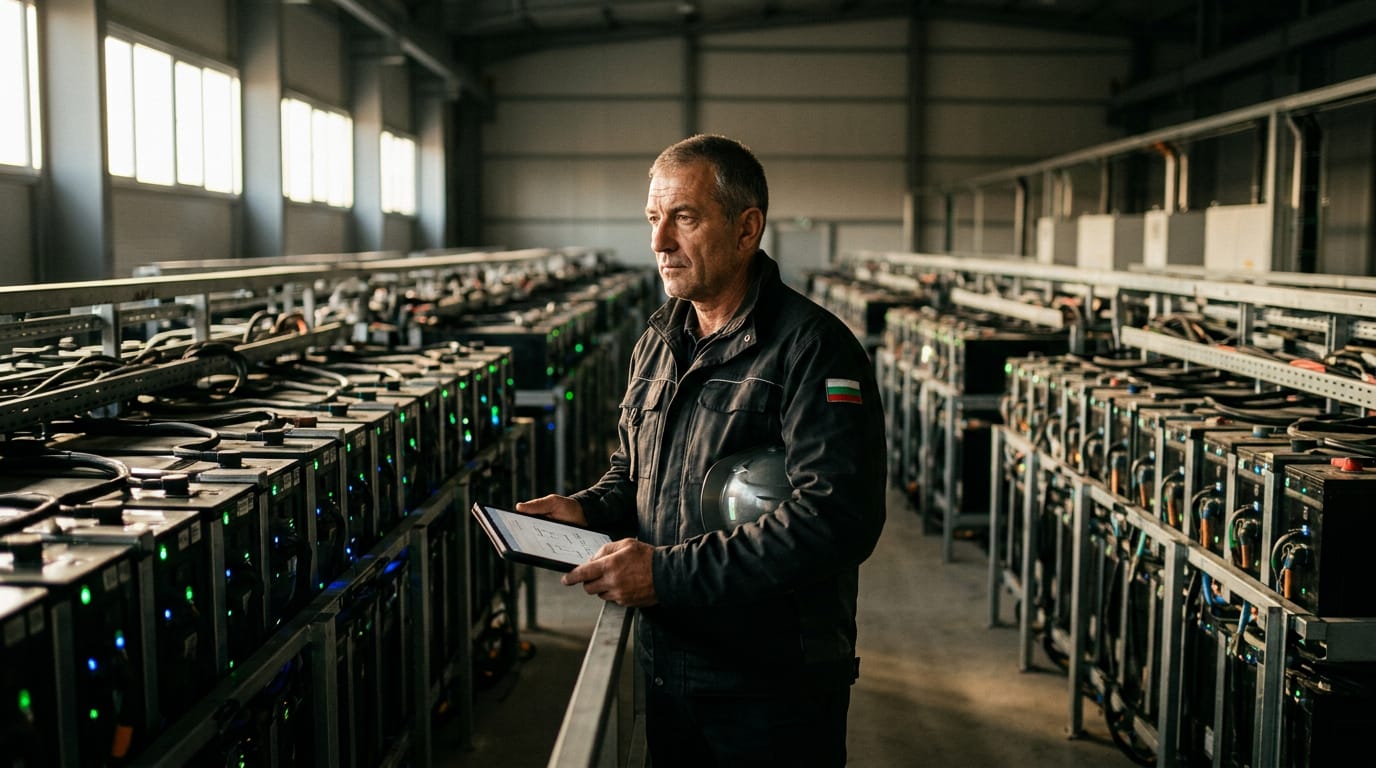
SOFIA, Bulgaria — In a quiet transformation across the rolling plains and former industrial heartlands of southeastern Europe, Bulgaria has vaulted past traditional green-energy pioneers to build the world’s most battery-intensive electricity system.
Spurred by a dramatic solar boom, competitive market dynamics, and targeted European Union funding, the Balkan nation has connected more than five gigawatts of utility-scale battery energy storage capacity. Batteries now account for nearly a quarter of Bulgaria's total power generation capacity, a proportion higher than that of California, China, or any other major power market. The unprecedented deployment has turned a country once heavily reliant on lignite coal into a linchpin of stability for southeastern Europe’s electric grid.
The Catalysts Behind an Unprecedented Boom
Bulgaria's battery surge was born out of rapid shifts in its solar generation sector. Over the past three years, private investors poured capital into commercial photovoltaics, taking advantage of abundant sunshine and relatively flat terrain. Solar capacity rapidly exceeded 6.5 gigawatts.
This sudden influx of weather-dependent generation caused midday wholesale electricity prices to plunge into negative figures during peak summer afternoons, followed by steep evening spikes as the sun set. For solar developers, standalone power production faced severe revenue erosion, commonly referred to as price cannibalization.
Adding storage quickly shifted from an optional upgrade to an economic necessity. Project developers discovered they could capture near-free midday surplus energy and dispatch it during profitable evening peak hours.
Government policies accelerated this commercial incentive. Bulgaria moved quickly to streamline permitting procedures for storage installations, establishing some of the fastest turnaround times on the continent. Crucially, the country leveraged European Union support through its National Recovery and Resilience Plan. Its dedicated energy storage initiative, known as the RESTORE program, mobilized hundreds of millions of euros in capital expenditure grants. The tenders attracted widespread developer interest, resulting in contracts for more than 14 gigawatt-hours of standalone and co-located battery systems.
Repurposing the Fossil Fuel Grid
Rather than requiring decades of fresh transmission construction, Bulgaria's battery sector expanded by repurposing existing energy infrastructure. Developers installed massive containerized lithium iron phosphate systems on underused industrial land, decommissioned airfields, and near the substations of aging thermal plants.
At the Maritsa East complex in southern Bulgaria, long the focal point of the country's coal generation, developers retired older thermal equipment and redirected high-voltage grid connections straight into battery parks. Reusing high-capacity transmission interconnections eliminated years of bureaucratic waiting lines, allowing developers to plug multi-megawatt facilities directly into the national backbone.
Industrial sites across the countryside that once supported heavy manufacturing now house racks of battery containers operated by automated control algorithms. By the middle of this year, Bulgaria's operational battery fleet could sustain full power discharge for more than two and a half hours, ranking it behind only Germany and Italy in Europe for total storage volume despite its significantly smaller economy.
Balancing the Regional Grid
The domestic rollout has had immediate effects beyond Bulgaria’s borders. Batteries and solar arrays now regularly supply roughly a quarter of Bulgaria’s domestic electricity consumption during peak evening hours, freeing up other resources for export.
Bulgaria's storage capacity faced an unexpected regional test during recent dry summer months. Record-low water levels on the Danube River drastically curtailed hydropower generation and prompted output reductions at nuclear stations in neighboring Romania and Hungary. Simultaneously, heatwaves drove evening cooling demand to historic highs across the Balkans.
Instead of suffering brownouts, the region drew heavily on Bulgarian power reserves. Bulgarian operators stored excess solar generation during daytime hours and exported up to 830 gigawatt-hours of electricity per month across the border, with Romania taking in substantial volumes of evening transfers. Bulgaria effectively evolved from a local energy market into a regional shock absorber, dampening price volatility throughout southeastern Europe.
Market Maturation and Revenue Headwinds
Despite its successes, the rapid expansion has introduced new structural hurdles. The speed of the buildout has begun compressing the very profit margins that sparked the boom.
With hundreds of battery systems discharging simultaneously during the early evening, the price spread between afternoon lows and evening peaks has flattened. Peak evening energy prices that once reached lucrative margins are diminishing as the market becomes saturated with stored power.
Battery operators are adapting by moving away from simple day-night energy arbitrage. Developers are shifting assets toward ancillary service markets, frequency regulation, and automated grid balancing contracts.
At the same time, grid operators warn that local distribution networks require modernization to support bidirectional power flows. When dozens of utility-scale batteries switch simultaneously from charge to discharge modes, the strain on transmission transformers and local substations demands real-time monitoring and software dispatch to avoid equipment bottlenecks.
A Template for the European Energy Transition
Bulgaria’s rapid rise to the top of global storage rankings marks a turning point for modern energy transitions. By demonstrating how rapidly flexible storage can be deployed to absorb high shares of renewable power, the country has answered long-standing doubts about the technical limits of green grids.
As older coal plants face phased retirements under continental climate mandates, Bulgaria has established a functional model for transforming legacy infrastructure into modern balancing assets. While market saturation and grid modernization remain ongoing tests, the country's transformation from a traditional coal producer into a clean energy balancing hub offers a working blueprint for energy security across an increasingly electrified continent.


