Humanity's Reach Expands: Artemis II Crew Departs Earth Orbit, Charting Course for the Moon
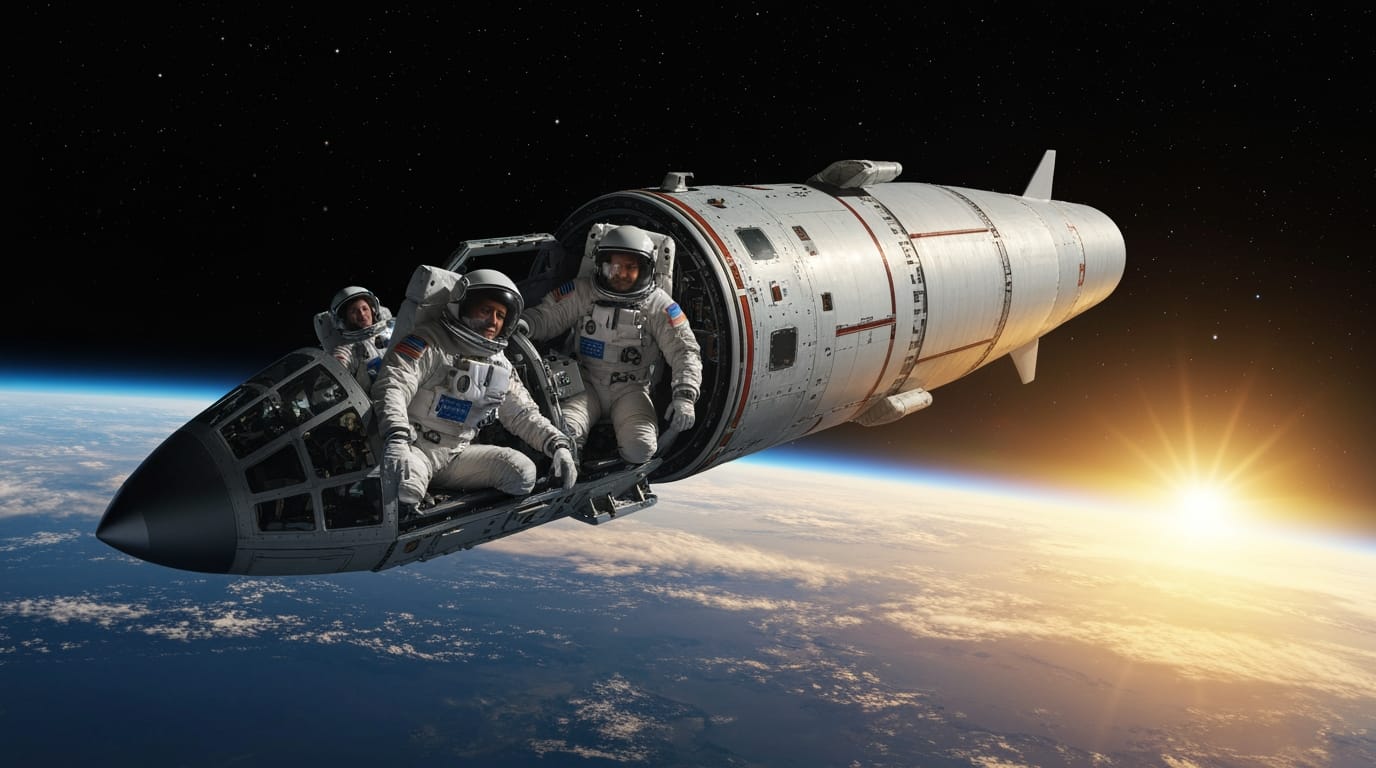
In a historic moment for space exploration, the four astronauts of NASA's Artemis II mission have successfully completed their Trans-Lunar Injection (TLI) burn, propelling their Orion spacecraft out of Earth's orbit and onto a trajectory towards the Moon. This pivotal maneuver, executed late Thursday, April 2, marks humanity's first crewed journey beyond low Earth orbit in over half a century, igniting a new era of lunar exploration and setting the stage for future deep-space endeavors. The crew, comprising Commander Reid Wiseman, Pilot Victor Glover, Mission Specialist Christina Koch of NASA, and Mission Specialist Jeremy Hansen of the Canadian Space Agency (CSA), are now embarked on an approximately four-day transit to the Moon, where they will perform a lunar flyby.
The Powerful Push Towards Lunar Shores
The critical Trans-Lunar Injection burn commenced approximately 25 hours after the mission's spectacular launch from Kennedy Space Center in Florida on April 1. For nearly six minutes, the Orion spacecraft's main engine roared to life, delivering approximately 6,000 pounds of thrust. This immense propulsion accelerated the spacecraft to an astounding 25,000 miles (40,233 kilometers) per hour, achieving the velocity required to break free from Earth's gravitational embrace. NASA likened the thrust to accelerating a car from zero to 60 mph in a mere 2.7 seconds, underscoring the raw power unleashed during the burn. This momentous engine firing represents the first such event for a human crew since Apollo 17 departed for the Moon in December 1972.
Prior to this decisive maneuver, the Artemis II crew diligently spent their initial hours in a high Earth orbit, meticulously verifying Orion's vital life-support and communication systems. This crucial checkout phase, managed closely by NASA's Mission Management Team, ensured the spacecraft was performing optimally for the journey ahead. While early reports indicated minor challenges, including a brief communications glitch and a malfunctioning toilet, these issues were successfully troubleshooted by the crew and ground teams, highlighting the resilience and adaptability inherent in human spaceflight.
A Crew of Trailblazers
The quartet of astronauts aboard Orion are not only making history by venturing to the Moon, but they are also setting unprecedented milestones in human spaceflight. Commander Reid Wiseman leads the mission, while Pilot Victor Glover becomes the first person of color to travel around the Moon. Mission Specialist Christina Koch is the first woman to undertake a lunar mission, and Mission Specialist Jeremy Hansen of the Canadian Space Agency marks the first non-American to journey to Earth's celestial neighbor. Their collective journey will also break the record for the most individuals in deep space simultaneously.
Over the planned 10-day mission duration, the crew will continuously monitor the spacecraft's systems, gather critical data on the effects of deep-space travel on the human body, and execute necessary trajectory correction burns. Their flight profile includes a free-return trajectory around the Moon, taking them approximately 4,700 miles (7,600 km) beyond the lunar far side. This will extend humanity's reach further than ever before, surpassing the distance record set by the Apollo 13 mission in 1970. Daily activities for the astronauts include exercising on a specialized flywheel device designed for deep-space environments and testing the AVATAR scientific payload. They will also conduct experiments related to radiation shielding and practice manual piloting of the Orion capsule.
Paving the Way for a Permanent Lunar Presence
The Artemis II mission serves as a critical test flight, validating the integrated performance of the Space Launch System (SLS) rocket, the Orion spacecraft, and associated ground systems for crewed operations in the lunar environment. Its primary objectives include demonstrating the capability of the systems and teams to sustain the flight crew through their journey and return, and to gather invaluable data to inform future missions.
This mission is a foundational step in NASA's broader Artemis program, which aims to establish a long-term human presence on the Moon and eventually facilitate human missions to Mars. The data collected during Artemis II will directly influence the design and planning of subsequent missions, particularly Artemis III, which aims to return humans to the lunar surface, and Artemis IV, which plans to establish a lunar base. Beyond its technical objectives, Artemis II also plays a crucial role in delivering and positioning elements for the Lunar Gateway, a planned space station orbiting the Moon. The crew will actively participate in scientific investigations, laying the groundwork for future lunar science operations and practicing remote observation techniques essential for exploring the Moon's diverse geology.
The Power and Precision of Orion and SLS
The successful journey is powered by a sophisticated suite of hardware. The Orion spacecraft, named "Integrity" by the crew, functions as both a transport vehicle and a living quarters for the astronauts. A critical component of Orion is the European Service Module (ESM), supplied by Airbus on behalf of the European Space Agency (ESA), which provides essential life support, power, and propulsion for the crew. This module has been specially fitted with advanced life support systems to ensure the safety and well-being of the astronauts during their deep-space transit.
Launching Orion into space was the mighty Space Launch System (SLS) Block 1 rocket, marking its second flight and first with a human crew. The SLS is the only rocket currently capable of sending Orion and its crew directly on a trans-lunar injection trajectory, showcasing its unparalleled power. Although primarily an expendable launch vehicle, the SLS, with its powerful four main engines and two solid rocket boosters, provided the initial thrust needed to escape Earth's gravity, paving the way for Orion's main engine to complete the TLI burn.
As the Artemis II crew accelerates deeper into space, their journey serves as a powerful testament to human ingenuity and the enduring drive to explore. This mission not only prepares humanity for its long-awaited return to the lunar surface but also inspires a new generation, reminding the world of what is possible when ambition and innovation converge beyond the confines of Earth. With the lunar flyby and subsequent return journey still ahead, the world watches as these four trailblazers continue to push the boundaries of human endeavor.


