UN Security Council Poised for Critical Vote on Strait of Hormuz Amid Escalating Iran Conflict
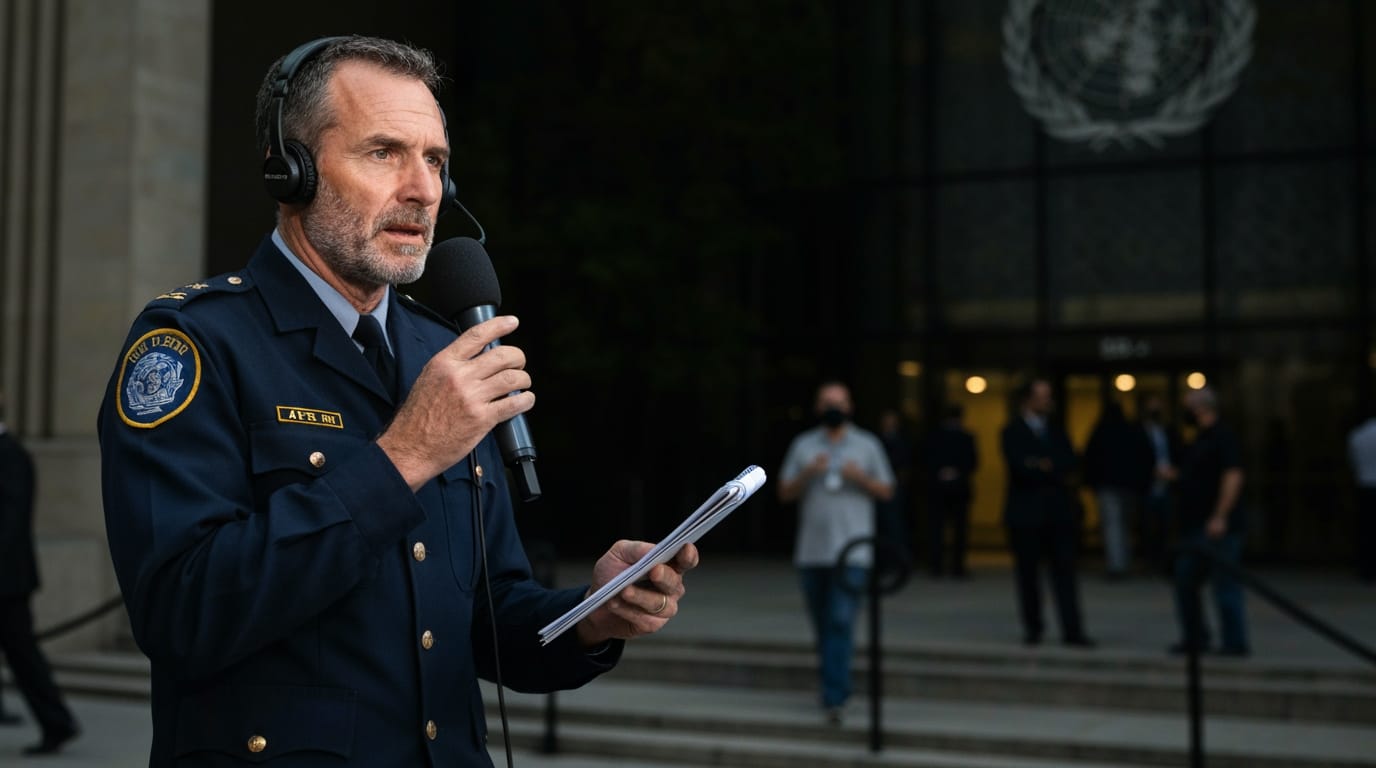
UNITED NATIONS, New York – The United Nations Security Council is scheduled to cast a pivotal vote today on a Gulf-backed resolution aimed at reopening the Strait of Hormuz, a crucial global chokepoint that Iran has largely cut off to international shipping, igniting fears of a wider conflict and significant global economic fallout. The vote comes as the world grapples with a month-old Middle East war, triggered by US-Israeli strikes against Iran, with the UN Secretary-General warning of the region being on the "edge of a wider war".
The international community watches with bated breath as the 15-member council considers a revised proposal from Bahrain that seeks to secure the vital waterway through "defensive means," a significant softening from an initial draft that would have authorized more direct military intervention. The outcome of today's vote holds profound implications for global energy markets, international trade, and the trajectory of the escalating tensions in the Middle East.
The Resolution on the Table: A Diplomatic Tightrope Walk
Bahrain, with the backing of its Gulf Arab neighbors and the United States, initially put forth a resolution calling for "all necessary means" – a UN phrase encompassing potential military action – to ensure free passage through the Strait of Hormuz, the Gulf, and the Gulf of Oman. This assertive language, however, met immediate resistance from veto-wielding permanent members Russia, China, and France, who expressed strong opposition to authorizing offensive force, fearing a dangerous escalation of the already volatile situation.
In response to these objections and weeks of intense closed-door negotiations, the resolution has undergone significant revisions. The final draft, circulated on Thursday, eliminates any reference to offensive military action. Instead, it authorizes member states to employ "all defensive means necessary and commensurate with the circumstances" to secure transit and deter interference with international navigation for a period of at least six months. This crucial amendment attempts to bridge the divide within the Security Council, aiming to secure enough votes while avoiding a direct confrontation over the use of force. Despite the modifications, the positions of Russia, China, and France on the watered-down text remained unclear leading up to the vote, making the resolution's passage far from guaranteed.
Iran's Stranglehold and the Global Economic Repercussions
Iran's effective blockade or stringent control over the Strait of Hormuz is not an isolated act but a direct retaliatory measure following "US-Israeli strikes that triggered the month-old Middle East war". This strategic move by Tehran has had immediate and severe consequences for the global economy. Approximately one-fifth of the world's oil supply typically transits through the Strait of Hormuz, making it an indispensable artery for global energy flow.
With the strait largely inaccessible, global oil prices have soared to unprecedented levels, triggering widespread inflation and pushing up food costs worldwide. The closure has led to a critical oil shortage and disrupted supply chains, causing immense pressure on national economies and daily lives across the globe. Reports indicate that over 2,000 ships are currently stranded, highlighting the immense logistical and economic paralysis inflicted by the blockade. Bahrain's UN Ambassador Jamal Alrowaiei underscored the severity of the situation, stating, "We cannot accept economic terrorism affecting our region and the world; the whole world is being affected by the developments". The UN Secretary-General further warned that "when the Strait of Hormuz is strangled, the world's poorest and most vulnerable cannot breathe".
Divided Responses and Diplomatic Maneuvers
The crisis at the Strait of Hormuz has exposed deep divisions and a complex web of diplomatic and geopolitical maneuvering. While Gulf states and the United States are pushing for robust action to restore freedom of navigation, key global powers maintain reservations about military engagement. Chinese Ambassador Fu Cong emphasized that "the use of force cannot bring peace. Political settlement is the fundamental way forward," cautioning that authorizing force could "lead to further escalation of the situation and lead to serious consequences". French President Emmanuel Macron has also voiced skepticism, deeming any attempt to open the Strait of Hormuz by military means as unrealistic.
The United Kingdom has stepped forward to lead a conference, convening dozens of countries in London to form a coalition aimed at reopening the strait through diplomatic, economic, and coordinated steps, including engagement with the International Maritime Organisation. Meanwhile, US President Donald Trump has offered contradictory statements, at one point urging allies to "go get your own oil" in the Strait of Hormuz, suggesting a reluctance for direct US military involvement, despite his administration's support for the Bahraini resolution. Adding another layer of complexity, the Philippines successfully struck a deal with Iran, securing safe and toll-free passage for its vessels through the strait, indicating Iran's selective control rather than an absolute closure for all. Ukraine's Foreign Minister Andrii Sybiha also offered his country's combat experience in countering naval blockades, suggesting a willingness to contribute to international efforts.
The Critical Juncture for Global Stability
The Strait of Hormuz remains a flashpoint with immense strategic importance, linking the oil-rich Persian Gulf to the open ocean. Its closure not only impacts energy markets but also threatens broader regional stability and international security. The UN Secretary-General Antonio Guterres delivered a stark warning yesterday, stating, "We are on the edge of a wider war that would engulf the Middle East, with dramatic impacts around the globe". This grim assessment underscores the urgency and delicacy of the Security Council's decision.
The month-old Middle East war, stemming from US-Israeli strikes on Iran and now impacting vital shipping lanes, has brought the region to a perilous threshold. The outcome of today's vote will signal the international community's collective resolve and approach to de-escalating the crisis while safeguarding global economic interests. Whether the revised resolution can garner the necessary support to address the blockade without further inflaming the conflict remains the critical question, with the world watching closely for a path forward amidst the specter of a widening war.


