Humpback Whale Finds Freedom After Days Stranded on German Coast
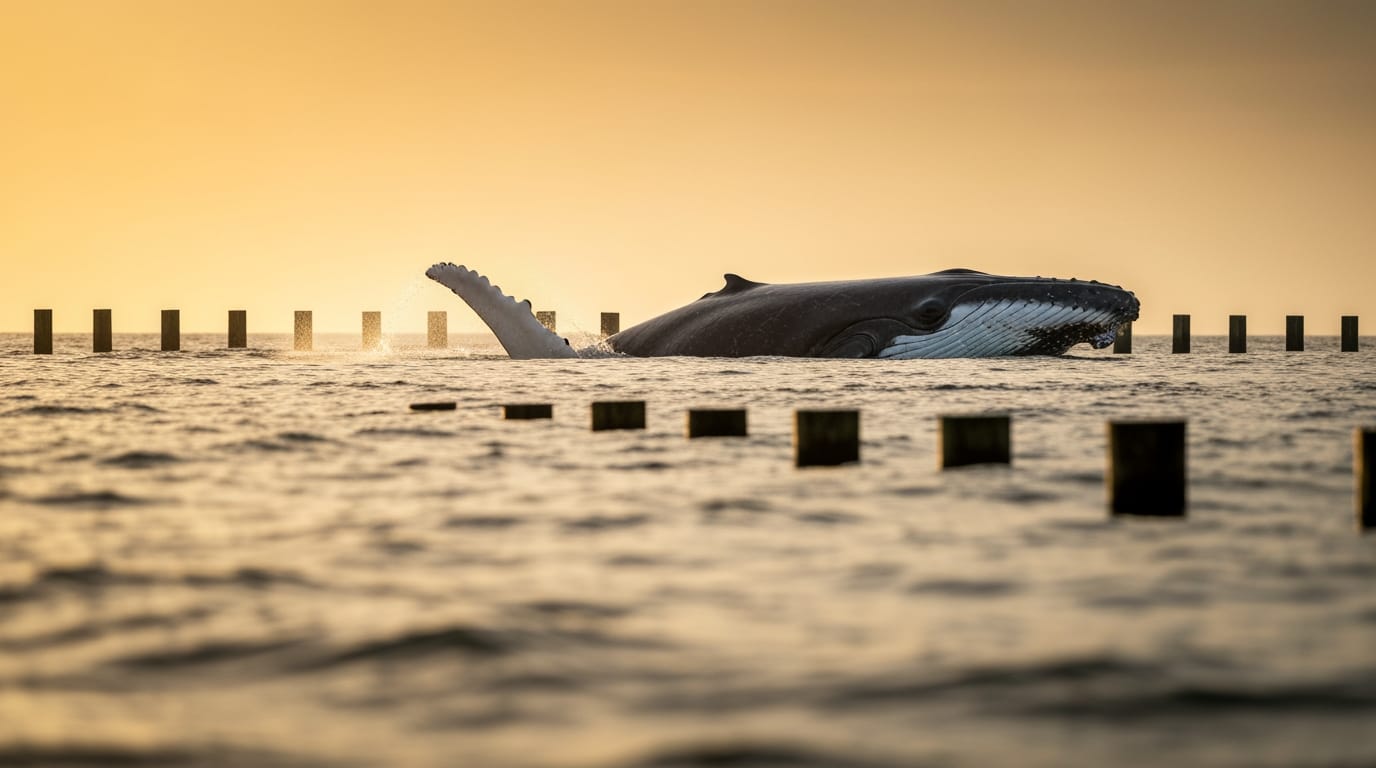
Timmendorfer Strand, Germany – A days-long, arduous rescue operation on Germany's Baltic Sea coast culminated in triumph yesterday as a juvenile humpback whale, estimated to be between 10 and 15 meters long, successfully navigated back into deeper waters after being stranded. The multi-ton marine mammal had captured international attention and sparked a massive, coordinated effort involving marine biologists, wildlife rescuers, and emergency services, all racing against time to save the magnificent creature. Its liberation from the shallow sands of Timmendorfer Strand brings a hopeful close to an extraordinary saga that highlighted both the vulnerability of marine life and the unwavering dedication of human intervention.
The Unexpected Arrival and Initial Desperation
The ordeal began early Monday, March 23, when the massive whale was discovered in distress in the shallow waters off the Niendorf district of Timmendorfer Strand, located in Lübeck Bay. Humpback whales are rarely seen in the Baltic Sea, which is not their natural habitat, making its presence and subsequent stranding an unusual event that immediately raised concerns among experts. The animal, a young male according to marine conservationists, was estimated to weigh approximately 15 tons, presenting an immense challenge for any rescue attempt. Initial efforts to dislodge the leviathan proved futile. Police boats, inflatable vessels, and even firefighter drones were deployed in a desperate attempt to guide the whale back to safety, but the mammal remained stubbornly aground. Experts observed the whale was still alive, breathing, making sounds, and occasionally lifting its head, but its condition was deteriorating with each passing hour, signaling the critical need for a breakthrough in rescue strategies.
A History of Entanglement and Failed Attempts
This particular humpback was no stranger to the headlines. It is believed to be the same whale that had been sighted repeatedly in the Baltic Sea in recent weeks, causing a stir among local residents and environmental groups. Earlier in the month, emergency services in Wismar harbor had partially freed the whale from a fishing net in which it had become entangled. Just days before its stranding at Timmendorfer Strand, the marine conservation organization Sea Shepherd reported removing additional remnants of fishing gear from a humpback whale off Travemünde, further suggesting this was the same animal. The presence of fishing net remnants around its body underscored the perils marine life faces from human activity, possibly contributing to its disorientation and ultimate stranding.
Throughout Monday and Tuesday, rescuers faced an uphill battle. High tides, which often provide a natural window for stranded marine mammals to refloat themselves, proved insufficient to move the enormous creature. Attempts by boats to create large waves in the hope of nudging the whale towards deeper water were also unsuccessful. The delicate nature of such a rescue operation meant that actively pulling the whale was deemed too risky due to the high probability of inflicting severe injury. "If the whale can't get off the beach, it's a death sentence for the animal," warned Sven Biertümpfel of Sea Shepherd, highlighting the urgency of the situation as the whale's condition worsened. Meanwhile, police cordoned off the beach, creating a perimeter to keep a large crowd of onlookers at bay, emphasizing the importance of minimizing stress on the distressed animal.
Engineering a Path to the Open Sea
As conventional methods failed, a new, more ambitious strategy emerged. Experts from the Institute for Terrestrial and Aquatic Wildlife Research (ITAW) in Büsum, along with local authorities, devised a plan to literally carve a path for the whale to freedom. The proposal involved digging a substantial channel through the shallow seafloor, a trench approximately 50 meters (164 feet) long, six meters wide, and 1.2 meters deep. The precision engineering required the deployment of a dredger and excavators on land, working in close proximity to the massive mammal. Buoys were strategically anchored to mark the water depth and guide the dredger's meticulous work, ensuring the channel would lead directly to the deeper waters of Lübeck Bay.
This intensive effort, undertaken with the whale's immediate welfare in mind, offered a glimmer of hope after days of frustration. The construction of the channel represented a critical turning point, leveraging heavy machinery and expert hydrographic knowledge to overcome the natural obstacles that had trapped the whale. The objective was clear: to provide a direct and safe passage for the whale to propel itself back into its aquatic element without human physical intervention that could cause further harm. The sheer scale and coordination required for this engineering feat underscored the global commitment to marine conservation and the lengths to which communities will go to protect endangered species.
A Cautious Return and Future Uncertainties
Following the successful creation of the channel, the moment of truth arrived. With a collective sigh of relief from all involved, the humpback whale, after what felt like an eternity stranded in the unfamiliar shallows, was observed using the newly dug passage to propel itself towards the open sea. This monumental effort, a testament to collaboration and perseverance, ensured the immediate survival of the magnificent creature.
However, the whale's return to deeper water is not without its lingering concerns. Experts, including veterinarian and whale expert Jan Herrmann, have issued warnings about the long-term prognosis for the humpback. The Baltic Sea, a relatively enclosed body of water, is a "bottleneck" and far from the natural migratory routes and feeding grounds of humpback whales. There is no guarantee that the whale, having already demonstrated a propensity to stray into these unusual waters, will be able to navigate its way out through Danish waters and back into the open North Sea. Its presence in the Baltic Sea raises broader questions about changes in ocean currents, prey distribution, or possible disorientation caused by human activities such as noise pollution or entanglement.
Conclusion
The successful rescue of the humpback whale off Timmendorfer Strand represents a significant victory for marine conservation and a powerful display of human compassion and ingenuity. The days-long ordeal, marked by tireless efforts and innovative solutions, underscored the profound connection many feel towards wildlife in distress. While the immediate danger has passed, the whale's journey is far from over. Its successful navigation out of the Baltic Sea remains a critical challenge, reminding us of the complex relationship between humans and the marine environment, and the continuous need for vigilance and protection for the ocean's majestic inhabitants. This event serves as a poignant reminder of the intricate balance of marine ecosystems and the imperative to understand and mitigate the threats facing these extraordinary creatures.


