Humpback's Precarious Baltic Odyssey Nears Danish Border
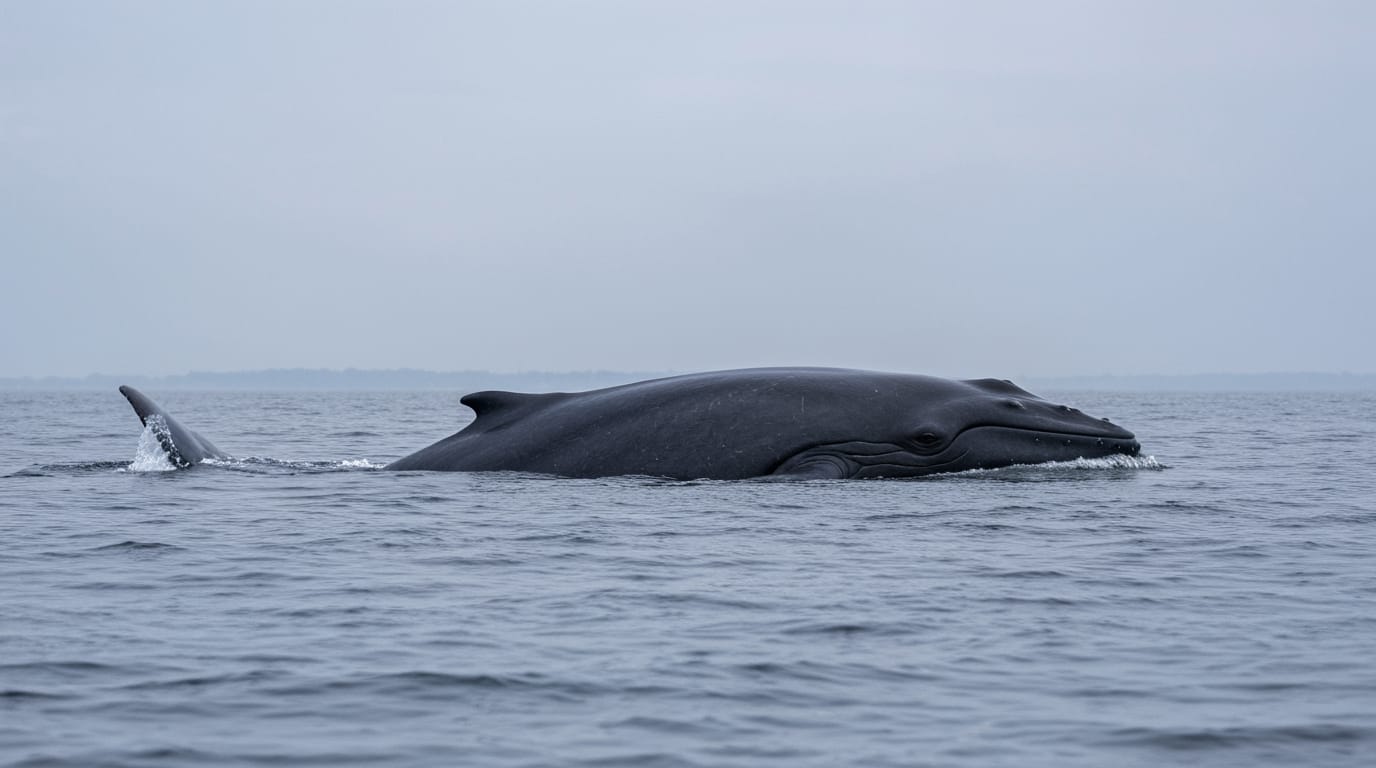
A solitary humpback whale, estimated to be between 12 and 15 meters (39 to 49 feet) long, has captivated international attention as it struggles for survival in the shallow and brackish waters of Germany's Baltic Sea coast, with its ultimate escape route necessitating a journey through Danish territory. The marine giant has repeatedly become stranded in recent weeks, sparking intense rescue efforts and raising serious concerns among marine biologists about its long-term health and ability to navigate back to its natural Atlantic Ocean habitat. Its ongoing presence in the region underscores the challenges large marine mammals face when venturing far from their usual migratory paths, highlighting a dramatic race against time and geography as the whale seeks open seas.
A Perilous Journey Inland: Initial Sightings and First Stranding
The whale's extraordinary journey into the Baltic Sea first gained widespread notice on March 3rd, when it was sighted in German waters. Experts suggest the massive mammal may have lost its way while pursuing a shoal of herring or during its migration, a rare but not unprecedented occurrence. The Baltic Sea, with its relatively low salinity and limited food sources suitable for a humpback, presents a hostile environment for the whale, making its presence there a matter of urgent concern for conservationists.
The drama intensified when the whale became stranded on an underwater sandbank near Timmendorfer Strand, a popular resort town, earlier in March. Initial attempts to free the massive creature proved difficult, with rescuers employing various methods, including the use of coast guard and fire department boats to create large waves, all to no avail. The immense public interest in the whale's plight was immediate, with German media providing continuous updates and even live streams of the rescue efforts.
Repeated Struggles and Rescues: Wismar Bay's Ordeal
After extensive efforts, including the digging of an escape channel with an excavator, the whale managed to swim free from Timmendorfer Strand late on March 27th. However, the reprieve was short-lived. Just days later, on March 28th, the humpback was sighted further east, near the port of Wismar, in the state of Mecklenburg-Western Pomerania, where it subsequently became stranded again. This repeated entrapment underscored the whale's weakened state and the treacherous nature of the shallow coastal waters.
The ongoing rescue operation saw environmental groups, including Greenpeace, and local authorities working in concert. Police and Greenpeace deployed rubber boats to accompany the whale, attempting to guide it towards deeper waters. Despite these interventions, the whale veered off course, turning into an inlet where it once again found itself stuck. Environmental Minister Till Backhaus of Mecklenburg-Western Pomerania noted the persistent challenges, though rescuers were able to prevent it from swimming too far into the inlet, ensuring it remained in waters deep enough for potential self-liberation.
Thilo Maack, a marine biologist with Greenpeace, emphasized the critical objective: to guide the whale out of Wismar Bay, through the Baltic Sea, then into Danish waters, and ultimately to the North Sea and the Atlantic, its true home. This ambitious goal highlights the significant international dimension of the rescue, requiring the whale to navigate a complex marine corridor that traverses national boundaries.
The Baltic's Harsh Realities: A Battle Against Time and Environment
Marine biologists have consistently warned that the Baltic Sea is fundamentally unsuitable for a humpback whale's long-term survival. The primary concerns revolve around the low salt concentration of the water, which is known to cause skin disease in marine mammals adapted to higher salinity environments. Furthermore, the Baltic Sea simply does not offer the type or quantity of nutrition required to sustain a creature of the humpback's size and dietary needs.
Experts like Maack stress that humpback whales are "designed for depths that are beyond anything found anywhere in the Baltic Sea". This physiological mismatch contributes significantly to the whale's exhaustion and repeated strandings. The journey back to the Atlantic is not merely a matter of distance, but a race against the deteriorating health of an animal in an alien environment. Its survival hinges on its ability to traverse several hundred kilometers through German and, crucially, Danish waters to reach the North Sea.
A Nation Captivated: Public Concern and Global Attention
The plight of the humpback whale has deeply resonated with the German public, becoming a pervasive topic across media outlets and social conversations. The dramatic rescue efforts and the whale's persistent struggle have evoked widespread sympathy and concern. News alerts and detailed updates have kept the nation informed, transforming the whale into a symbol of both nature's resilience and its vulnerability in the face of human encroachment and environmental challenges.
The public's engagement has provided a powerful backdrop to the dedicated work of the rescue teams and marine biologists. This widespread attention also serves as a potent reminder of the interconnectedness of marine ecosystems and the responsibility humans bear in protecting them, especially when unusual events bring wildlife into direct contact with human-dominated coastal zones.
Conclusion: A Long Road Ahead for the Baltic Humpback
As the humpback whale continues its precarious journey along the German Baltic coast, its ultimate fate remains uncertain. While rescue efforts have succeeded in freeing it from immediate peril on multiple occasions, the overarching challenge of guiding it back to its natural deep-water, high-salinity habitat persists. The path forward is long and arduous, requiring the whale to navigate through potentially unfamiliar waters, including a significant stretch through Danish maritime territory, before it can reach the North Sea and, finally, the Atlantic. The ongoing monitoring and occasional intervention by environmentalists and authorities underscore a collective hope that this magnificent creature will ultimately find its way home, a testament to the complex and often dramatic intersection of wildlife conservation and environmental stewardship in the modern era.


