Hungarian Election: Orbán Faces Uphill Battle as Europe's Far-Right Rallies Support
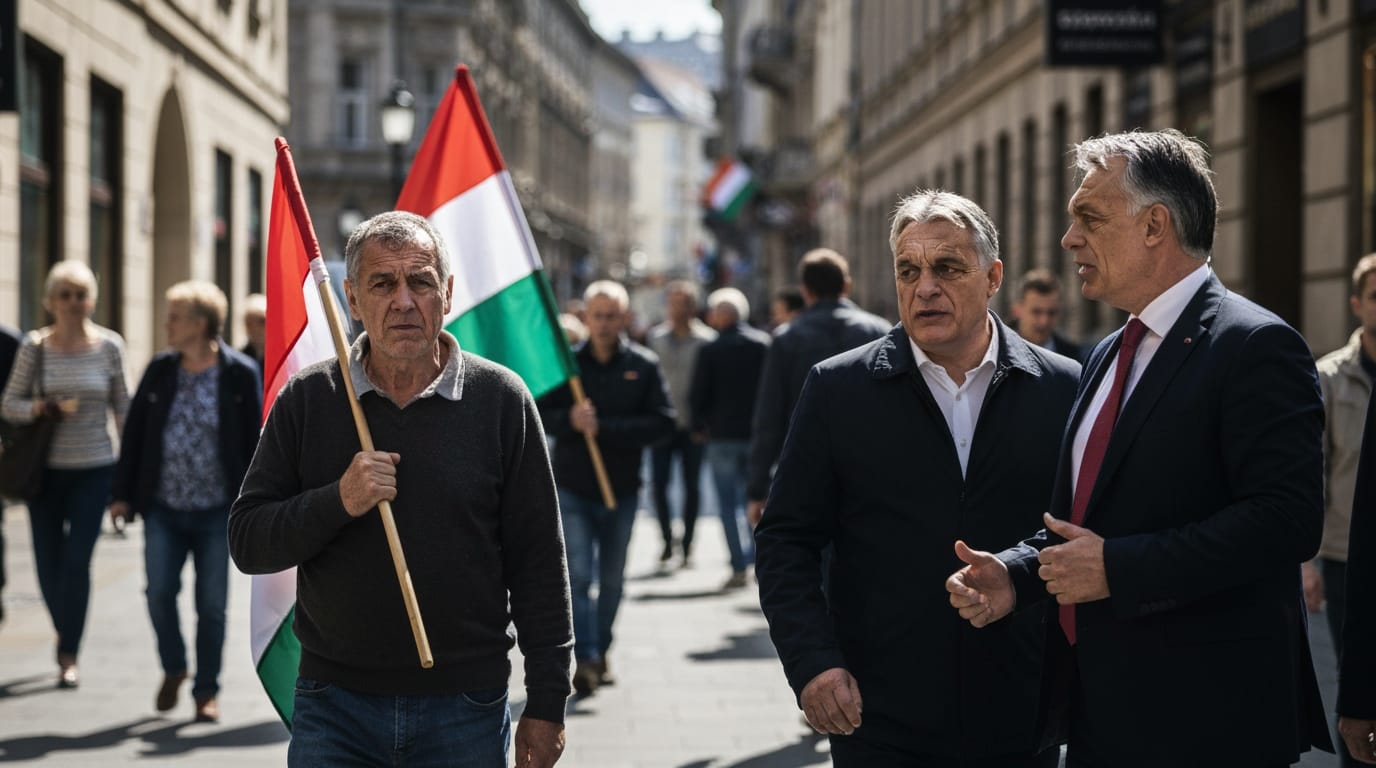
Budapest, Hungary — As Hungary prepares for its parliamentary elections on April 12, 2026, Prime Minister Viktor Orbán, a long-standing figurehead for the European far-right, faces an unprecedented challenge to his 16-year rule. While leaders from across Europe's nationalist spectrum converge in Budapest to bolster his campaign, opinion polls suggest Orbán and his Fidesz party are trailing a newly emerged, center-right challenger, Péter Magyar, signaling a potentially pivotal moment for Hungarian politics and the broader future of the European Union. The outcome of this election is poised to test the durability of Orbán's "illiberal state" model and could redefine the trajectory of far-right influence across the continent.
The Shifting Sands of Hungarian Politics
Since regaining power in 2010, Viktor Orbán has systematically reshaped Hungary's political landscape, consolidating control over government institutions, media, and academia, often emphasizing conservative social values and national sovereignty. His repeated electoral victories, including four consecutive terms, cemented his image as a successful practitioner of illiberal democracy, a concept he articulated as early as 2014. This model, characterized by an aggressive nationalist and socially conservative framework, has drawn both admiration and concern, positioning Orbán as a key figure among international authoritarian right-wing leaders. However, the upcoming election presents a significantly tougher electoral environment for Fidesz than in previous years. Recent surveys indicate that Orbán is currently lagging behind his principal opponent, Péter Magyar, leader of the Tisza (Respect and Freedom) Party. Magyar, a former Fidesz insider who broke with the ruling party in 2024, has rapidly gained prominence by campaigning on an anti-corruption platform and advocating for a return to democratic norms and stronger ties with Western partners. His rallies have drawn hundreds of thousands, showcasing a potent surge of opposition energy fueled by public discontent over a stagnant economy, rising living costs, allegations of nepotism, and widespread corruption.
European Far-Right Mobilizes for Orbán
The high stakes of the Hungarian election are underscored by the visible and vocal support Orbán is receiving from a coalition of European far-right leaders. On March 23, 2026, more than a dozen prominent figures from across the continent gathered in Budapest in a demonstrative show of solidarity. This assembly included influential personalities such as Marine Le Pen of France, Matteo Salvini of Italy, and Geert Wilders from the Netherlands. The event was organized by the "Patriots for Europe," a group founded by Orbán and his allies in 2024, which has since become the third-largest faction within the European Parliament.
These leaders view Hungary under Orbán as a "proof of concept" for their shared ideological vision. Their collective manifesto, "A Patriotic Manifesto for a European Future," emphasizes weakening the European Union, prioritizing national sovereignty over enhanced integration, opposing illegal immigration, and adhering to conservative social values. Orbán himself has openly stated the group's ambition to "occupy and transform the center of Brussels." Hungary has been described as a "safe haven" for this movement, leveraging the power of the state and its financial resources to advance their agenda. Further solidifying this international backing, former U.S. President Donald Trump has publicly endorsed Orbán, praising his defense of "borders, culture, heritage, sovereignty, and values," a sentiment reiterated at the Conservative Political Action Conference (CPAC) in Budapest. This concerted effort by a transnational far-right network highlights the perceived importance of Orbán's continued leadership in advancing their broader European objectives.
Domestic Fault Lines and the Challenger's Momentum
Despite the international show of support, Orbán's Fidesz party faces significant domestic headwinds. Public discontent stems from a struggling economy, evidenced by declining GDP growth, rising state debt, and high inflation, alongside concerns about low living standards and limited social mobility. Allegations of widespread government corruption and nepotism have further fueled public dissatisfaction, particularly with the perception that Orbán's regime operates a patronage state enriching insiders.
Adding to Orbán's challenges is the tightly controlled media environment, which critics describe as an "informational autocracy." The government's pervasive influence over news outlets, estimated to control approximately 80% of Hungary's media market, creates what some term a "parallel reality" for many citizens. This narrative control, combined with Fidesz's strategic campaign messaging that frames the election as a defense against external threats from Ukraine and "Brussels," seeks to mobilize its base and discredit the opposition as being "directed from abroad."
Péter Magyar's emergence has tapped into a growing desire for change. His platform directly confronts the issues of corruption and calls for a restoration of democratic institutions, advocating for Hungary to reclaim its rightful place within Western democracies and NATO. The Tisza party's success in challenging Fidesz's dominance in rural areas, traditionally Orbán strongholds, suggests a broader shift in voter sentiment. However, the Hungarian electoral system, which was rewritten under Orbán's leadership, is widely considered "free but not fair." Designed to favor the largest party, it features gerrymandered constituencies and an "uneven playing field" in campaign resource allocation, meaning that Tisza would likely need to significantly outpoll Fidesz nationally to secure a parliamentary majority.
Implications for Europe and Beyond
The Hungarian election carries profound implications extending far beyond its borders, particularly for the European Union. A victory for Orbán would further embolden the rise of nationalist populist parties across the continent, potentially weakening EU defense and economic cooperation and leaving the bloc more susceptible to external pressures. His government's consistent clashes with Brussels over rule-of-law issues, including infringements on judicial independence, have already led to the suspension of €22 billion in EU funds.
Moreover, Hungary's close ties with Moscow, marked by Orbán's refusal to send weapons to Ukraine and his resistance to EU sanctions against Russia, remain a significant point of contention within the bloc. Recent allegations of Hungary's foreign minister routinely sharing confidential EU meeting details with his Russian counterpart have intensified concerns, with some opposition figures calling for investigations into potential treason. An Orbán victory could reinforce these geopolitical alignments, potentially undermining EU unity and its coordinated response to global challenges. Conversely, a defeat for Orbán could signal a broader shift back towards liberal democracy and European integration, challenging the narrative of an unstoppable far-right surge across Europe.
Conclusion: A Critical Juncture
As Hungarians prepare to cast their ballots, the nation stands at a critical juncture. The upcoming election is more than a contest between two political parties; it represents a clash of visions for Hungary's future – one rooted in an "illiberal" nationalistic model supported by a network of European far-right allies, and another advocating for democratic renewal and a stronger, more integrated role within the European Union. The outcome will not only determine Hungary's domestic path but will also send a powerful message reverberating across Europe, influencing the trajectory of its political landscape and the ongoing struggle between democratic values and rising populist movements.


