Hungarian Judges Fight for Independence Amidst Government Pressure
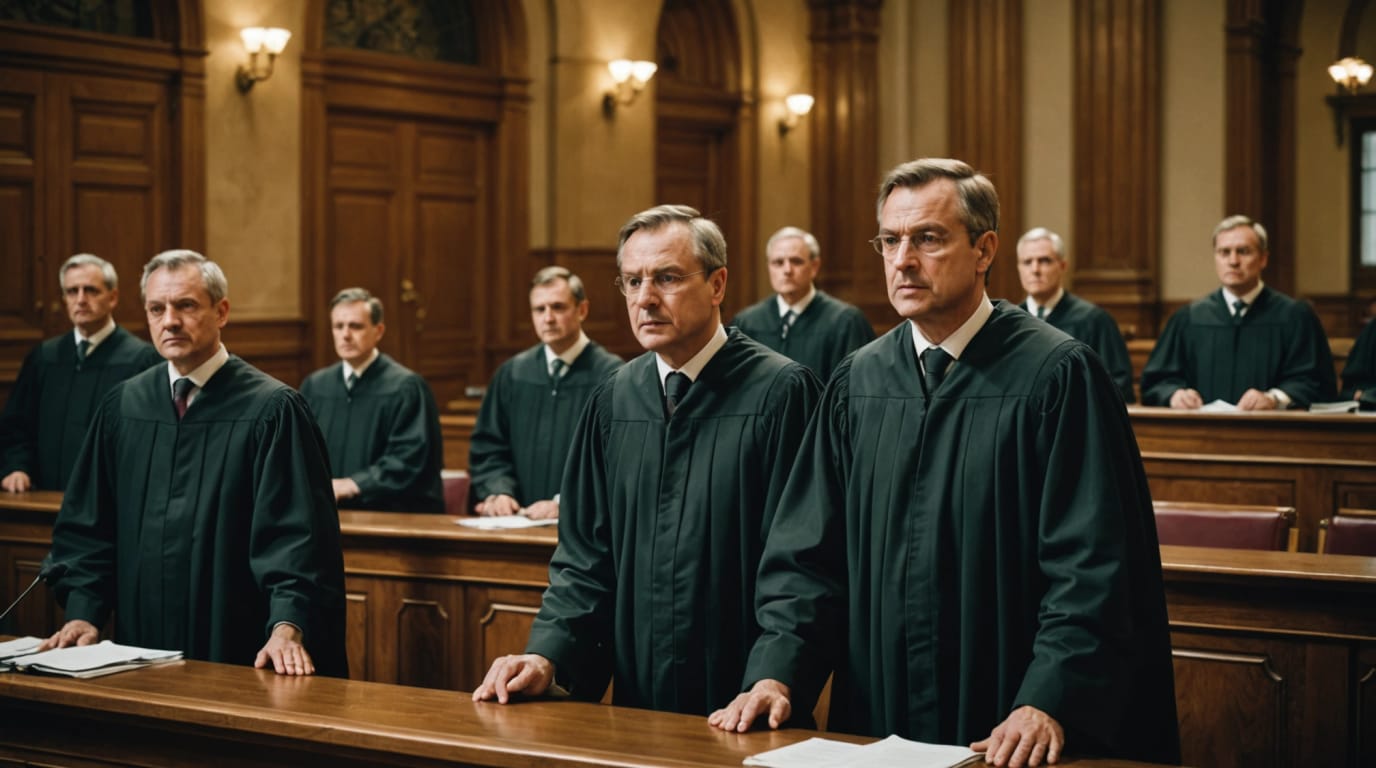
For over a decade, the independence of the Hungarian judiciary has been increasingly challenged, leading to widespread concern both within the country and internationally. Judges are now actively resisting what they perceive as government encroachment, fearing a "full-scale judicial capture." This resistance comes in the wake of controversial reforms and agreements that many believe undermine the separation of powers and threaten the rule of law.
A Decade of Eroding Independence
Since 2010, Hungarian judges have faced numerous challenges, including forced early retirement, politically motivated appointments, restrictions on freedom of expression, workplace discrimination, and media smear campaigns. Disciplinary actions have also been used to control judges who speak out to protect their independence. These actions have created a climate of fear and mistrust within the judiciary, with many judges hesitant to voice their opinions or challenge administrative decisions.
In 2018, Tünde Handó, then-President of the National Office for the Judiciary (NOJ), attempted to initiate disciplinary proceedings against members of the National Judicial Council (NJC), the body responsible for supervising the central administration of courts. Although these proceedings were ultimately discontinued, they signaled a growing effort to exert control over the judiciary.
The "Black Friday" Agreement
In late 2024, hundreds of Hungarian judges publicly protested an agreement linking judicial salary increases to structural reforms. This agreement, signed by the Minister of Justice and the presidents of the NOJ, the Kúria (Supreme Court), and the NJC, was widely criticized for being reached under political pressure. Judges felt that the government was using financial leverage to force judicial leaders to compromise the independence of the judiciary.
The Hungarian Helsinki Committee (HHC) called the agreement a "Black Friday at Hungarian Courts," arguing that it violated judicial independence and undermined the system of checks and balances. The HHC highlighted how the government exerted financial pressure on the judiciary, pushing it to the brink of inoperability, and then converted this into political pressure on the NJC.
Chief Justice's Warning
Adding to the tension, Chief Justice Varga warned service court presidents that their statements of support for protesting judges did not fall within the scope of protection for freedom of expression. This warning was seen as a direct threat to judges who dared to speak out against the government's policies.
Varga's actions have heightened fears of a "full-scale judicial capture," where the government exerts complete control over the judiciary. Critics argue that Varga is attempting to silence dissenting voices and consolidate power within the judicial system.
EU's Response and Concerns
The European Union has been closely monitoring the situation in Hungary, expressing concerns about the rule of law and judicial independence. In 2023, Hungary passed legislation to improve judicial independence, leading the European Commission to partially unfreeze EU funds. However, concerns remain about the effectiveness of these reforms and the government's commitment to upholding the rule of law.
In December 2023, the European Commission acknowledged that Hungary's judicial reforms addressed some deficiencies in judicial independence but maintained measures on budget conditionality due to concerns in other areas, such as the "child-protection law," academic freedom, and the right to asylum. The Commission has stated that it will continue to monitor the situation closely and will react if any backsliding occurs.
The "Sauron's Eye" Law
In April 2024, the Hungarian Parliament passed a law granting the Minister of Justice unlimited access to court decisions. Critics have dubbed this law the "Sauron's Eye" because it allows the government to acquire protected information, interfere in ongoing processes, and influence their outcomes.
The HHC and Transparency International Hungary have jointly analyzed the new law, arguing that it undermines the independence of the justice system. They contend that the law is unnecessary for its declared legislative purpose and liquidates institutional independence.
A Fight for the Future
The fight for an independent judiciary in Hungary is ongoing. Judges, civil society organizations, and international bodies are all working to ensure that the rule of law is upheld and that the judiciary can function without undue political interference.
The outcome of this struggle will have significant implications for the future of democracy in Hungary and for the country's relationship with the European Union. As Hungary prepares to take over the Presidency of the Council of the EU in July 2024, the spotlight will be on its commitment to upholding the values of the European Union, including the rule of law and judicial independence.


