Hungarian Leader Viktor Orban Accuses Ukraine in Nord Stream Sabotage Amid Escalating Energy Disputes
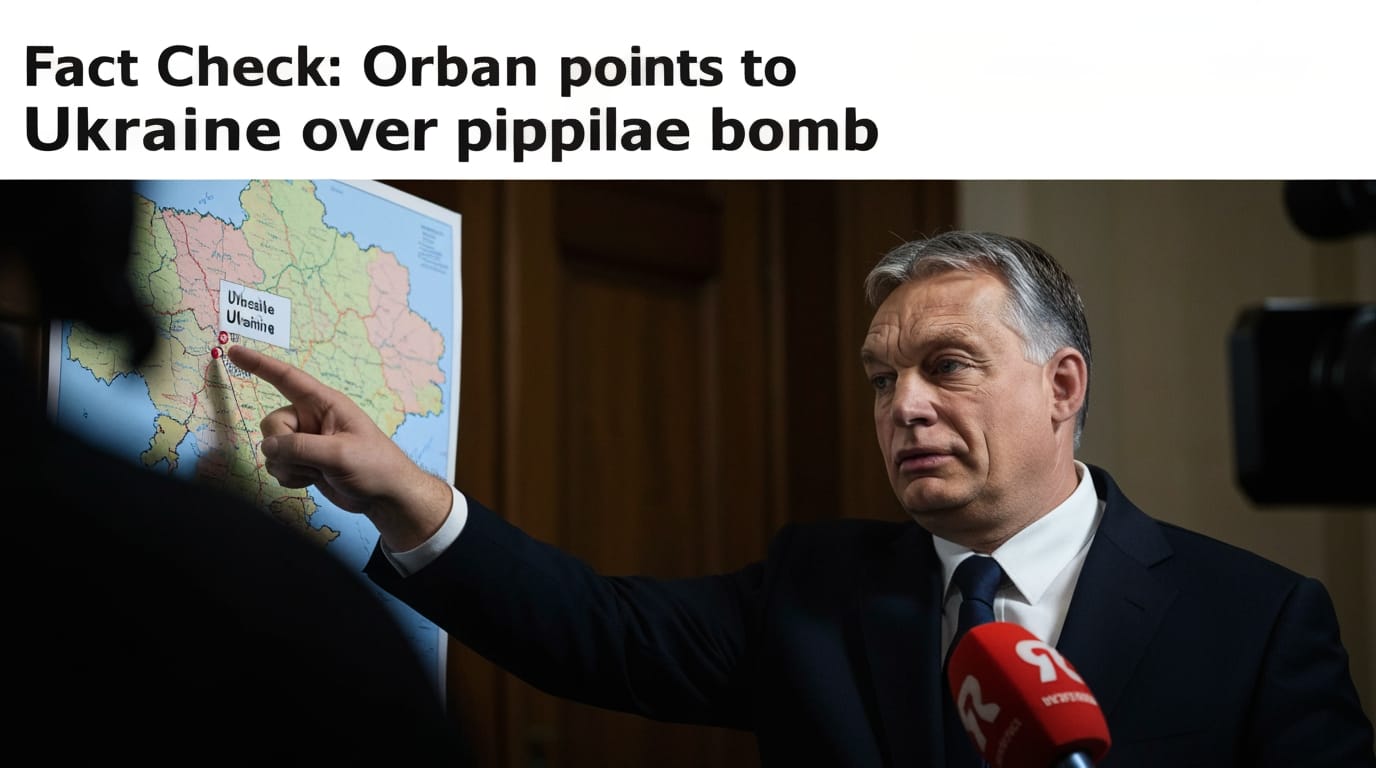
BUDAPEST, HUNGARY – Hungarian Prime Minister Viktor Orban has reignited controversy surrounding the 2022 Nord Stream pipeline explosions, directly accusing Ukraine of responsibility for the sabotage. His assertive claims, made during recent statements, come amidst already strained relations between Budapest and Kyiv, exacerbated by ongoing energy disputes and a recent incident involving explosives found near a gas pipeline in Serbia that supplies Hungary.
Orban's pronouncements mark a significant and unsubstantiated accusation from a European Union leader, potentially further complicating international investigations and geopolitical alliances at a critical juncture in the conflict in Ukraine. The Hungarian leader’s assertions align with a broader narrative from Budapest that casts Ukraine as a disruptive force threatening Hungary’s energy security, a stance that has been met with strong denials from Kyiv and skepticism from other European nations.
Orban's Direct Accusations and the Context of Escalation
Prime Minister Orban has unequivocally stated that Ukraine was behind the Nord Stream pipeline attacks. "Those who blocked the Druzhba oil pipeline are the same people who blew up Nord Stream. It was the Ukrainians," Orban asserted, framing the alleged act as "state terrorism" aimed at disrupting Hungary's energy supplies and coercing financial support for Ukraine. He further argued that Ukraine is violating agreements with the European Union by taking actions that jeopardize the energy security of member states.
These claims are not isolated. Orban has consistently maintained a distinctive position within the European Union regarding the conflict in Ukraine, often advocating for a pro-peace stance that critics argue aligns with Russian interests. His government has frequently blocked EU aid packages to Kyiv and maintained a dialogue with Moscow, positioning Hungary as an outlier in the collective European response to the ongoing war. The latest accusations surfaced amid a dispute where Orban attributed a halt in Russian oil transit via the Druzhba pipeline to Ukrainian actions, further intensifying the rhetoric.
The Enigma of the Nord Stream Sabotage
The Nord Stream 1 and 2 pipelines, critical arteries for Russian natural gas supplies to Germany, were crippled by a series of underwater explosions in September 2022. The incidents released vast quantities of methane into the Baltic Sea, triggering immediate international concern and launching investigations by Germany, Denmark, and Sweden. All three nations confirmed that the damage resulted from powerful explosions, indicating deliberate sabotage.
However, definitive attribution has remained elusive. Both Denmark and Sweden concluded their investigations in 2024 without publicly identifying those responsible, citing insufficient grounds to pursue a criminal case. Germany's probe, while ongoing, has offered some suggestive details. German media reports, citing investigative findings, have pointed towards the involvement of a pro-Ukrainian group. These reports have detailed the alleged use of a yacht, the Andromeda, hired by a Ukrainian-owned company, and the discovery of traces of sophisticated underwater explosives, such as Octogen or HMX, on samples taken from the vessel. Some reports have even named a Ukrainian national, Serhii K, Serhii Kuznetsov, or Volodymyr Zhuravlev, as a suspect linked to the operation. Further, Dutch military intelligence reportedly warned the CIA in mid-2022 about a Ukrainian plan to sabotage the pipelines, a plan allegedly overseen by General Valerii Zaluzhnyi, but purportedly without the knowledge of President Zelensky to maintain deniability.
Despite these suggestive leads, Ukrainian officials have vehemently denied any involvement in the Nord Stream attacks. Meanwhile, Russia, which previously blamed the United States and the United Kingdom for the sabotage without providing evidence, has leveraged the investigative ambiguities to sow division.
A New Pipeline Incident and Renewed Accusations
Adding another layer to the complex narrative, an incident in early April 2026 saw the discovery of explosives near a gas pipeline in Serbia that transports Russian gas to Hungary. Serbian authorities reported finding two backpacks rigged with plastic explosives just hundreds of feet from the Balkan Stream pipeline. While Serbian officials initially noted the explosives were US-made and subsequently denied Ukrainian involvement in this specific Serbian incident, Prime Minister Orban quickly linked it to what he described as Ukraine's consistent efforts to disrupt Europe's energy supply.
Orban, while not directly blaming Ukraine for the Serbian incident, indicated that Ukraine possesses both the "ability and willingness" to carry out such actions, placing the event within a "series of events" impacting energy infrastructure. Ukraine's Foreign Ministry promptly rejected these accusations, suggesting the incident could be a Russian "false-flag operation" designed to influence the upcoming Hungarian elections. Opposition parties within Hungary echoed these suspicions, alleging that the timing of such events serves to create fear and bolster Orban's political standing ahead of a crucial election.
Geopolitical Implications and Lingering Questions
Orban's pointed accusations regarding the Nord Stream sabotage, coupled with his narrative around the recent Serbian pipeline incident, carry significant geopolitical weight. By directly implicating Ukraine, he challenges the solidarity of European nations supporting Kyiv and amplifies a message that has often been aligned with Moscow's interests. Such claims, particularly when unsubstantiated by definitive international investigative conclusions, risk further fracturing the European Union's united front against Russian aggression.
The ongoing investigations into the Nord Stream attacks, and the conflicting claims surrounding the Serbian pipeline incident, underscore the volatile nature of energy security in Europe. With major probes yielding few public answers, and political leaders selectively interpreting available information, the truth behind these acts of sabotage remains contested. The lack of a clear consensus leaves room for various narratives to take root, impacting international trust and diplomatic relations.
The broader implications extend to the credibility of international investigations and the potential for political leaders to leverage complex security incidents for domestic or geopolitical gain. As Europe grapples with energy challenges and the continuing war, the unresolved questions surrounding pipeline sabotages, combined with assertive, yet unproven, accusations from member states, contribute to an environment of heightened uncertainty and distrust within the international community. The need for definitive factual conclusions, transparently presented, remains paramount for stability in the region.


