Hungary Bans Pride Events Amidst Rising Concerns of Russian Influence
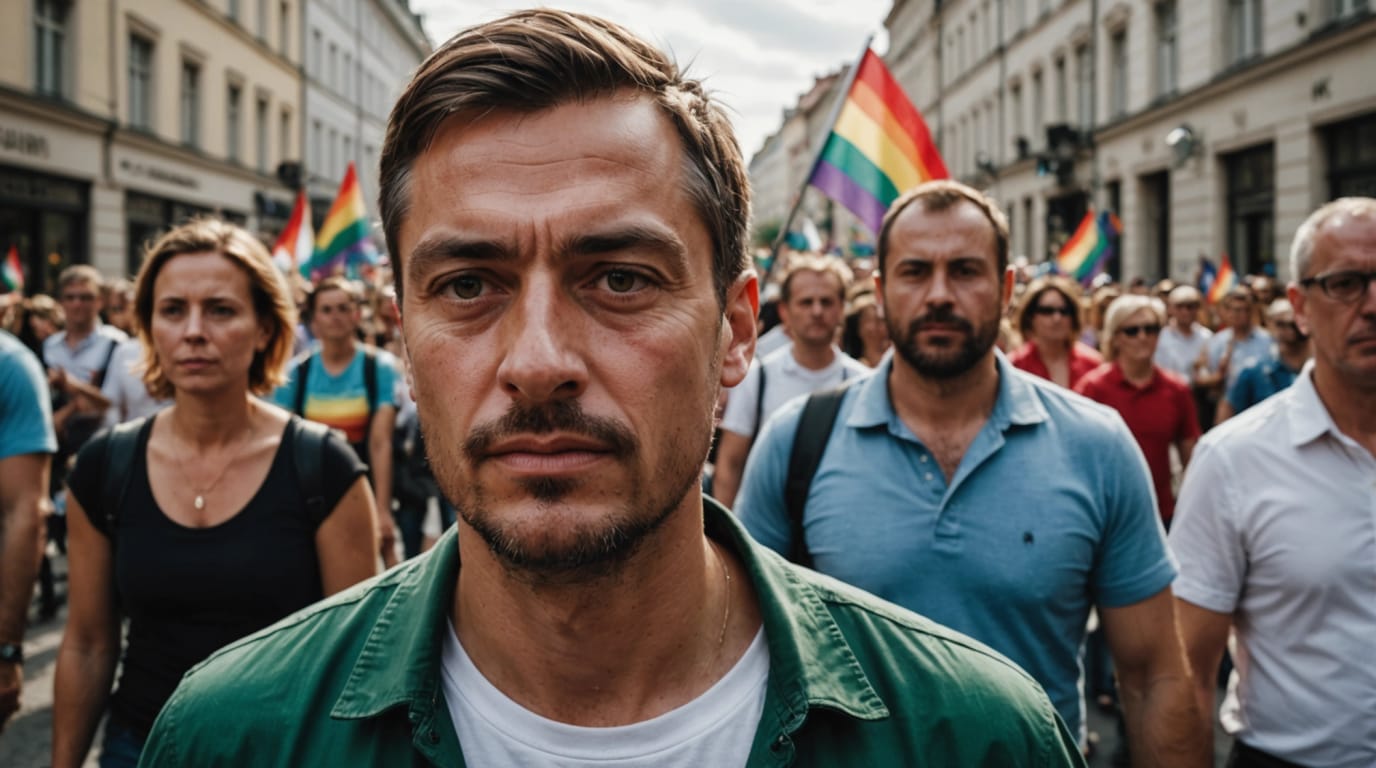
Hungary has enacted a law prohibiting LGBTQ+ Pride events, sparking widespread protests and raising concerns about the country's alignment with Russia's increasingly restrictive policies on LGBTQ+ rights. The move, spearheaded by Prime Minister Viktor Orbán's nationalist-populist party, has been condemned by human rights organizations and opposition leaders as a blatant attack on the LGBTQ+ community and a violation of fundamental rights. Critics fear the legislation mirrors tactics employed by Russian President Vladimir Putin, who has aggressively suppressed LGBTQ+ rights in Russia.
Content of the Law and its Ramifications
The new law amends Hungary's Act on the Right of Assembly, effectively criminalizing the organization of events and penalizing attendance at gatherings that violate the country's "Propaganda Law." This law, passed in 2021, forbids the "depiction or promotion" of homosexuality to minors, a provision that LGBTQ+ advocates argue is being exploited to target LGBTQ+ people under the guise of protecting children.
Furthermore, the legislation authorizes the use of facial recognition technology to monitor attendees at public gatherings, raising concerns about surveillance and potential discrimination. Opponents of the law argue that it creates a chilling effect on freedom of expression and peaceful assembly, making it more difficult for LGBTQ+ individuals and their allies to advocate for their rights.
The penalties for violating the law are significant, with fines ranging from 6,500 to 200,000 Hungarian forints (€16 to €502). This financial burden could disproportionately affect LGBTQ+ individuals and organizations, further marginalizing them within Hungarian society.
Protests and Opposition
The passage of the law has triggered widespread protests in Budapest and across Hungary. Thousands of demonstrators have taken to the streets, chanting anti-government slogans and blocking traffic in defiance of police orders. Opposition legislators have also staged protests within the parliament, using rainbow-colored smoke bombs to disrupt proceedings and express their dissent.
Evgeny Belyakov, a Russian citizen who immigrated to Hungary after facing repression in Russia, participated in the protests, drawing parallels between the situation in Hungary and the erosion of rights in Russia. He expressed fears that Hungary is following a similar path, warning that a failure to resist these measures could lead to a further crackdown on civil liberties.
Echoes of Russian Tactics
Critics have drawn attention to the similarities between Hungary's new law and Russia's policies on LGBTQ+ rights. In December 2022, Putin expanded Russia's ban on "propaganda of nontraditional sexual relations" to include adults, effectively outlawing any public endorsement of LGBTQ+ activities. This move has been widely condemned by international human rights organizations as a violation of fundamental rights and a setback for LGBTQ+ equality.
The Hungarian government's justification for the law, which centers on protecting children from "sexual propaganda," also echoes rhetoric used by Russian authorities to justify their own restrictive policies. Critics argue that this rhetoric falsely conflates homosexuality with pedophilia and is used to stoke prejudice and discrimination against LGBTQ+ people.
Hadley Renkin, a gender studies professor at Central European University, told Truthout that Orbán is making a powerful statement about what kind of people he and his party think Hungarians should be in terms of their gender and sexual expression, and making it much less possible for all Hungarians to express social and political dissent of any kind.
Political Motivations and International Reactions
The timing of the law's passage has led some observers to speculate about Prime Minister Orbán's political motivations. With Hungary facing economic challenges and an election approaching in 2026, some analysts believe that Orbán is using the issue of LGBTQ+ rights to distract the electorate and consolidate his support among conservative voters.
According to Politico, Fidesz says it's trying to prohibit Pride to keep children safe from the so-called LGBTQ+ agenda, but opponents say the prime minister's party is trying to create a wedge issue.
The European Union has expressed concerns about the law, with some officials suggesting that it could violate EU law and undermine fundamental rights. However, the EU's ability to take action against Hungary is limited, as Orbán has repeatedly blocked EU initiatives that he opposes.
Implications for the Future
The ban on Pride events in Hungary represents a significant setback for LGBTQ+ rights in the country and raises concerns about the future of democracy and human rights under Orbán's leadership. Critics fear that the law could embolden further attacks on LGBTQ+ people and other marginalized groups, leading to a further erosion of civil liberties.
The situation in Hungary also highlights the growing influence of Russia in Central and Eastern Europe, where authoritarian leaders are increasingly adopting policies that mirror those of the Putin regime. This trend poses a challenge to the EU and the international community, which must find ways to support human rights and democracy in the region.
As Budapest Pride wrote in a statement, this is not child protection, this is fascism, saying that the electorally threatened Orbán wants to win votes from the extremes of Hungary's far right to boost his chances of winning the country's next election, likely to be held in April 2026.
The Hungarian government's actions have sparked outrage and condemnation from LGBTQ+ advocates, human rights organizations, and international observers. The future of LGBTQ+ rights in Hungary remains uncertain, but the resistance and activism of those who oppose the ban offer a glimmer of hope in a challenging environment.


