Hungary Gripped by "Operation Purgatory" as New Prime Minister Moves to Dismantle Orbán Era
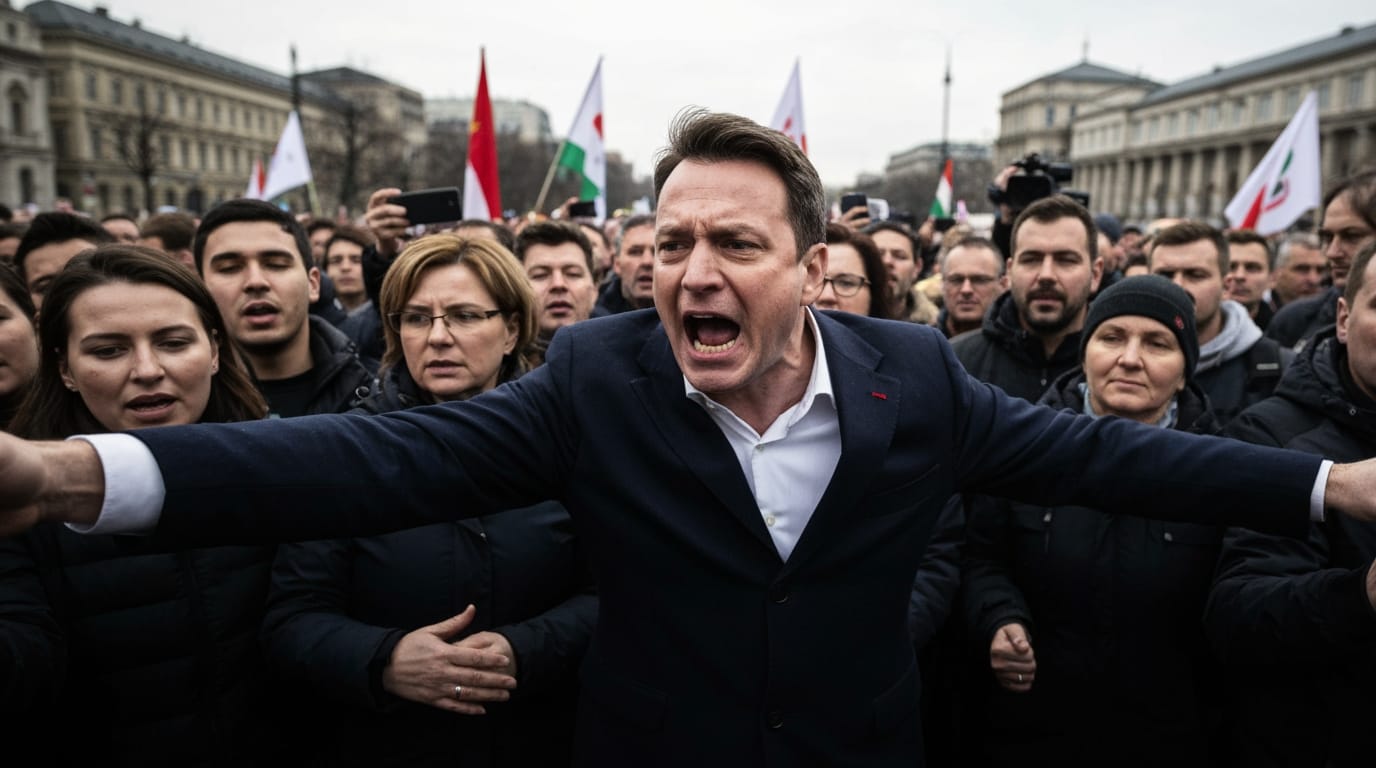
BUDAPEST — Hungary is currently witnessing a profound political transformation as newly elected Prime Minister Péter Magyar launches an ambitious initiative dubbed "Operation Purgatory," aimed at systematically dismantling the long-entrenched "Orbán system" and rooting out alleged widespread corruption. This sweeping campaign follows Magyar's landslide victory in the April elections, which saw his Tisza party secure a supermajority, effectively ending Viktor Orbán's 16-year reign and signaling a dramatic shift in the nation's political trajectory. The new government's bold steps include establishing an independent anti-corruption agency and proposing constitutional amendments designed to reshape Hungary's institutional landscape, promising a new era of accountability and transparency.
The Architect of Change: Péter Magyar's Ascent
Péter Magyar, once an insider within Orbán's Fidesz party and the former husband of ex-Justice Minister Judit Varga, dramatically broke ranks with the previous administration in early 2024. His emergence as a prominent opposition figure was catalyzed by the presidential pardon scandal involving Katalin Novák, which ignited public outrage and fueled calls for political change. Capitalizing on widespread dissatisfaction with both the ruling Fidesz and the traditional opposition, Magyar rapidly galvanized public support, positioning himself as a fresh, centrist voice against what he termed a "feudalistic system" of governance.
His campaign resonated deeply across the country, attracting hundreds of thousands to rallies and leading to an unprecedented victory for the Tisza party. The election results, which saw Tisza capture 138 out of 199 parliamentary seats with 53.6% of the vote, granted Magyar's government a two-thirds majority, empowering him to initiate significant constitutional and legislative reforms. This decisive mandate has been widely interpreted as a rejection of the political system constructed by Orbán since 2010 and a clear demand for change.
Unveiling "Operation Purgatory": A War on Corruption
At the core of Magyar's reform agenda is "Operation Purgatory," a comprehensive political, economic, and legal initiative to combat corruption and undue influence within the state. Speaking in Parliament on June 22, Prime Minister Magyar outlined the initiative, comparing the alleged corruption network to organized crime and declaring his mission to "free our country from the economic and political mafia."
A key component of this operation is the proposed National Office for Asset Recovery and Protection. This new, independent agency, which will report directly to Parliament, is tasked with investigating suspected financial abuses and corruption linked to the previous government over the past two decades. Its responsibilities will span monitoring public procurement procedures, concession agreements, transfers of state assets, government investment projects, the use of European Union funds, and financial transactions that raise suspicions of harm to state interests. The legislation to establish this office is expected to pass swiftly through Parliament, given Tisza's commanding majority. Magyar asserts that corruption has cost Hungary 8% to 10% of its Gross Domestic Product in recent years, underscoring the perceived urgency of these reforms.
Dismantling the "Orbán System" and Institutional Overhaul
Magyar's government is not only targeting financial corruption but also aiming to dismantle the structural elements that allegedly enabled the "Orbán system" to flourish. Critics, including Magyar himself, have accused the previous administration of systematically weakening democratic institutions, consolidating power, and channeling public funds to a select group of politically connected elites and family members. Specific allegations include the misuse of public funds, inflated contracts, and the erosion of checks and balances within governance. Investigations by the European Anti-Fraud Office (OLAF) have previously revealed irregularities in public procurement, including collusion and inflated prices, with one notable case being the "Elios case" involving Orbán's son-in-law.
To counter these practices, Magyar's government plans to introduce several constitutional and legal changes. These include a proposed constitutional amendment to limit prime ministers to an eight-year term, a restriction that would prevent former Prime Minister Orbán from returning to office. Furthermore, the government intends to dissolve the Sovereignty Protection Office, an Orbán-era creation criticized for targeting non-governmental organizations, media outlets, and political parties under the guise of preventing foreign influence. Other reforms include imposing age limits for Constitutional Court judges, which could affect key Orbán allies, and empowering judges in the selection of judicial leaders. These measures are designed to restore institutional accountability and strengthen the rule of law.
Immediate Challenges and International Repercussions
The path to reform is not without its immediate challenges. Prime Minister Magyar has initiated steps to remove President Tamás Sulyok from office, describing him as a "puppet" of the former regime and accusing him of failing to represent national unity. This move, which would involve a constitutional amendment to terminate Sulyok's mandate, has drawn criticism from some legal experts who warn of setting a dangerous precedent. However, Magyar argues that retaining Orbán-linked figures in key positions would contradict the electoral mandate for change.
Internationally, Magyar's victory and his reform agenda are expected to significantly alter Hungary's relationship with the European Union. The Orbán government's confrontational stance and its perceived democratic backsliding led to the freezing of billions of euros in EU funds. Magyar has signaled a desire for a more cooperative relationship with Brussels, with anti-corruption measures central to unlocking these suspended funds. This shift could also impact Hungary's approach to other contentious issues, such as the war in Ukraine, with expectations of a less confrontational stance from Budapest.
A New Chapter for Hungarian Democracy
As "Operation Purgatory" unfolds, Hungary stands at a critical juncture. Prime Minister Péter Magyar's decisive electoral victory has empowered him with a robust mandate to enact profound changes, aiming to unravel decades of alleged state capture and systemic corruption. The establishment of new anti-corruption bodies, coupled with constitutional and institutional reforms, reflects a deep-seated aspiration within the electorate for a more transparent and accountable government. While the Orbán-led Fidesz party has rejected the allegations, the new administration is pressing forward with its promise to expose and rectify past wrongdoings. The success of this ambitious undertaking will not only redefine Hungarian politics but also determine the country's standing within the European Union and its future as a democratic nation. The coming months will reveal the full extent of this "cleansing fire" and its lasting impact on Hungary's democratic foundations.


