Hungary Gripped by Political Shake-Up as Former PM Orbán Vows Resistance Against New Premier Magyar
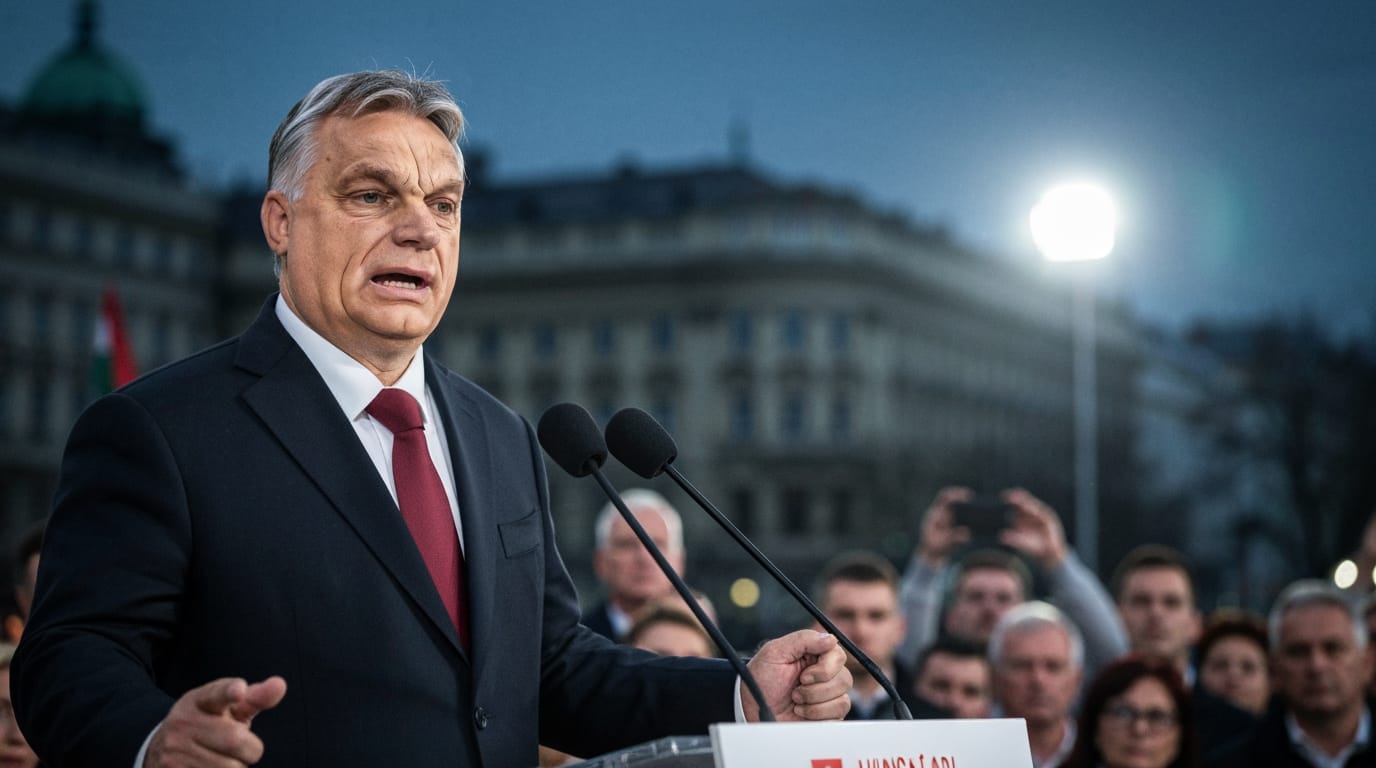
BUDAPEST – Hungary is navigating an unprecedented political landscape following the decisive parliamentary elections in April 2026, which saw the ousting of long-serving Prime Minister Viktor Orbán and the ascent of Péter Magyar, a former insider turned formidable opposition leader. The dramatic shift, marked by Magyar's Tisza Party securing a supermajority, has ushered in a new era for Hungarian politics, though not without immediate and fervent pushback from the former ruling guard. In a potent display of the lingering political divide, ex-Prime Minister Orbán has recently called upon his supporters to resist what he terms Prime Minister Magyar's "tyranny," accusing the new government of crushing democracy and abusing power.
The Fall of an Era and the Rise of an Insider
Péter Magyar, 45, emerged from relative obscurity within the Fidesz establishment to orchestrate one of Hungary's most significant political upsets in recent history. His journey to the premiership began in early 2024, when he publicly broke with the ruling Fidesz party amidst the scandalous presidential pardon granted by then-President Katalin Novák. Magyar, who was once married to Orbán's former Justice Minister Judit Varga, leveraged his insider knowledge to expose alleged corruption and what he described as systemic issues within Orbán's administration.
This pivotal moment allowed Magyar to position himself as a credible alternative to both the entrenched Fidesz government and a fractured traditional opposition. Drawing on deep-seated public dissatisfaction, he swiftly galvanized a grassroots movement, transforming the largely unknown Tisza (Respect and Freedom) Party into a potent political force. His appeal resonated across various demographics, uniting former Fidesz supporters, liberals, centrists, and disillusioned conservatives under a banner of anti-corruption and national renewal. This rapid ascent was evident in the 2024 European Parliament elections, where Tisza secured nearly 30% of the vote, making it the strongest opposition party and signalling a profound shift in voter sentiment.
A Landslide Mandate for Change
The political earthquake culminated in the April 2026 parliamentary elections, where Péter Magyar's Tisza Party delivered a stunning landslide victory, ending Viktor Orbán's 16-year stronghold on power. With an exceptionally high voter turnout approaching 79%, Tisza secured 141 out of 199 seats in the National Assembly, achieving a two-thirds supermajority. This commanding mandate empowers the new government to enact significant constitutional changes without needing support from other parties.
Magyar's campaign focused intensely on promises to dismantle what he termed Orbán's "feudalistic system." He pledged to restore democratic checks and balances, aggressively combat corruption, and re-establish stronger ties with the European Union. The message of accountability and a return to European democratic norms resonated deeply with an electorate fatigued by years of alleged misconduct and a confrontational stance with Brussels. On election night, as results solidified, a jubilant Magyar declared to cheering supporters in Budapest, "We have liberated Hungary and have taken back our country," while Orbán conceded defeat, describing the outcome as "painful."
The New Government's Agenda and Orbán's Resistance
Since assuming office in May 2026, Prime Minister Péter Magyar has wasted no time in initiating his promised reforms. His government has committed to forming six parliamentary investigative committees to probe alleged corruption and abuses of power during Orbán's previous administration, including the suspected misappropriation of public funds managed by the National Bank. Magyar has stated, "We will put all corruption and abuses of power on full display. The Hungarian people have the right to know who benefited from their money, who stole their money, who got rich from the vulnerability of the people."
A key legislative move has been the introduction of a constitutional amendment limiting the prime minister's term to eight years, a measure directly aimed at preventing future leaders from accumulating power as Orbán did. This initiative is part of a broader effort to dismantle elements of Orbán's illiberal constitutional system and restore democratic institutions.
However, the transition of power has not been without immediate contention. Viktor Orbán, now serving as former Prime Minister, has not retreated quietly. Just weeks after Magyar's government was sworn in, Orbán issued a "Statement of Resistance" on Facebook, accusing the new government of undermining democracy and establishing its own form of "tyranny." His strong rebuke followed a raid by prosecutors on Fidesz offices, which Orbán claimed was politically motivated and designed to hinder his party's operations. Orbán has denied all corruption allegations, contending that constitutional changes by Magyar's government, such as ending the mandates of the president and the head of the constitutional court, demonstrate an authoritarian approach. The Tisza Party, conversely, denies these accusations, asserting its commitment to curbing corruption and bringing Hungary back into the European mainstream.
Reshaping Hungary's Future and European Relations
The political seismic shift under Péter Magyar is poised to significantly reshape Hungary's domestic governance and its standing on the international stage. His government has signalled a departure from Orbán's often confrontational posture towards Brussels, indicating a desire for a more cooperative relationship with the European Union. This includes engaging in constructive talks regarding the release of frozen EU funds, which were previously withheld over rule-of-law concerns. Magyar has also expressed intentions to end Hungary's dependence on Russian energy by 2035, while maintaining Orbán's opposition to sending weapons to Ukraine and fast-tracking its EU membership bid.
Domestically, the expectations for Magyar's government are exceptionally high. Beyond corruption investigations and constitutional reforms, he faces the challenge of addressing long-standing public frustrations over economic stagnation and underinvestment in public services. The Tisza Party’s broad electoral coalition, encompassing diverse ideological backgrounds, presents both an opportunity for national unity and a potential challenge in navigating varied expectations.
Conclusion
Hungary stands at a critical juncture, having witnessed a remarkable political upheaval that brought an end to Viktor Orbán's formidable 16-year rule. Péter Magyar's meteoric rise, fueled by a promise of accountability and renewed democratic values, has fundamentally altered the nation's political trajectory. While the new Prime Minister embarks on an ambitious agenda of reform and reconciliation with Europe, the vocal resistance from the former ruling party signifies that Hungary's political landscape remains charged with tension and ideological contestation. The path forward for Magyar's government will involve navigating these inherent challenges while striving to fulfill its mandate for a more transparent, democratic, and pro-European Hungary.


