Hungary Realigns with Europe: Orbán Concedes as Pro-EU Movement Sweeps to Power
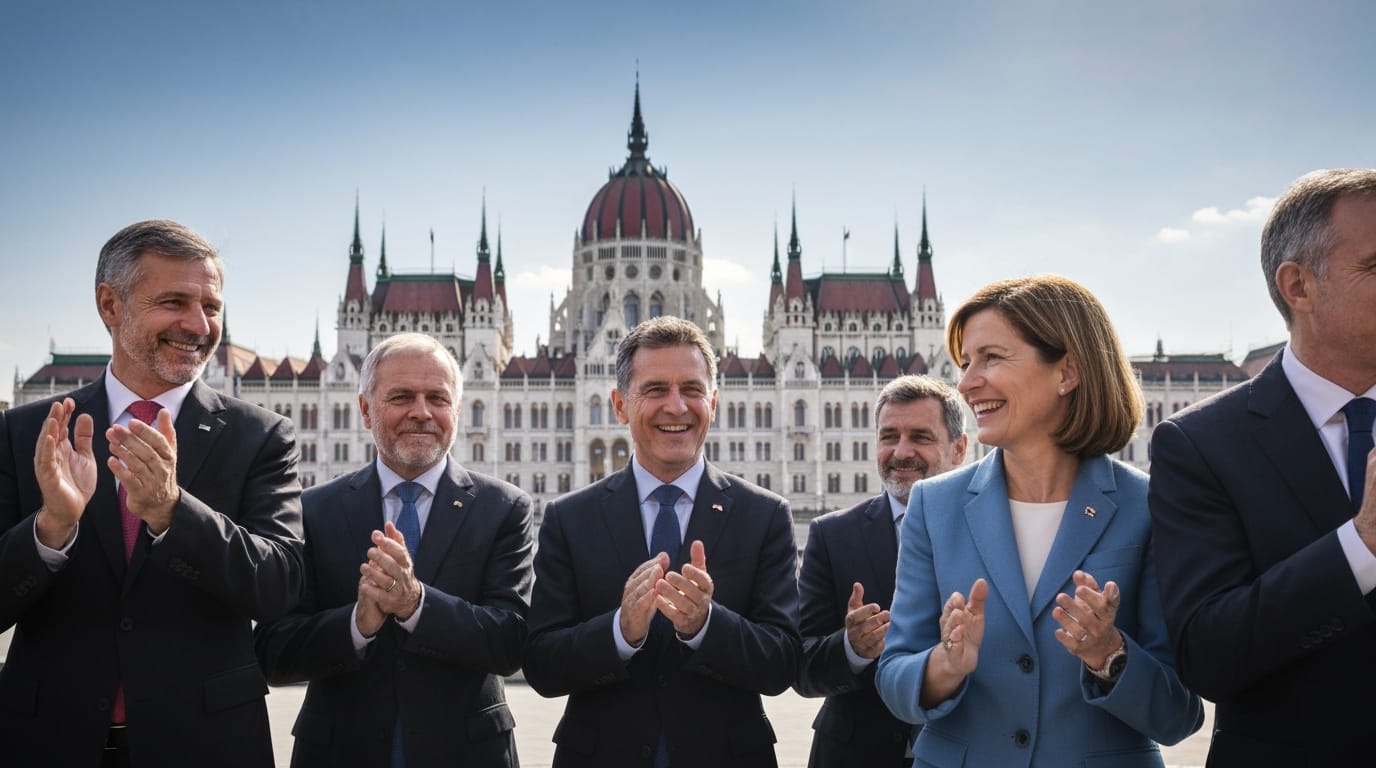
BUDAPEST – A political earthquake has reshaped Hungary's landscape, as Prime Minister Viktor Orbán conceded defeat in a landmark general election, bringing an end to his 16-year tenure. The surprising victory of Péter Magyar's pro-European Tisza party has been met with a wave of enthusiastic congratulatory messages from across the European Union, signaling a potential thaw in relations that have long been strained by concerns over democratic backsliding and rule of law. European leaders have hailed the outcome as a triumph for European values and a clear indication that Hungary is reaffirming its commitment to the bloc.
A Decisive Shift: Orbán's Era Concludes
The parliamentary elections, held on April 12, 2026, delivered a stunning rebuke to the long-serving Prime Minister Viktor Orbán and his Fidesz party. Initial results indicated that the opposition Tisza party, led by newcomer Péter Magyar, secured a significant majority, potentially achieving a two-thirds supermajority in the 199-seat parliament. This decisive outcome grants Magyar's movement the legislative power to potentially roll back some of the profound constitutional and institutional changes enacted during Orbán's extended period in office. With nearly half of the votes tallied, Orbán himself acknowledged the situation, stating, "The election results are not final yet, but the situation is understandable and clear. The responsibility and possibility of governing was not given to us. I have congratulated the winner." This concession marks a pivotal moment in Hungarian politics, signifying the first time since the fall of communism in 1989 that a ruling party has been ousted by a resurgent opposition movement, and it was achieved with a record turnout, reaching approximately 77.8%.
Brussels Celebrates a Renewed Alignment
The reaction from European capitals and the top echelons of the EU has been swift and overwhelmingly positive. European Commission President Ursula von der Leyen was among the first to express her elation, posting on social media that "Europe's heart beats stronger tonight in Hungary," and emphatically stating, "Hungary has chosen Europe. Europe has always chosen Hungary. A country claims its European path. The Union is strengthened." She also reportedly engaged in a congratulatory call with Magyar, agreeing to work in "close collaboration."
French President Emmanuel Macron echoed this sentiment, praising "this victory of democratic participation, for the commitment of the Hungarian people to the values of the European Union and for Hungary in Europe." German Chancellor Friedrich Merz also extended his "heartfelt congratulations," expressing his eagerness to "join forces for a strong, secure and, above all, united Europe." Other leaders, including the Prime Ministers of Sweden, Estonia, Latvia, Croatia, Ireland, and Spain, similarly lauded the result as a "historic choice" for a "free and strong Hungary" within a "united Europe," often framing it as a victory for European democracy and values. Even Ukrainian President Volodymyr Zelensky congratulated Magyar on his "resounding victory," pledging to work constructively with the new leadership, underscoring the broader geopolitical implications of the shift.
The Orbán Years: A Trajectory of Tension
Viktor Orbán, a self-described proponent of "illiberal democracy," had been a dominant figure in Hungarian and European politics for over a decade and a half. His rule, which began in 2010, was characterized by a consolidation of power, significant reforms to the country's institutions, and a foreign policy often at odds with the mainstream European consensus. Over the years, the EU had consistently raised concerns about the erosion of the rule of law, judicial independence, freedom of the press, and civil liberties in Hungary under his administration.
These concerns led to significant tensions, including the activation of the Article 7 procedure by the European Parliament in 2018, which aimed to address persistent breaches of EU values. Billions of euros in EU funds had been frozen due to ongoing disputes over corruption and rule of law standards. Orbán's government had also been criticized for its stance on issues such as migration, LGBTQ+ rights, and its perceived closeness to Russia, particularly following the invasion of Ukraine. This history provides crucial context for the EU's current jubilant reaction, as Magyar's victory is seen as an opportunity to reset and realign Hungary within the European framework.
Charting a New Course: Challenges and Opportunities
Péter Magyar, a former government insider who broke ranks with Orbán's Fidesz party, successfully tapped into widespread discontent over alleged state corruption and falling living standards. His campaign resonated particularly with young voters eager for change, and his promises to normalize relations with the EU appear to have been a key factor in his electoral success.
The transition of power, however, will not be without its challenges. Magyar's new government faces the complex task of dismantling entrenched systems and rebuilding trust in democratic institutions. Hungary's struggling economy, cited as a significant factor in Orbán's decline, will also require immediate attention. A key implication of Magyar's victory is the potential unfreezing of the substantial EU funds previously withheld, which could provide a much-needed economic boost and foster greater cooperation between Budapest and Brussels. While some of Magyar's positions on certain policy issues may still align with elements of Orbán's approach, his commitment to a pro-European path signals a willingness to engage constructively with the EU.
A Turning Point for Hungary and the EU
The outcome of Hungary's 2026 general election marks a profound turning point. For Hungary, it represents a break from a long-standing political trajectory and an opportunity to address domestic issues while mending its often-fractious relationship with the European Union. For the EU, it is a significant moment that bolsters its foundational values and strengthens its collective unity, particularly after years of internal debate and concern regarding the state of democracy in one of its member states. The enthusiastic embrace of Péter Magyar's victory by European leaders underscores the hope that this new chapter will lead to a more cooperative and integrated Hungary within the European family. The path ahead will involve complex reforms and renewed dialogue, but the initial applause from Brussels suggests a strong desire for reconciliation and a shared vision for a united Europe.


