Romania Plunges Deeper into Political Turmoil as Government Collapses
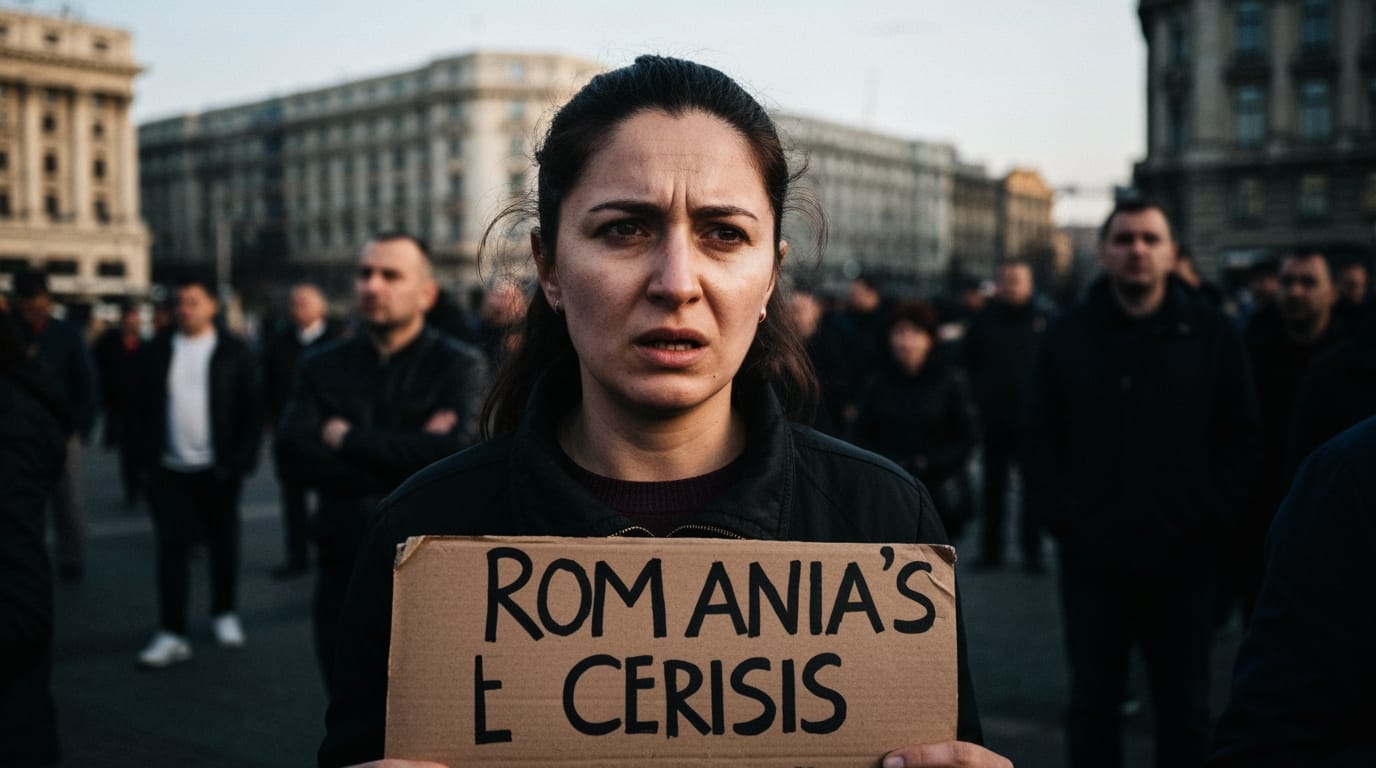
BUCHAREST – Romania's pro-European coalition government has collapsed, casting a shadow of uncertainty over the nation's political and economic stability and raising concerns across the European Union. Prime Minister Ilie Bolojan's administration was toppled on May 5, 2026, after losing a no-confidence vote initiated by his former coalition partner, the Social Democratic Party (PSD), in an unusual alliance with the surging far-right Alliance for the Union of Romanians (AUR). The dramatic turn of events, less than a year after the government was sworn in, underscores deep-seated divisions over fiscal austerity and the growing influence of anti-establishment forces.
The Fall of the Bolojan Cabinet
The parliamentary vote of no confidence delivered a decisive blow to Prime Minister Ilie Bolojan, a liberal from the National Liberal Party (PNL). The motion passed with 281 votes in the 464-seat parliament, marking the largest margin for such a motion in Romania's post-communist history. The PSD, the largest party in parliament, had formally withdrawn its support for Bolojan following an internal online ballot, citing irreconcilable differences over his government's economic policies and leadership style. Bolojan had previously refused to step down despite an ultimatum from the PSD leadership, signaling his intention to lead a minority government if necessary. The far-right AUR, a vocal critic of the mainstream establishment, enthusiastically joined the PSD in bringing down the government, with its leader George Simion calling for immediate early elections.
Austerity's Unpopular Cost: The Economic Divide
At the heart of the government's demise lay a fierce disagreement over the necessity and impact of stringent fiscal austerity measures. Bolojan's grand coalition, formed in June 2025, inherited a challenging economic landscape, with Romania grappling with one of the highest budget deficits in the European Union, peaking at 9.3% of GDP in 2024. To address this and secure crucial EU recovery funds—approximately €10 billion at stake with an August cutoff—the government implemented unpopular measures including tax increases, freezes on public sector wages and pensions, and cuts to public spending. While these policies succeeded in reducing the deficit to 7.9% in 2025, the PSD argued that they were harming the economy and severely impacting the living standards of ordinary Romanians. The coalition's own internal design, which included a rotating premiership meant to balance power between the Liberals and Social Democrats, also contributed to heightened competition and an eventual breakdown of trust, with the next handover scheduled for April 2027.
A Precedent of Instability: Elections, Interference, and the Far-Right's Ascent
The recent government collapse is not an isolated incident but rather the latest chapter in a period of significant political instability for Romania. The country experienced a severe electoral disruption in late 2024 when the Constitutional Court annulled the November presidential election results due to credible allegations of foreign interference, including AI-driven disinformation campaigns. A rerun of the presidential election in May 2025 saw centrist, pro-European Nicușor Dan defeat the far-right nationalist candidate George Simion. This turbulent electoral cycle, coupled with long-standing issues of political clientelism, corruption, and a weakening of democratic norms, has fueled public disillusionment and created fertile ground for anti-establishment sentiment. The Alliance for the Union of Romanians (AUR) has been the primary beneficiary of this discontent, rapidly surging in opinion polls to become the most popular party with an estimated 37% support. This rise of populist, Eurosceptic forces mirrors broader trends across Central and Eastern Europe and poses a significant challenge to Romania's pro-Western trajectory.
Economic Repercussions and the Path Forward
The immediate aftermath of the government's collapse has sent ripples through Romania's financial markets. The national currency, the leu, has hit record lows, and market jitters reflect concerns about the country's financial stability. Analysts have drawn comparisons to the sovereign debt crisis faced by Greece in 2010, highlighting the severe risks associated with fiscal delays and ongoing political instability. Crucially, the continued uncertainty could jeopardize Romania's access to vital EU recovery and resilience funds, which are contingent on meeting specific fiscal consolidation targets and implementing further reforms.
Despite the domestic turmoil, analysts suggest that Romania's pro-Western foreign policy and security trajectory, particularly its commitment to NATO and the EU, are unlikely to change. President Nicușor Dan, who ruled out the possibility of early elections, now faces the formidable task of navigating the political landscape. He is expected to initiate consultations with political parties to try and rebuild a stable governing majority, either under a new PNL premier or potentially a technocrat. However, the deep divisions, particularly the PNL and the reformist Save Romania Union (USR) vowing to oppose any future administration involving the PSD, complicate these efforts.
The path ahead for Romania remains fraught with challenges. The country must urgently address its economic vulnerabilities while contending with a fragmented political class and the increasing polarization driven by the far-right. The stability of any future government will be paramount to unlocking EU funds, restoring investor confidence, and ensuring that Romania can navigate the complex domestic and international pressures it faces. The ability of Romania's political actors to coalesce around a viable solution will determine not only the nation's immediate future but also its long-term democratic resilience and economic prosperity.


