South Korea Charts Course for Nuclear Submarine Future Amidst Regional Tensions
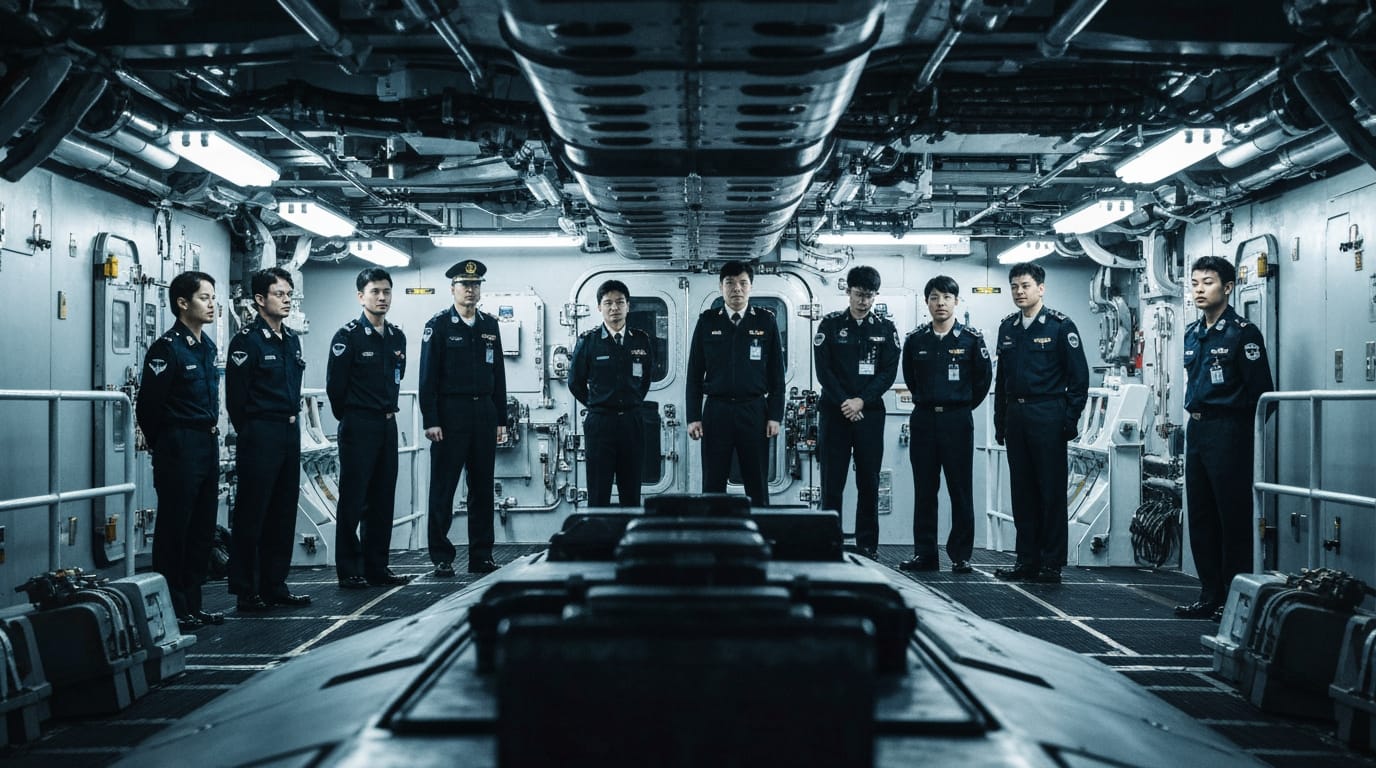
SEOUL – South Korea has officially launched an ambitious plan to develop and deploy its first nuclear-powered submarine by the mid-2030s, marking a significant shift in its defense posture aimed at countering North Korea's escalating underwater threats. The "Basic Plan for the Development of Nuclear Submarines for the Republic of Korea," unveiled this week by Defense Minister Ahn Gyu-back, signals Seoul's determination to enhance its strategic capabilities while navigating complex geopolitical and non-proliferation landscapes.
This monumental undertaking, dubbed the "Jang Bogo N Project," is presented as a national strategic initiative designed to provide the Republic of Korea Navy with unparalleled underwater endurance and mobility, fundamentally reshaping the balance of power on the Korean Peninsula and potentially beyond.
A Strategic Imperative in a Volatile Region
South Korea's pursuit of nuclear-powered submarines is primarily driven by an urgent need to address North Korea's rapidly advancing submarine-launched ballistic missile (SLBM) capabilities and growing underwater nuclear threats. Conventional diesel-electric submarines, while effective, are limited by shorter submerged endurance and slower speeds, making them less suited for continuously tracking and neutralizing Pyongyang's stealthy submarine fleet.
Defense Minister Ahn Gyu-back emphasized that nuclear-powered submarines would play a "core role" in establishing an "underwater kill chain," a critical concept involving the detection, tracking, and response to North Korean submarines before they can launch missiles. This enhanced capability would provide a persistent underwater presence, allowing South Korea to more effectively shadow adversary submarines and conduct covert strike missions. Beyond deterrence, the project aims to elevate South Korea's status from a security consumer to a more capable security provider within the U.S.-ROK alliance, aligning with Washington's strategic objectives in the Indo-Pacific. Such a move could deepen defense industrial cooperation, foster joint training, and improve operational interoperability with allies.
Navigating the Nuclear Waters: Domestic Development and Non-Proliferation Pledges
The "Jang Bogo N Project" envisions the domestic development and construction of these advanced vessels, leveraging South Korea's formidable shipbuilding, nuclear technology, and defense industries. The first submarine is projected to be launched by the mid-2030s and become fully operational in the latter half of the decade. This initiative is expected to generate over 40,000 jobs across these key sectors, demonstrating its significance as a national industrial development project.
A central tenet of Seoul's plan is a firm commitment to nuclear non-proliferation. South Korea has explicitly stated it will not possess or develop nuclear weapons in any form. Instead, the submarines will be powered by low-enriched uranium (LEU), a crucial distinction that mitigates concerns about weapons-grade material. To ensure transparency and adherence to international standards, South Korea plans to cooperate closely with the United States on fuel management and establish robust safeguards systems with the International Atomic Energy Agency (IAEA).
This endeavor is not without historical precedent. South Korea has explored nuclear submarine capabilities since the early 2000s, with a secret "362 Project" in 2003 reportedly canceled due to U.S. pressure. Renewed interest gained traction in the late 2010s, culminating in U.S. President Donald Trump's reported "political green light" for South Korea to build nuclear-powered submarines during a summit with President Lee Jae Myung last year. This approval marks a notable shift in U.S. non-proliferation policy and is viewed as a "tectonic shift" in the U.S.-ROK alliance.
Hurdles on the Horizon: Costs, Diplomacy, and Technology
Despite the strategic rationale and political backing, the path to a nuclear-powered submarine fleet is fraught with challenges. One of the most significant hurdles is the astronomical financial cost. Preliminary estimates suggest the program could cost approximately 28.9 trillion Korean won (around $21 billion USD), with each submarine unit potentially costing 10 trillion Korean won. This substantial investment comes at a time when South Korea is also pushing for the transfer of wartime operational control (OPCON), an effort that itself demands considerable budgetary allocation for reconnaissance assets and command systems. Concerns have been raised in the U.S. regarding South Korea's capacity to manage both high-cost initiatives concurrently within its defense budget.
Technological complexities also present a formidable obstacle. While South Korea possesses advanced shipbuilding and nuclear energy capabilities, the development of a fully indigenous nuclear propulsion system for submarines requires highly specialized expertise. Past attempts were halted due to various factors, including technological limitations and international pressure.
Diplomatically, navigating the U.S.-Republic of Korea Agreement for Peaceful Nuclear Cooperation, known as the "123 Agreement," remains critical. This agreement prohibits South Korea from enriching uranium or reprocessing spent nuclear fuel, necessitating careful negotiations with the U.S. for fuel supply and technical support. Delayed U.S. consultations and non-proliferation concerns among international observers continue to complicate these discussions, despite Seoul's assurances of using low-enriched uranium and adhering to international safeguards.
Regional Repercussions and Global Impact
The introduction of nuclear-powered submarines by South Korea carries significant regional implications. While Seoul frames the initiative as a defensive measure against North Korea, some analysts suggest it could trigger an arms race in Northeast Asia. Neighboring countries like China and North Korea may view this as justification to further enhance their own naval capabilities, potentially destabilizing the regional security environment. There are also concerns that Japan, a major maritime power, could be spurred to pursue its own nuclear-powered submarine program in response.
Globally, the project tests the limits of the non-proliferation regime. Although South Korea's commitment to using low-enriched uranium and eschewing nuclear weapons is clear, the acquisition of nuclear propulsion technology by a non-nuclear-weapon state raises questions about precedents and potential pathways to proliferation. The U.S. support for South Korea's plan, coming after the AUKUS agreement that provided Australia with nuclear submarine technology, indicates a evolving approach to nuclear naval propulsion among allies.
A New Era of Underwater Deterrence
South Korea's decision to press ahead with its nuclear-powered submarine program marks a pivotal moment in its defense strategy. Driven by the imperative to counter a rapidly evolving North Korean threat, and bolstered by a reconfigured understanding with its primary ally, the United States, Seoul is embarking on a technologically demanding and financially intensive journey. The successful realization of the "Jang Bogo N Project" will hinge on South Korea's ability to overcome significant financial, technological, and diplomatic challenges, while maintaining its unwavering commitment to nuclear non-proliferation. The world will be watching as this non-nuclear-weapon state seeks to join an exclusive club of nations, fundamentally altering its security landscape and influencing regional and global stability for decades to come.


