Germany Navigates Delicate Balance, Deepening Ties with Taiwan Amidst Beijing's Objections
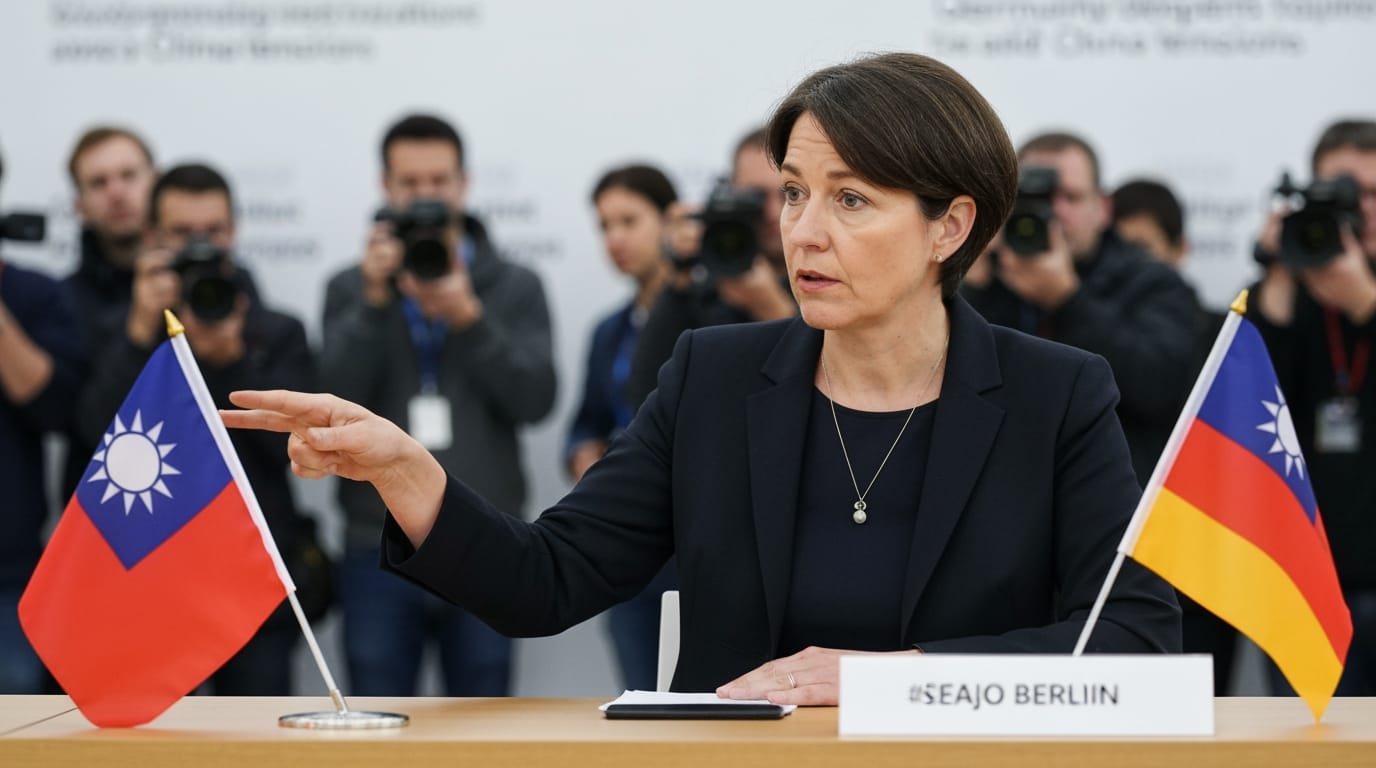
Berlin is increasingly forging closer ties with Taiwan, a move that signals a significant recalibration of Germany's foreign policy amid escalating geopolitical tensions and China's assertive stance towards the self-governing island. This evolving relationship, characterized by parliamentary exchanges, burgeoning economic cooperation, and shared democratic values, reflects a broader shift in European engagement with the Indo-Pacific, albeit one that consistently draws strong condemnation from Beijing. The delicate dance between economic pragmatism and democratic solidarity underscores Germany's efforts to diversify its strategic partnerships while navigating the complex realities of its "One China" policy.
A Shifting Geopolitical Landscape and Shared Values
The recent uptick in engagement between German and Taiwanese officials comes against a backdrop of heightened global concern over stability in the Taiwan Strait and a growing recognition of Taiwan's critical role in the global economy. Germany, while maintaining its official "One China" policy — which acknowledges Beijing's claim over Taiwan but does not explicitly endorse it — increasingly views Taiwan as a "partner of common values." This perspective has been a driving force behind parliamentary visits and discussions aimed at fostering deeper cooperation.
In late May 2026, a cross-party delegation of German lawmakers, led by Green Party MP Till Steffen, visited Taiwan, meeting with President Lai Ching-te and former President Tsai Ing-wen. This visit, focused on expanding cooperation in areas such as defense, disaster response, and technology, was swiftly met with criticism from China's Foreign Ministry spokesperson Mao Ning, who reiterated Beijing's opposition to any official interactions with Taiwan and urged Germany to cease sending "wrong signals" to "separatist forces." Similar exchanges occurred in April 2026, when a delegation from the German Bundestag's Committee on Legal Affairs and Consumer Protection visited the island, and in October 2022 and March 2023, signaling a sustained pattern of engagement.
These visits are not isolated incidents but rather part of a discernible trend of strengthening unofficial ties. German officials emphasize that such interactions between democratic nations are normal and should not be subject to interference from third parties, a clear reference to China's objections. Taiwan's leadership, including President Lai Ching-te, has consistently highlighted shared democratic principles with Germany, advocating for mutual cooperation to uphold a rules-based international order.
Economic Imperatives and Strategic Diversification
Beyond shared values, economic considerations are a significant catalyst for Germany's deepening engagement with Taiwan. Taiwan holds a uniquely strategic position in the global semiconductor ecosystem, producing the most advanced chips essential for a wide range of industries. The COVID-19 pandemic underscored vulnerabilities in global supply chains, prompting Germany and the broader European Union to seek greater resilience and reduce over-reliance on single sources, particularly China.
This strategic imperative is evidenced by the significant investment of Taiwan Semiconductor Manufacturing Company (TSMC), the world's leading semiconductor manufacturer, in a cutting-edge manufacturing plant in Dresden, Germany, with construction beginning in 2024. This initiative is a cornerstone of efforts to strengthen democratic supply chains between Taiwan and Europe and enhance technological sovereignty.
Bilateral trade figures further illustrate the robust economic connection. Trade between Germany and Taiwan has remained above USD 20 billion for five consecutive years, with a 6% growth in 2025 compared to the previous year. Germany is Taiwan's most important trading partner in the European Union, and conversely, Taiwan is Germany's fifth most important trading partner in Asia. German companies, numbering around 300, maintain a significant presence in Taiwan, seeing the island as a strategic hub for technology and research and development in the Asia-Pacific region. Cooperation has intensified in critical sectors like semiconductors, artificial intelligence, e-mobility, and sustainable technologies.
Beijing's Opposition and Germany's Tightrope Walk
China views Taiwan as an inseparable part of its territory, governed by its "One China" principle, and consistently opposes any form of official interaction between Taiwan and countries that have diplomatic relations with Beijing. Chinese officials frequently express strong disapproval of parliamentary visits and other high-level engagements, warning that such actions could negatively impact bilateral relations between China and Germany. China's Foreign Minister Wang Yi has urged Germany to support China's "peaceful reunification" with Taiwan, highlighting the delicate position Germany finds itself in.
Despite these warnings, Germany has continued to deepen its informal relations with Taiwan. This involves maintaining unofficial missions, such as the German Institute in Taipei, which is expanding its diplomatic presence. Agreements have been signed to expand cooperation on legal, criminal, scientific, and research matters, and Germany advocates for Taiwan's specialized participation in international organizations, including the World Health Organization (WHO). These actions demonstrate a nuanced approach by Germany, aiming to bolster its relationship with Taiwan without crossing the red line of diplomatic recognition, which would inevitably trigger severe repercussions from Beijing.
The Future of a Complex Relationship
Germany's evolving relationship with Taiwan represents a strategic imperative driven by both shared democratic values and vital economic interests. The ongoing parliamentary visits, growing trade, and significant investments like TSMC's Dresden plant signify a clear trend towards strengthening these ties, despite the constant pressure from China. This approach reflects Germany's broader foreign policy recalibration to enhance resilience, diversify supply chains, and engage with key partners in a multipolar world.
The challenge for Berlin lies in maintaining this delicate balance: cultivating robust unofficial relations with democratic Taiwan, leveraging its technological prowess, and advocating for its international participation, while simultaneously managing its extensive economic relationship with mainland China. As the geopolitical landscape continues to shift, Germany's ability to navigate this complex terrain will have significant implications not only for its own strategic autonomy but also for the broader stability of the Indo-Pacific region. The sustained engagement suggests that Germany is prepared to walk this diplomatic tightrope, viewing a stronger relationship with Taiwan as essential for its long-term economic security and adherence to democratic principles.


