Hungary's New Dawn: Péter Magyar Outlines Ambitious Policy Agenda After Landslide Victory
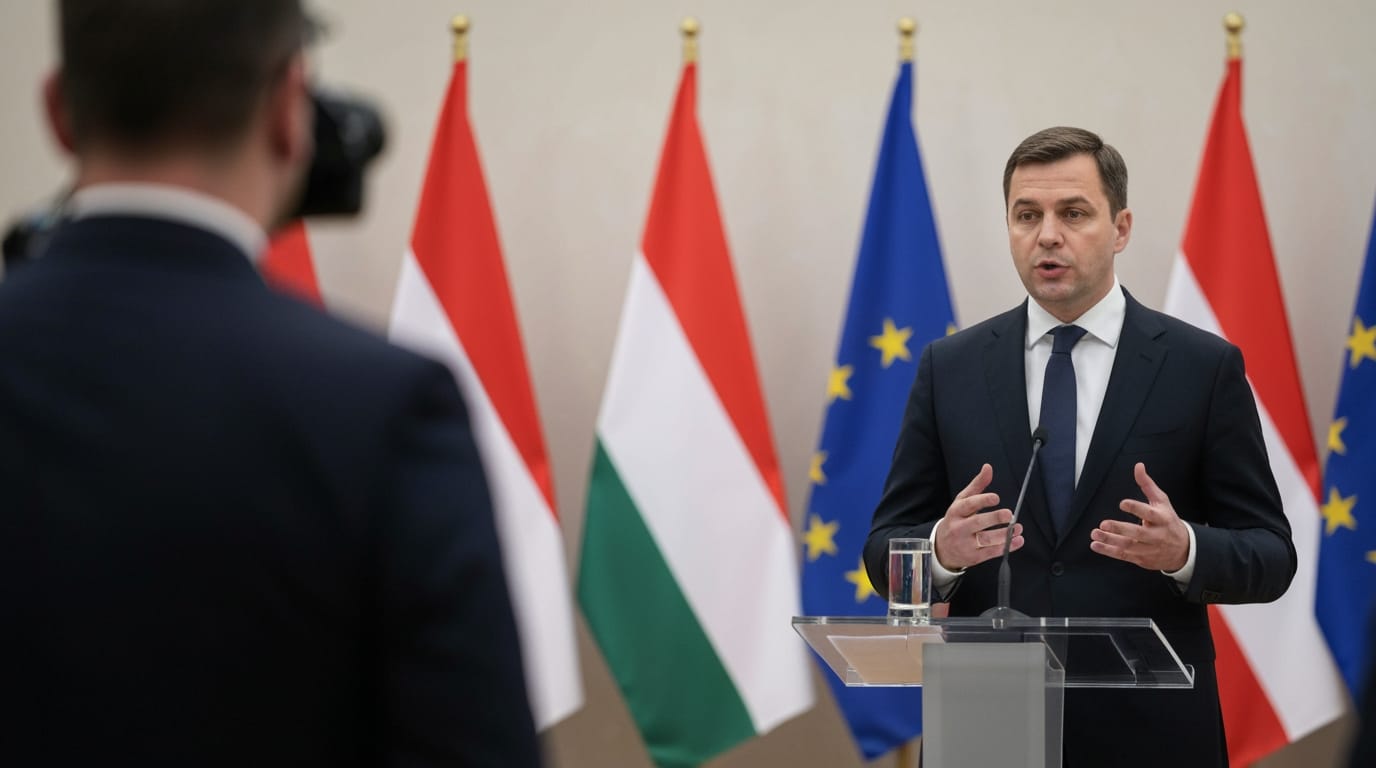
BUDAPEST, Hungary – In a pivotal moment for Hungarian politics, Péter Magyar, the charismatic leader of the Tisza (Respect and Freedom) party, has unveiled a comprehensive policy agenda, promising a fundamental reshaping of the nation's governance and its standing on the international stage. Following a stunning electoral triumph that saw his party secure a two-thirds super-majority in parliament, Magyar outlined his vision in a highly anticipated news conference, signaling a decisive break from the 16-year rule of Viktor Orbán and his Fidesz party. With a mandate for "complete change in regime," Magyar's proposals focus on combating deep-seated corruption, restoring democratic institutions, mending fractured ties with the European Union, and addressing pressing domestic economic and social concerns.
Magyar, a 45-year-old lawyer and former diplomat, has rapidly ascended to prominence, capturing the imagination of a populace yearning for change. His meteoric rise began in early 2024, sparked by a presidential pardon scandal that implicated high-ranking Fidesz officials, including his ex-wife, former Justice Minister Judit Varga. Magyar publicly denounced the government, accusing Fidesz of corruption and of "hiding behind women's skirts," a dramatic defection that resonated deeply with public frustration over perceived misuse of EU funds, a soaring cost of living, stagnant wages, and deteriorating public services. His grassroots campaign, marked by massive rallies across the country, successfully unified a broad spectrum of the democratic opposition, propelling the Tisza party to an unexpected landslide victory with 138 out of 199 parliamentary seats. This overwhelming mandate empowers Magyar's government to undertake significant constitutional reforms and overhaul the nation's institutional framework.
Reclaiming the Rule of Law and Battling Corruption
At the core of Magyar's platform is a fervent commitment to eradicating corruption and revitalizing the rule of law, areas where Hungary has faced consistent criticism from Brussels and international watchdogs. He pledged to prosecute members of the Orbán elite alleged to have enriched themselves through illicit means. A cornerstone of this anti-corruption drive will be Hungary's immediate accession to the European Public Prosecutor's Office (EPPO), a move explicitly rejected by the previous administration. Joining the EPPO will grant EU investigators the authority to probe fraud cases and potentially reopen scrutiny into the allocation and use of billions of euros in EU funds under Orbán's tenure, with a mandate extending back to 2017. This decisive step signals a profound shift in Hungary's approach to financial oversight and accountability, potentially unlocking critical frozen EU funds that have been withheld due to concerns over democratic backsliding and judicial independence.
Beyond external oversight, Magyar intends to implement sweeping domestic reforms to strengthen democratic checks and balances. He announced plans to overhaul government structures, making them more independent and resilient to political influence. A notable proposal is the introduction of a two-term limit for the prime minister, which he stated would be applied retrospectively, thereby effectively preventing Viktor Orbán from seeking the top office again. This constitutional amendment would underscore a commitment to preventing the concentration of power and fostering a more dynamic political landscape. The new administration also plans to establish specialized ministries focusing on acute issues in public health, environmental protection, and education, signaling a refocus on tangible public services.
Rebuilding European Bridges and Redefining Foreign Policy
A central pillar of Magyar's agenda is the ambitious undertaking of repairing Hungary's strained relationship with the European Union. Under Orbán, Hungary often adopted an adversarial stance towards Brussels, leading to the freezing of substantial EU development funds vital for the nation's economy. Magyar has committed to leading a constructive EU policy, actively seeking compromises, and engaging in dialogue to unlock these frozen funds. He acknowledged the complexities and bureaucratic nature of the EU but expressed confidence in finding mutually beneficial solutions for Hungary. His intention to meet with European Commission President Ursula von der Leyen promptly to discuss the release of funds further underscores this priority.
In terms of broader foreign policy, Magyar articulated a shift away from Hungary's recent trajectory. He pledged to end the country's drift towards Russia, aiming to reduce dependence on Russian energy sources by 2035, while maintaining "pragmatic relations" with Moscow. He also hinted at a willingness to consider removing sanctions against Russia if the conflict in Ukraine concludes. A clear signal of his administration's renewed commitment to European integration is his stated plan for the first foreign trip as prime minister: to Warsaw, Poland, followed by visits to Vienna and Brussels, signifying a desire to strengthen regional alliances and re-engage with key European partners. He also aims to renew and potentially expand cooperation within the Visegrád Four group.
Economic Renewal and Social Investment
Magyar's campaign also heavily emphasized addressing the everyday economic concerns of Hungarians. His policy outlines include a strong focus on improving living standards, tackling high inflation, and reforming Hungary's beleaguered healthcare system. A bold economic pledge is the aspiration to introduce the Euro to Hungary by 2030, a move resisted by the previous government. While acknowledging the need for a thorough assessment of the country's fiscal situation before setting a firm target date, this commitment highlights a desire for deeper economic integration with the eurozone and a potential pathway to greater stability.
On the sensitive issue of migration, Magyar has indicated a tougher stance than his predecessor, vowing to scrap the country's guest worker scheme. This position suggests a pragmatic approach to issues that have frequently fueled populist sentiments, seeking to differentiate his policies while maintaining a focus on national interests.
Looking Ahead: Challenges and Transformations
Péter Magyar's comprehensive policy outline marks a transformative moment for Hungary, signaling a profound departure from the political landscape of the past decade and a half. His emergence has been described as that of a "dark horse," with some specific details of his program yet to be fully elaborated, a strategy partly designed to circumvent manipulation by Fidesz-aligned media. However, the broad strokes paint a picture of a nation poised for significant internal reforms and a recalibration of its international relationships.
While the electoral victory provides a powerful mandate, the path forward will undoubtedly present challenges. The deep-seated institutional changes under the previous government will require sustained effort to dismantle and rebuild. Despite Orbán's concession, remnants of the old system could pose obstacles to Magyar's reform agenda. Nevertheless, the overwhelming public support for a "complete change in regime" offers a unique window of opportunity. Magyar's first news conference has not only laid out a detailed blueprint for his government but has also underscored the collective desire of Hungarians to forge a new, more democratic, and European-aligned future. The world will now watch closely as Hungary embarks on this ambitious journey of transformation under its new leadership.


