Hungary's Orbán Weaves a Web of Incentives and Accusations to Secure Power
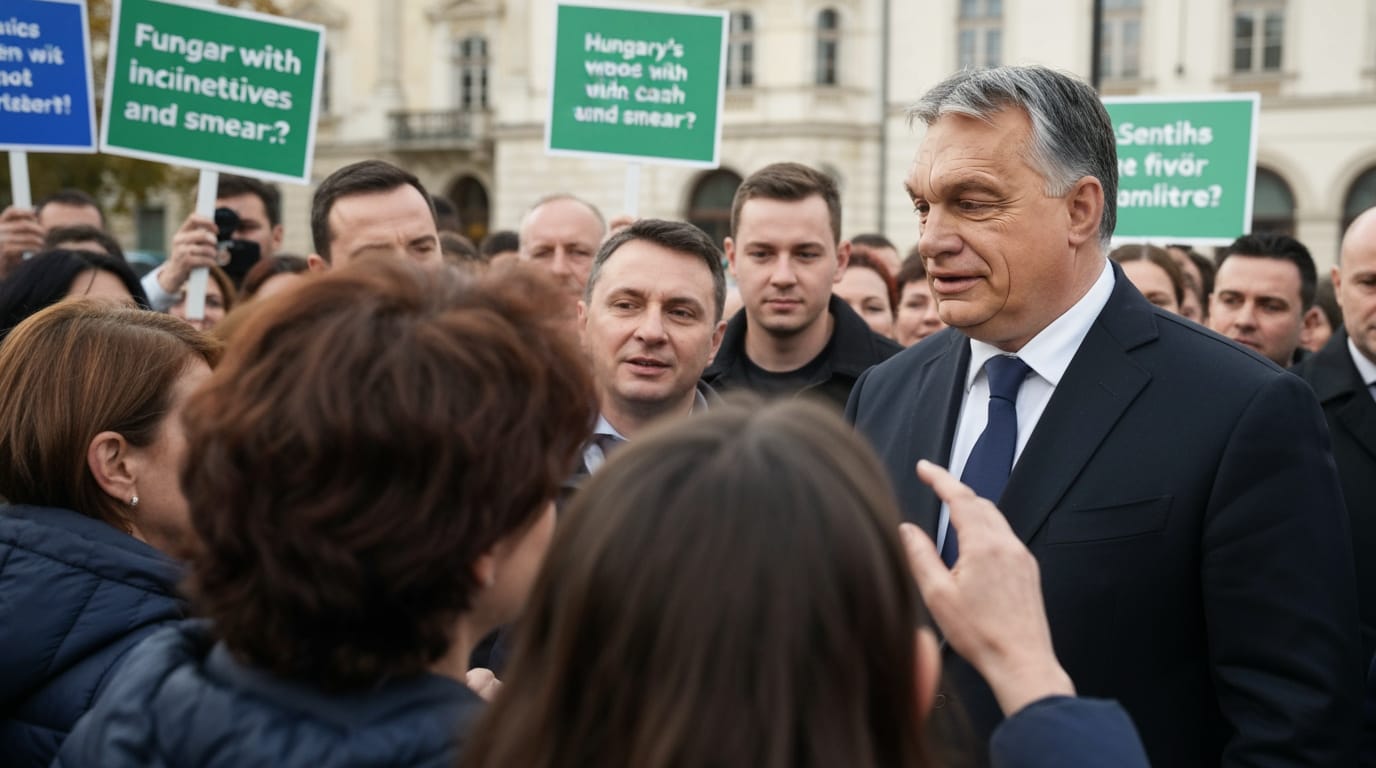
BUDAPEST, Hungary – Prime Minister Viktor Orbán of Hungary has meticulously constructed a durable political apparatus, consistently securing electoral victories and extending his party Fidesz's dominant influence over the nation. His strategy hinges on a calculated blend of generous financial incentives aimed at key demographics and aggressive smear campaigns that effectively neutralize political opposition and external critics. This dual approach has cemented his hold on power, reshaping Hungary's political landscape and drawing both fervent support at home and significant international scrutiny.
The Allure of the 'Family Protection Action Plan'
At the core of Orbán's appeal to voters lies an extensive suite of financial benefits, primarily channeled through what the government terms its "Family Protection Action Plan." These programs are explicitly designed to boost Hungary's birth rate and strengthen traditional family values, often framed as an alternative to immigration. Hungary reportedly dedicates more than 4% of its GDP to family support, a figure among the highest in Europe.
Key measures include interest-free "baby loans" of up to 10 million HUF for young married women, with repayment suspended after the first child and the entire debt forgiven upon the birth of a third. The CSOK (Family Home Ownership Subsidy Program) offers significant grants, ranging from 10 to 15 million HUF, for families with two or three children to purchase homes, alongside mortgage deductions for expanding families. Further sweetening the deal are non-repayable grants of 2.5 million HUF for large families to buy new seven-seater cars.
Perhaps the most impactful financial incentive is the broad scope of personal income tax exemptions. Individuals under 25 years of age are exempt from income tax. Women who have raised four or more children benefit from a lifetime exemption from personal income tax. Recent expansions mean that from October 2025, mothers raising three children will also receive full income tax exemption, with further exemptions for mothers under 30 with one child and a phased introduction for mothers with two children. The government also plans to introduce an annual HUF 1 million allowance for public sector employees, including doctors, nurses, and teachers, for mortgage or home down payment starting January 2026. Beyond these family-focused measures, the Fidesz government has implemented broader voter-pleasing initiatives such as a 13th-month pension for seniors, frozen fuel and food prices, and significant minimum wage hikes, often timed strategically before elections. These policies have demonstrably bolstered the ruling party's support, particularly among older voters.
Manufacturing External and Internal Threats
Complementing the financial inducements is a consistent campaign of portraying various entities as threats to Hungary's sovereignty and cultural identity. Prime Minister Orbán's government has routinely deployed anti-migration, anti-EU, and anti-George Soros rhetoric to mobilize its base and deflect criticism.
George Soros, the Hungarian-born financier and philanthropist, has been a perennial target. Government-backed campaigns have depicted him as a puppet master orchestrating a "Soros Plan" to flood Europe, including Hungary, with Muslim migrants. This narrative often incorporates conspiratorial and at times antisemitic undertones, effectively demonizing a foreign figure for perceived threats.
Migration itself is frequently characterized as an existential danger to Hungary's Christian character and national security. The construction of border fences and the staunch opposition to EU migrant quotas underscore this hardline stance, resonating with a segment of the electorate concerned about demographic and cultural shifts.
The European Union itself is not immune from these attacks. When faced with criticism regarding the rule of law or democratic standards, the Orbán government often accuses Brussels of meddling, blackmail, or pursuing failed policies. These narratives reinforce a perception among supporters that Orbán is a strong leader defending national interests against external pressures. More recently, the government has also targeted "gender ideology" and LGBTQ+ rights, framing them as threats to children and traditional values.
Orchestrating the Information Landscape
A crucial element of Orbán's enduring political dominance is the systematic control and manipulation of the media landscape. The Fidesz government has effectively curtailed independent journalism through various means, ensuring that its message dominates public discourse while dissenting voices are marginalized or discredited.
Reports indicate that Fidesz and its allies own or control over 90% of Hungarian media outlets. This overwhelming dominance allows the government to propagate its narratives, often at the expense of objective reporting. Independent and investigative journalists frequently face significant obstacles, including surveillance, limited access to officials and public information, and sustained smear campaigns in pro-government media. Organizations like Reporters Without Borders have consistently voiced concerns about the erosion of press freedom in Hungary, ranking it low on global press freedom indices.
Moreover, the government has been accused of blurring the lines between state resources and party campaigning. International observers have noted the clear overlap, which creates an unfair playing field for opposition parties. Legislation, such as the "Sovereignty Protection Act," has been introduced, empowering a new governmental entity to investigate foreign influence on Hungarian politics, a move critics argue is designed to further crush dissent and silence independent civil society organizations and media that receive foreign funding.
Democratic Erosion and International Condemnation
The cumulative effect of these strategies has led to significant concerns regarding Hungary's democratic health and adherence to the rule of law. Critics, including the European Parliament and various human rights organizations, have described Hungary as an "illiberal democracy" or a country experiencing democratic backsliding.
Since returning to power in 2010, Orbán's Fidesz party has used its supermajority in parliament to rewrite the constitution, pack constitutional courts with loyalists, and gerrymander electoral districts to its advantage. These actions, while often technically legal within the framework created by Fidesz, are widely seen as corrosive to the checks and balances essential for a functioning democracy.
The EU has initiated infringement proceedings against Hungary over various issues, including its "Protection of National Sovereignty Act" and broader concerns about rule of law and fundamental rights. However, Orbán's government has largely remained defiant, often using EU criticism to fuel its nationalist rhetoric and portray itself as a defender of Hungarian interests against an overreaching Brussels. While surveys indicate mixed reviews on Orbán's impact on democracy, particularly among younger and urban populations, he generally maintains positive approval ratings within the country, demonstrating the effectiveness of his comprehensive political approach.
Conclusion: A Masterclass in Populist Governance
Viktor Orbán's sustained leadership in Hungary represents a sophisticated exercise in populist governance, skillfully leveraging both economic largesse and aggressive rhetoric. By showering significant financial benefits on key constituencies, particularly families and public sector workers, Fidesz cultivates a loyal voter base. Simultaneously, the government employs potent smear campaigns targeting perceived internal and external adversaries—from George Soros and migrants to the European Union and independent media—to consolidate national identity and discredit opposition. This dual strategy, reinforced by an increasingly controlled media environment and a reformed electoral system, has allowed Orbán to maintain supermajorities and reshape Hungary's institutional framework. While these tactics have led to accusations of democratic backsliding and international condemnation, they have proven remarkably effective in solidifying Orbán's power and ensuring Fidesz's continued dominance in Hungarian politics. The long-term implications for Hungary's democratic future and its relationship with the wider European community remain a subject of ongoing debate and concern.


