Hungary's Paradox: Growing Reliance on Russian Oil Amidst EU Phase-Out Efforts
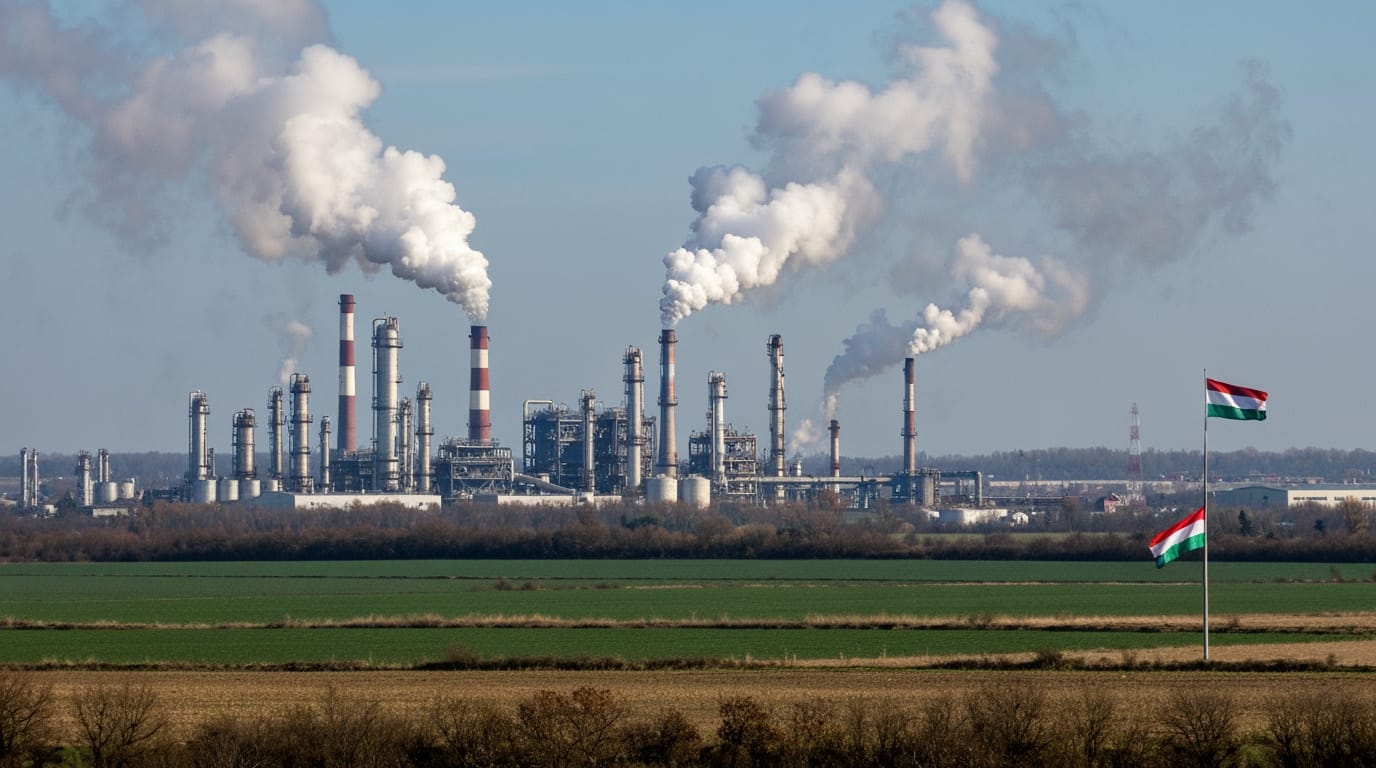
Budapest, Hungary – As the European Union continues its strategic pivot away from Russian energy, a significant paradox has emerged: Hungary, a member state, has not only maintained but deepened its reliance on Russian crude oil, raising questions about European unity and the efficacy of sanctions. Despite the EU's broad efforts to reduce Moscow's energy revenues, Hungary's imports of Russian oil have surged, positioning it as a critical outlier in the bloc's collective energy strategy. This increasing dependence, often justified by arguments of energy security and economic stability, underscores a persistent rift within the EU, particularly as disruptions to critical pipelines escalate tensions.
The Unwavering Flow: Hungary's Increasing Russian Oil Imports
Hungary's reliance on Russian oil has seen a marked increase, growing from 61% before Russia's full-scale invasion of Ukraine in early 2022 to an estimated 86% in 2024 and reaching as high as 90% by 2025, with some reports indicating 92% by early 2026. This upward trend stands in stark contrast to the broader EU objective of phasing out Russian fossil fuel imports. In 2024 alone, Hungary imported approximately $2.3 billion worth of crude petroleum from Russia, solidifying Russia's position as its primary supplier. Specific data for September 2024 indicates a rise to 397 thousand tonnes of crude oil imports from Russia, up from 269 thousand tonnes in August of the same year. By 2025, the country had purchased 8.5 million tons of crude oil and 7 billion cubic meters of natural gas from Russia. This escalating dependency is largely facilitated by a crucial exemption from EU sanctions on Russian oil, specifically for crude delivered via the Druzhba pipeline, a Soviet-era infrastructure critical for landlocked member states.
A Lifeline or a Loophole? The Druzhba Exemption and Its Justifications
The exemption granted to Hungary and Slovakia from the EU's ban on seaborne Russian oil imports was a key component of the bloc's sixth sanctions package, agreed upon in May 2022. Hungary has consistently argued that its landlocked geography and the design of its refineries, optimized for Russian Urals crude, make a sudden shift away from Russian oil economically unfeasible and a threat to its energy security. Hungarian officials contend that converting its oil refineries and pipelines to process non-Russian crude would require massive investment and take years, potentially leading to increased energy prices, factory shutdowns, and unemployment. Prime Minister Viktor Orbán has publicly warned that cutting off Russian oil could reduce Hungary's Gross Domestic Product by 4%. While Hungary's national energy plan acknowledges that dependence on Russian energy poses a risk, it proposes a more gradual reduction in oil imports from Russia, aiming for 85% by 2030, rather than a full cessation.
The economic calculus extends to Hungarian refiners like MOL, which reportedly benefit from processing discounted Russian crude and selling refined products at regional market prices. This arrangement, however, has not necessarily translated into lower prices for Hungarian consumers, with fuel costs often remaining above the EU average. Beyond economic concerns, Hungary's stance is also deeply intertwined with its geopolitical maneuvering, frequently using its position on Russian energy as leverage in broader EU discussions, particularly regarding aid to Ukraine and additional sanctions against Moscow. Adding another layer of complexity, the United States, in November 2025, granted Hungary a one-year exemption from US sanctions on Russian oil and gas, following discussions between Prime Minister Orbán and former President Donald Trump.
Fractured Unity: EU's Dilemma and Alternative Perspectives
Hungary's continued and increasing reliance on Russian oil poses a significant challenge to the EU's efforts to project a united front against Russia. Critics within the bloc argue that Hungary's actions undermine the spirit and effectiveness of the sanctions regime, potentially extending the conflict by indirectly financing Russia's military operations. The European Commission has found itself navigating a delicate balance, at one point offering financial and technical support to Ukraine to repair sections of the Druzhba pipeline damaged by attacks, illustrating the complexities of maintaining internal cohesion while pursuing external policy objectives.
Some analyses suggest that Hungary's reliance on Russian oil is less a "physical constraint" and more a "political choice." These perspectives highlight the existence of alternative routes, such as the Adria pipeline, and point to a perceived lack of genuine effort by Budapest to diversify its energy sources. Reports from early 2026 indicated that MOL, Hungary's largest oil and gas company, stated it could source up to 80% of its crude from non-Russian suppliers if Druzhba flows were interrupted, although this would incur "higher technical risks and logistics costs." This statement suggests a potential, albeit costly, pathway to reduced dependence, challenging the long-held narrative of indispensability.
Escalating Tensions: Pipeline Disruptions and Political Retaliation
The fragility of this energy landscape has been starkly revealed by recent disruptions to the Druzhba pipeline. In January 2026, an attack, which Ukrainian officials attributed to Russian drones, halted oil deliveries to Hungary and Slovakia. This incident sparked a new wave of political contention, with Hungary accusing Ukraine of deliberately threatening its energy security and using the disruption as a reason to block substantial EU aid packages for Ukraine and new sanctions against Russia. This tit-for-tat dynamic underscores the intricate web of energy, economics, and geopolitics that defines the current situation. Hungary's Foreign Minister, Péter Szijjártó, has also advocated for a broader suspension of sanctions on Russian oil, aligning with some calls from the US to alleviate rising global energy prices.
Conclusion: A Complex Future for European Energy Independence
Hungary's increasing reliance on Russian oil, shielded by a specific EU exemption, represents a significant challenge to the European Union's ambition of achieving energy independence from Russia. While Budapest consistently cites critical energy security and economic concerns, its actions and rhetoric often diverge from the collective strategy of its fellow member states. The ongoing disruptions to the Druzhba pipeline and the resulting political friction further complicate an already intricate situation, highlighting the delicate balance between national interests, regional stability, and the overarching goal of a unified European response to Russian aggression. The path forward remains fraught with diplomatic complexities and the necessity for difficult choices, as the EU grapples with ensuring both its energy future and its internal cohesion.


