Hungary's Standoff Over Russian Oil Threatens Critical EU Aid to Ukraine
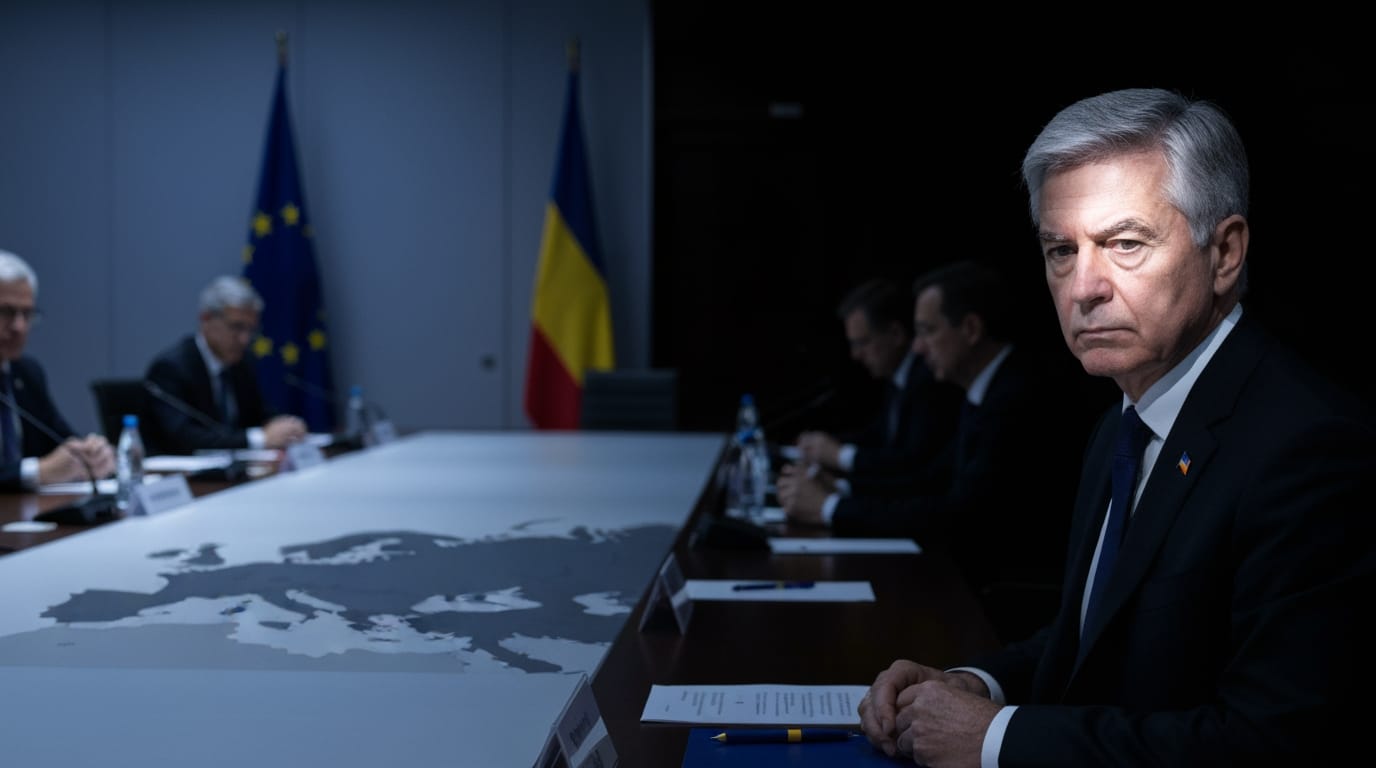
Brussels, Belgium – A deep fissure has opened within the European Union, jeopardizing a crucial €90 billion aid package intended for war-torn Ukraine, as Hungary leverages its veto power in a dispute over Russian oil supplies. The dramatic standoff, centered on the Soviet-era Druzhba pipeline, has sparked accusations of "blackmail" and "betrayal" from exasperated EU leaders, exposing the fragile unity of the bloc in its support for Kyiv. Hungarian Prime Minister Viktor Orbán has firmly stated that no aid will flow to Ukraine until Russian oil deliveries through the pipeline are fully restored, declaring the issue "existential" for his nation.
The dispute reached a boiling point at a recent EU summit in Brussels, where Orbán refused to greenlight the substantial loan. This move reversed an earlier agreement and drew sharp criticism from other member states, with German Chancellor Friedrich Merz describing it as a "gross act of disloyalty" that could leave "deep marks" on the bloc. The urgently needed funds are essential for Ukraine's military and to maintain its struggling economy amidst the ongoing conflict with Russia.
The Druzhba Pipeline at the Heart of the Crisis
The flashpoint of this escalating diplomatic row is the Druzhba pipeline, a critical artery that transports Russian crude oil to landlocked nations in Central and Eastern Europe, including Hungary and Slovakia. These two countries, alongside others like Poland, Germany, and Czechia, received a temporary exemption from the EU's ban on Russian seaborne oil imports, allowing them to continue receiving crude via the pipeline after Russia's full-scale invasion of Ukraine in 2022.
The current disruption in oil flow stems from conflicting narratives. Ukraine asserts that the pipeline's infrastructure was damaged by a Russian drone strike in January, halting deliveries. Ukrainian President Volodymyr Zelenskyy informed EU leaders that repairs were underway and full restoration of flows could occur within approximately 1.5 months, by early May, assuming no further attacks. Kyiv also accepted an EU offer of technical support and funding to expedite these repairs.
Conversely, Hungary and Slovakia accuse Ukraine of deliberately delaying the repairs, or even intentionally blocking oil supplies, to exert pressure on them. Hungarian Foreign Minister Péter Szijjártó specifically claimed that Kyiv halted transit in coordination with Brussels and Hungarian opposition, seeking to create supply disruptions and inflate fuel prices ahead of Hungarian elections. Prime Minister Orbán has underscored the vital nature of these supplies, stating that obtaining oil is "an issue of national sovereignty" and "existential" for Hungarians, warning of economic collapse without it. This sentiment is encapsulated in his stark declaration: "No oil, no money."
Hungary's Long-Standing Opposition and Domestic Agendas
Hungary's current obstruction of Ukraine aid is not an isolated incident but rather a continuation of its broader, often contentious, approach to EU policy concerning Russia and Ukraine. Budapest has consistently voiced opposition to EU sanctions against Moscow, arguing they harm European economies more than Russia's. Hungary has also maintained close relations with the Kremlin, with Prime Minister Orbán having nurtured a close relationship with Russian President Vladimir Putin for years. This stance extends to refusing to supply weapons to Ukraine or allowing their transit across its border.
Observers note that Hungary's hardline position is also heavily influenced by domestic political considerations. Orbán faces what is anticipated to be a tight election, and his government has increasingly relied on anti-Ukraine rhetoric to mobilize voters. The government has even conducted "national consultations" to gauge public support for its opposition to EU sanctions, portraying them as decided by a "Brussels elite." This blend of energy security concerns, geopolitical alignment, and internal political maneuvering creates a complex backdrop for Hungary's actions on the European stage. Slovakia has often aligned with Hungary on these issues, including opposing Ukraine's EU accession negotiations and maintaining Russian oil imports.
EU's Scramble for Solutions and Maintaining Unity
The blocking of the €90 billion loan has ignited a diplomatic firestorm, with EU leaders expressing profound frustration and concern over the erosion of bloc unity. European Commission President Ursula von der Leyen affirmed that the EU would ensure Ukraine receives the funds "one way or another," indicating a determination to bypass Hungary's veto. Efforts are now underway to explore alternative funding mechanisms, often referred to as a "Plan B," should Hungary remain intransigent. This could involve securing guarantees from individual member states, an extraordinary measure reflecting the urgency of sustaining support for Kyiv.
The offer of technical and financial assistance to repair the Druzhba pipeline was a direct attempt by the EU Commission and Council to resolve Hungary's immediate grievance. Despite Ukraine's reported acceptance of this aid and projected repair timeline, Hungary initially dismissed the initiative as "theatre" and held its ground. The ongoing dispute highlights a fundamental challenge for the EU: balancing the need for unanimous decision-making on critical issues with the imperative to present a united front against external aggression. Leaders across the EU emphasize that the authority and credibility of the European Union depend on upholding agreements and acting collectively, particularly in times of crisis.
The broader implications of this internal dispute extend beyond the immediate financial aid. It raises questions about the long-term viability of consensus-based decision-making in the EU, especially when faced with a member state willing to use its veto for what others perceive as nationalistic or self-serving interests. While Hungary and Slovakia are highly dependent on the Druzhba pipeline, alternatives exist, such as oil supplies via Croatia's Adriatic pipeline, which Croatian Prime Minister Andrej Plenković has indicated could ensure energy security for both nations. The ongoing negotiations underscore the high stakes involved, not just for Ukraine's survival but for the coherence and effectiveness of the European Union itself.


