India and Japan Deepen Strategic Ties as PM Takaichi Concludes Landmark Visit to New Delhi
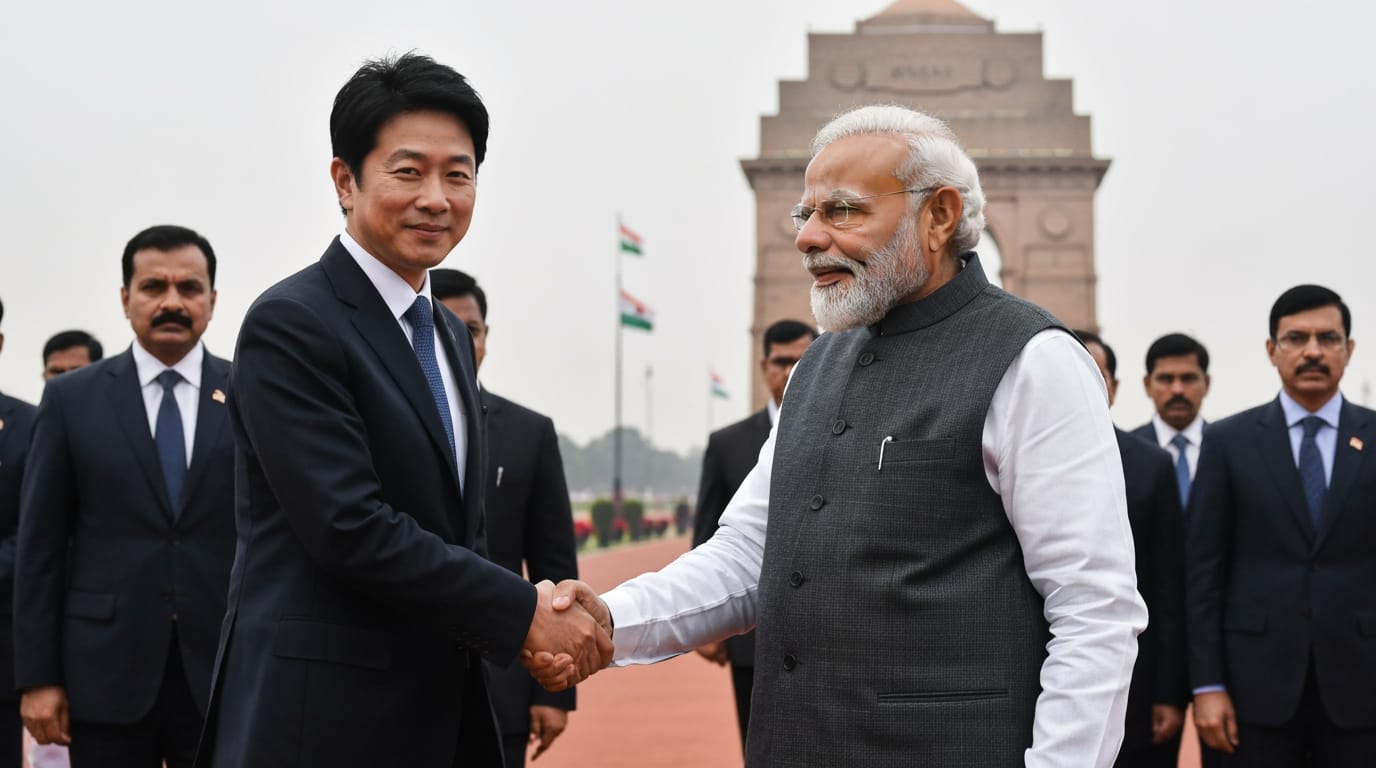
New Delhi, India – Japanese Prime Minister Sanae Takaichi concluded a pivotal three-day visit to India on July 3, 2026, marking her first official state visit since assuming office in October 2025. Her engagements with Indian Prime Minister Narendra Modi underscore a mutual commitment to fortify the "Special Strategic and Global Partnership" between the two Asian democracies, focusing on a broad spectrum of cooperation from economic security to regional stability in a rapidly evolving Indo-Pacific. The visit culminated in the 16th India-Japan Annual Summit, signaling a robust and forward-looking alliance designed to navigate contemporary global challenges.
Bolstering Economic and Energy Security
A cornerstone of Prime Minister Takaichi's discussions with Prime Minister Modi centered on enhancing economic and energy security, critical areas for both nations. The Japanese delegation, which included a substantial business contingent, aimed to boost trade and investment, reinforcing Japan's position as a significant investor in India. Bilateral trade between the two countries reached $27.5 billion in 2025-26, with Japanese investment in India totaling $3.2 billion between April and December 2025 alone. Building on this trajectory, a new ambitious target of 10 trillion Japanese Yen (approximately USD 68 billion) in Japanese private investment in India over the next decade was set, indicating a strong confidence in India's economic potential and a shared vision for mutual growth.
Discussions also delved into critical supply chains, particularly in semiconductors and critical minerals, addressing global vulnerabilities and aiming to foster resilient economic ecosystems. The leaders explored avenues for deepening cooperation in clean energy, including solar, battery storage systems, and the burgeoning Green Hydrogen Ecosystem, aligning with both countries' net-zero commitments. These initiatives are poised to accelerate technological collaboration and economic resilience, crucial for sustainable development in both nations.
Advancing Defense and Strategic Cooperation
The visit underscored the escalating strategic convergence between India and Japan, particularly in defense and security. Both leaders emphasized their commitment to a "Free and Open Indo-Pacific," a principle vital for regional peace and stability. High-level defense exchanges have been regular, and the partnership now includes concrete steps toward defense industrial cooperation. A notable example is the co-development of the UNICORN (Unified Complex Radio Antenna) masts for the Indian Navy, a landmark project reflecting Japan's evolving security policies and its willingness to engage in genuine co-production and co-development of defense equipment. This collaboration signifies a strategic pivot, as Japan previously had significant restrictions on defense exports. The discussions covered maritime security and technology cooperation, further solidifying a comprehensive security framework.
Strengthening People-to-People Ties and Innovation
Beyond economic and security dimensions, the leaders also focused on strengthening human capital and innovation. An Action Plan for India-Japan Human Resource Exchange was a key outcome, envisioning the exchange of 500,000 people between the two nations, including inviting 50,000 highly-skilled Indian personnel to work in Japan over the next five years. This initiative aims to address skill gaps, foster innovation, and deepen cultural understanding. Furthermore, collaboration in digital public infrastructure and joint research and development in advanced technological fields such as Artificial Intelligence (AI) and the Internet of Things (IoT) were identified as priority areas. These efforts are expected to create new avenues for growth and shared prosperity, leveraging the demographic dividends and technological prowess of both countries.
The Significance of a Historic Visit
Prime Minister Sanae Takaichi's visit carries significant weight, marking her inaugural journey to India as Japan's first female Prime Minister. Her ascendancy to the leadership of Japan's Liberal Democratic Party in October 2025 was a historic moment for a country long dominated by male political leadership. Known for her conservative views and a strong focus on national security and economic resilience, Takaichi's background as a protégé of former Prime Minister Shinzo Abe signals a continuation of robust engagement with India. Her discussions with Prime Minister Modi not only built upon previous annual summits, such as Modi's visit to Tokyo in August 2025, but also laid out a clear roadmap for deepening the "Japan-India Joint Vision for the Next Decade."
The bilateral framework between India and Japan now encompasses over 70 dialogue mechanisms, indicative of the breadth and depth of their cooperation. This comprehensive partnership, rooted in shared democratic values and converging strategic interests, is poised to play an increasingly vital role in shaping the geopolitical landscape of the Indo-Pacific and beyond. The successful conclusion of Prime Minister Takaichi's visit reaffirms that the India-Japan relationship is not merely transactional but a strategic alliance built on mutual trust and a shared vision for a stable, prosperous, and interconnected world.


