India and Malaysia Forge Deeper Strategic Alliance in Landmark Modi Visit
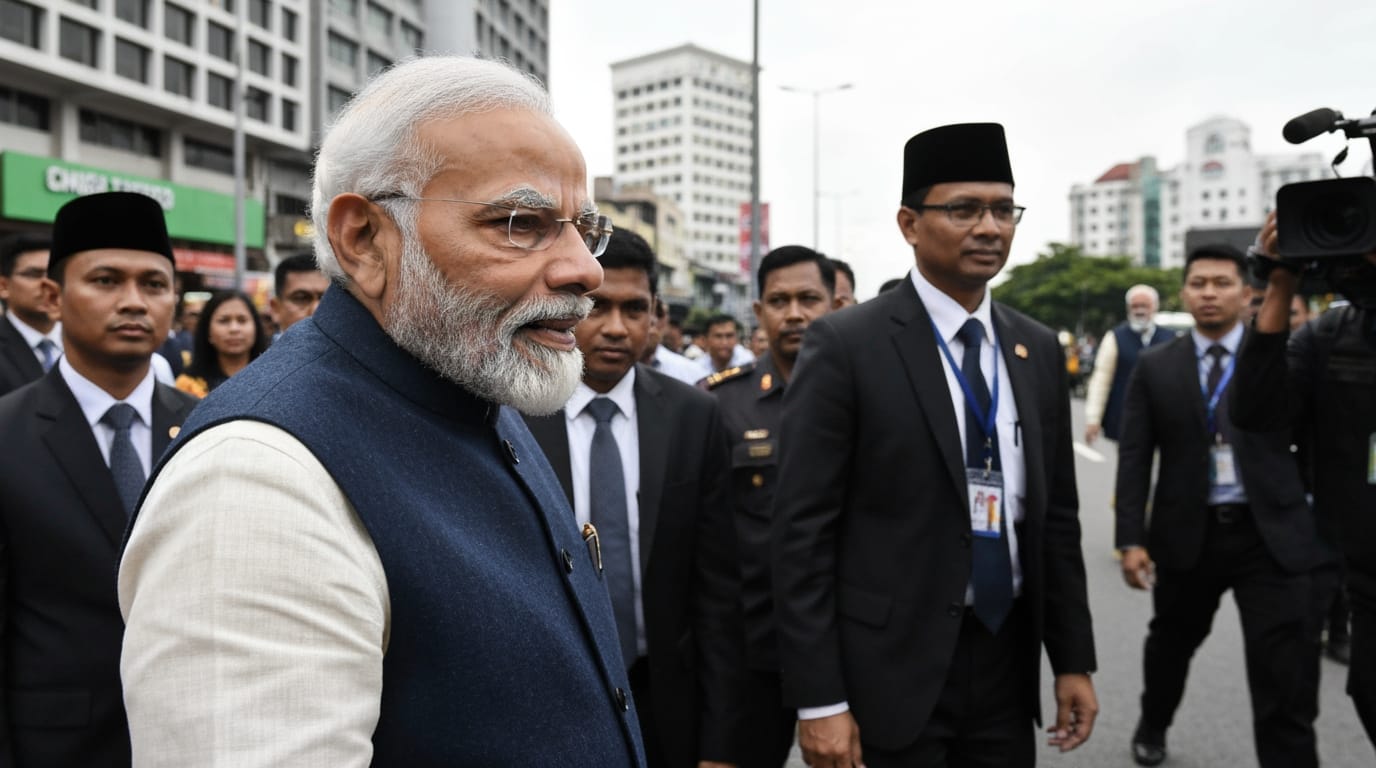
Kuala Lumpur, Malaysia – Indian Prime Minister Narendra Modi concluded a pivotal two-day official visit to Malaysia on February 8, 2026, marking his first international trip of the year and solidifying a burgeoning Comprehensive Strategic Partnership between the two nations. The high-stakes engagement, hosted by Malaysian Prime Minister Anwar Ibrahim, saw the exchange of 11 memoranda of understanding across critical sectors, signaling a concerted effort to accelerate cooperation in economy, defense, technology, and cultural ties. The visit underscored a mutual commitment to navigating regional complexities and fostering shared prosperity, elevating a relationship described by both leaders as one built on trust and friendship rather than mere diplomatic routine.
A Strengthened Strategic Axis in Southeast Asia
Prime Minister Modi's recent visit to Kuala Lumpur, his third to Malaysia as prime minister, holds significant weight, particularly as it follows the elevation of India-Malaysia relations to a Comprehensive Strategic Partnership (CSP) in August 2024. The upgrade, which occurred during Malaysian Prime Minister Anwar Ibrahim's visit to New Delhi, set the stage for deeper engagement, with the current discussions aiming to operationalize and expand the scope of this enhanced relationship. The Indian premier received a ceremonial welcome at the Perdana Putra complex, featuring a Guard of Honour, symbolizing the high importance Malaysia attaches to these bilateral ties. Both leaders engaged in extensive discussions, covering the full spectrum of bilateral relations, from political engagement to emerging areas like artificial intelligence. Malaysian Prime Minister Anwar Ibrahim notably described Modi as a "great personal friend," reflecting the warm and cordial atmosphere that characterized the talks.
Expanding Economic Horizons: Trade, Technology, and Investment
Economic cooperation emerged as a cornerstone of the bilateral talks, with both leaders prioritizing increased trade, investment, and collaboration in cutting-edge technologies. India stands as Malaysia's largest trading partner in South Asia, while Malaysia is the third-largest trading partner for India within the ASEAN region. In 2025, total bilateral trade reached RM79.49 billion (approximately US$18.59 billion), with Malaysian exports predominantly comprising palm oil and electronic goods, and imports from India including agricultural, petroleum, and chemical products.
A key highlight of the visit was the pledge to deepen the semiconductor partnership. Malaysia is a global leader in the semiconductor industry, ranking sixth in worldwide exports and contributing around 25% to its gross domestic product. The agreements aim to leverage Malaysia's manufacturing prowess and India's growing technological ambitions, fostering collaboration in chip manufacturing and other digital technologies. Furthermore, discussions included expanding cooperation in the digital economy, with an agreement between India's Unified Payments Interface (UPI) and Malaysia's Pay-net set to enhance fintech collaboration and potentially deepen India's digital payment model in Southeast Asia. The leaders also emphasized the importance of the Malaysia-India Comprehensive Economic Cooperation Agreement (MICECA) and the ASEAN-India Trade in Goods Agreement (AITIGA), with Modi calling for the AITIGA review to be completed expeditiously. Other economic areas targeted for increased cooperation include tourism, connectivity, agriculture, and food security, with Malaysia reaffirming its commitment as a reliable supplier of sustainable palm oil.
Bolstering Security and Regional Geopolitics
The visit also placed a strong emphasis on enhancing defense and security cooperation, reflecting shared concerns over regional stability and maritime security. Both nations agreed to strengthen collaboration in counter-terrorism, intelligence sharing, and maritime security. Prime Minister Modi reiterated India's firm stance on combating terrorism, emphasizing "no double standards, no compromise" in dealing with the threat. This includes joint efforts to counter radicalization, violent extremism, and the financing of terrorism, as well as preventing the misuse of emerging technologies for nefarious purposes.
Strategically, the visit is viewed within the framework of India's "Act East" policy, positioning New Delhi as a vital partner in Southeast Asia. Malaysia's geographical location, surrounded by critical sea lanes like the Strait of Malacca, makes it a key pillar in India's maritime connectivity strategies and its broader Indo-Pacific vision. The deepening strategic partnership is also seen as India's effort to assert itself as a stabilizing regional power and a strategic counterweight to growing geopolitical influence in the ASEAN region. Discussions also touched upon regional and global issues of mutual interest, including ASEAN centrality, global governance reforms, and conflicts in Ukraine and the Middle East, particularly Gaza. Malaysia also confirmed its decision to join the International Big Cat Alliance (IBCA) as a founding member, further diversifying areas of collaboration.
Cultivating Cultural Ties and People-to-People Connections
Beyond economic and strategic imperatives, the visit highlighted the enduring cultural and historical bonds between India and Malaysia. These ties are significantly reinforced by Malaysia's vibrant Indian-origin population, which numbers approximately 2.9 million and constitutes the world's third-largest overseas Indian community. Prime Minister Modi acknowledged the strong presence of the Tamil language in Malaysia's education, media, and cultural life, describing it as a reflection of the deep-rooted people-to-people connection.
New initiatives announced during the visit aimed to further strengthen these linkages, including the establishment of a Thiruvalluvar Centre and the opening of a new Indian consulate in Sabah. Leaders also encouraged youth and parliamentary exchanges, with existing collaborations between institutions like Nalanda University and Universiti Malaya, and IIT Madras and the Advanced Semiconductor Academy of Malaysia, being lauded. Modi also met with Indian National Army (INA) veteran Jeyaraj Raja Rao in Kuala Lumpur, conveying India's gratitude for the INA's historical contributions. These initiatives collectively aim to enhance educational, healthcare, and vocational training exchanges, ensuring the bonds between the two nations continue to flourish across generations.
A Future of Enhanced Collaboration
Prime Minister Modi's visit to Malaysia signifies a robust reaffirmation of the Comprehensive Strategic Partnership, setting a clear trajectory for enhanced cooperation across multiple fronts. The blend of shared cultural heritage, growing economic interdependence, and converging strategic interests positions India and Malaysia to play an increasingly important role in shaping the regional and global landscape. The agreements forged during this visit, from advanced technology and defense to cultural exchanges, underscore a commitment to not only mutual growth but also to contributing to stability and prosperity in the Indo-Pacific. As both nations continue to navigate an evolving international order, their deepening ties stand as a testament to the power of sustained diplomacy and shared vision.


