India and US 'Very Close' to Landmark Trade Deal Amidst Renewed Diplomatic Push
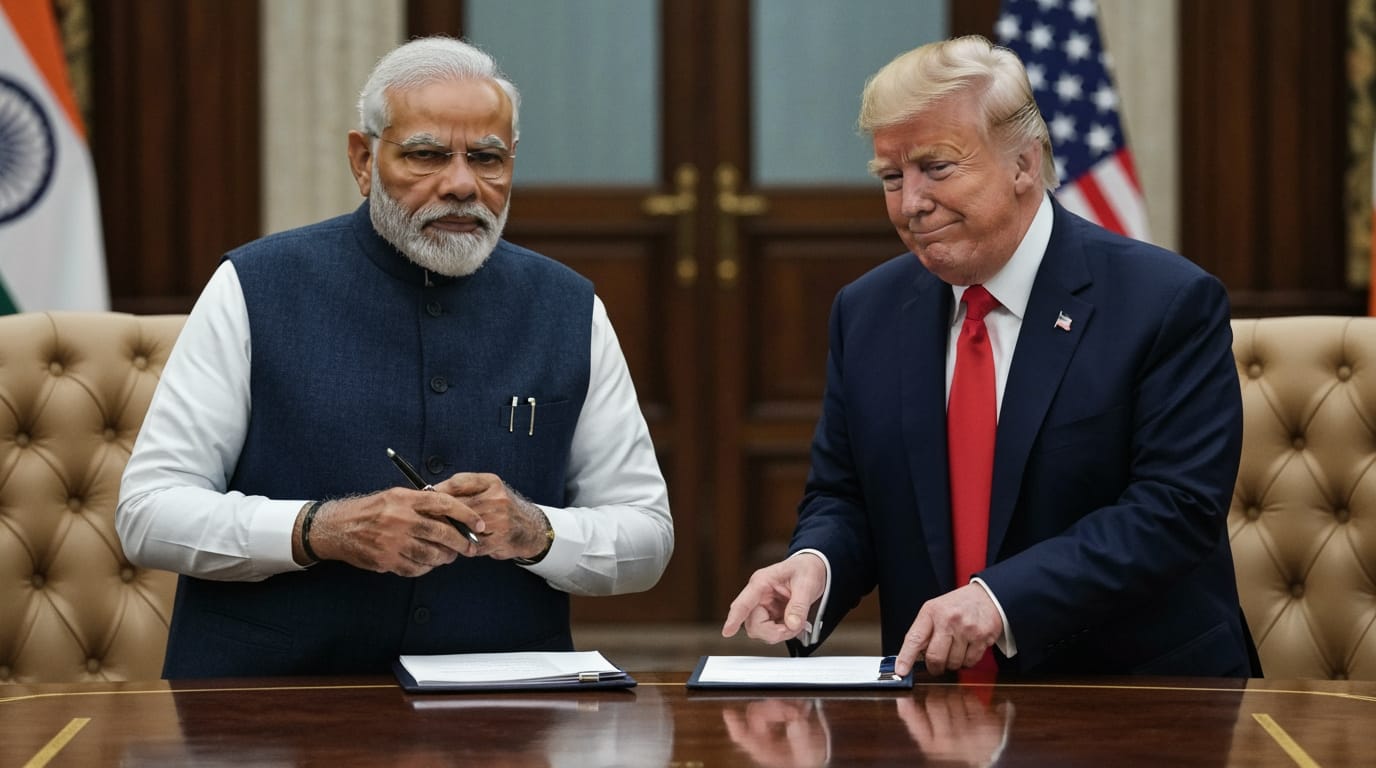
EVIAN, France – A long-sought trade agreement between the United States and India appears to be on the cusp of finalization, with leaders from both nations expressing significant optimism following a high-level meeting at the G7 Summit. US President Donald Trump and Indian Prime Minister Narendra Modi indicated that a comprehensive deal is "very close," aiming to boost bilateral trade and deepen their strategic partnership. The renewed momentum underscores a concerted effort to resolve persistent economic disagreements and forge stronger ties in an evolving global landscape.
The recent meeting between President Trump and Prime Minister Modi on the sidelines of the G7 Summit in Evian, France, marked their first face-to-face discussions since February 2025 in Washington. Both leaders affirmed "significant progress" in negotiations toward an interim Bilateral Trade Agreement (BTA). President Trump publicly stated that the two countries were "very close" to sealing a deal, while the Indian Ministry of External Affairs confirmed that officials had been instructed to work towards a "balanced, mutually beneficial, and commercially meaningful agreement at the earliest." This diplomatic push follows an initial understanding reached in February 2026, which laid the groundwork for the current optimistic outlook.
Interim Agreement and Ambitious Trade Targets
The framework for the Interim Agreement, announced in February 2026, outlines substantial commitments from both sides. Under the proposed terms, India is set to eliminate or significantly reduce tariffs on a wide array of US industrial goods and agricultural products, including dried distillers' grains, red sorghum, tree nuts, fresh and processed fruit, soybean oil, wine, and spirits. Concurrently, India has committed to purchasing over $500 billion worth of US energy, information and communication technology, coal, and other products, demonstrating a concerted effort to address trade imbalances and enhance market access for American products.
In a reciprocal move, the United States has agreed to lower its additional tariff on imports from India from 25% to 18%. This adjustment is particularly significant given that Indian exports had previously faced tariffs as high as 50% in 2025. The agreement also signals the potential removal of further reciprocal tariffs, a key demand from Indian negotiators. US Trade Representative Jamieson Greer is expected to visit India shortly to advance these negotiations, signaling the proximity of a formal signing. Both Washington and New Delhi have set an ambitious target of boosting bilateral trade to $500 billion by 2030, a goal that this impending agreement is designed to facilitate.
Navigating Past Hurdles: Tariffs, Market Access, and Energy
The path to this potential trade breakthrough has been fraught with challenges, marked by persistent disagreements over tariffs and market access. Over the past few years, the Trump administration has repeatedly criticized India's tariff structure, leading to retaliatory measures from both sides. In 2025, the US imposed a 25% "reciprocal tariff" on Indian goods, citing India's continued oil purchases from Russia and perceived protectionist policies. This was compounded by an additional 25% penalty linked to India's defense ties and energy imports from Russia, driving tariffs to a peak of 50%.
India's diversification of its energy sources, moving away from heavy reliance on West Asia and discounted Russian oil, has been a central point of discussion. While President Trump has publicly stated that India agreed to halt purchases of Russian oil as part of the trade deal, Indian officials have emphasized energy security and diversification as key priorities, indicating a strategic shift rather than an abrupt cessation of all Russian oil purchases, allowing for a wind-down period for existing commitments. The US has emerged as a key alternative supplier, with India signing long-term agreements for liquefied petroleum gas (LPG) imports and significantly increasing crude oil and liquefied natural gas (LNG) imports.
Further complicating negotiations, a US Supreme Court ruling in February 2026 struck down some of President Trump's sweeping tariff measures, temporarily slowing the trade talks. Despite these setbacks, the commitment to a comprehensive deal remained, leading to renewed investigations into unfair trade practices against India by the Trump administration, even as negotiations progressed on tariff reductions. Earlier, in July 2023, both nations successfully resolved six trade disputes pending at the World Trade Organization, including issues stemming from US tariffs on steel and aluminum and India's retaliatory duties on US products, demonstrating a capacity to overcome long-standing disagreements.
Broadening the Strategic Horizon
Beyond the immediate trade agreement, the deepening US-India relationship encompasses a broader strategic partnership. Discussions at the G7 Summit extended to critical areas such as defense, strategic technologies, and energy cooperation, under initiatives like the India-US COMPACT (Catalyzing Opportunities for Military Partnership, Accelerated Commerce and Technology). The leaders welcomed advancements across these sectors, reaffirming their commitment to strengthening this comprehensive global strategic alignment.
A notable development in this strategic pivot is the signing of a dedicated pact on critical minerals and rare earths. This agreement aims to secure supply chains for essential inputs in semiconductors, electric vehicles, defense systems, and clean energy technologies, strategically positioning India within a trusted partner network designed to reduce dominance by other nations. India's increasing integration into US-aligned technology ecosystems through initiatives like the TRUST Initiative, FORGE, and Pax Silica further underscores this strategic alignment.
The recent G7 discussions also touched upon geopolitical concerns, including maritime security and tensions in West Asia. Prime Minister Modi raised concerns about the safety of Indian seafarers following a recent US strike in the Gulf of Oman that resulted in fatalities among Indian crew members. President Trump assured US support for India's security interests and expressed sympathy for the losses, highlighting the complex web of issues influencing the bilateral relationship.
A Future of Enhanced Economic Collaboration
The anticipated trade deal marks a significant milestone in the evolving relationship between the United States and India. While the leaders have often been described as "tough negotiators," their recent interactions have been characterized by mutual respect and a clear commitment to advancing shared economic and strategic objectives. The interim agreement, poised for finalization, is expected to catalyze substantial growth in bilateral trade, which already surpassed $140 billion in fiscal year 2025-26.
The resolution of long-standing trade disputes and the establishment of new frameworks for cooperation signal a robust future for economic collaboration between the world's two largest democracies. The ongoing efforts to address tariffs, diversify supply chains, and align strategic interests demonstrate a shared vision for a more integrated and resilient global economy. As US Trade Representative Jamieson Greer prepares for his imminent visit to India, the focus remains on transforming the expressed optimism into concrete, commercially meaningful outcomes that will benefit both nations for years to come.


