India Ascends: Becomes World's Fourth-Largest Economy, Eclipsing Japan
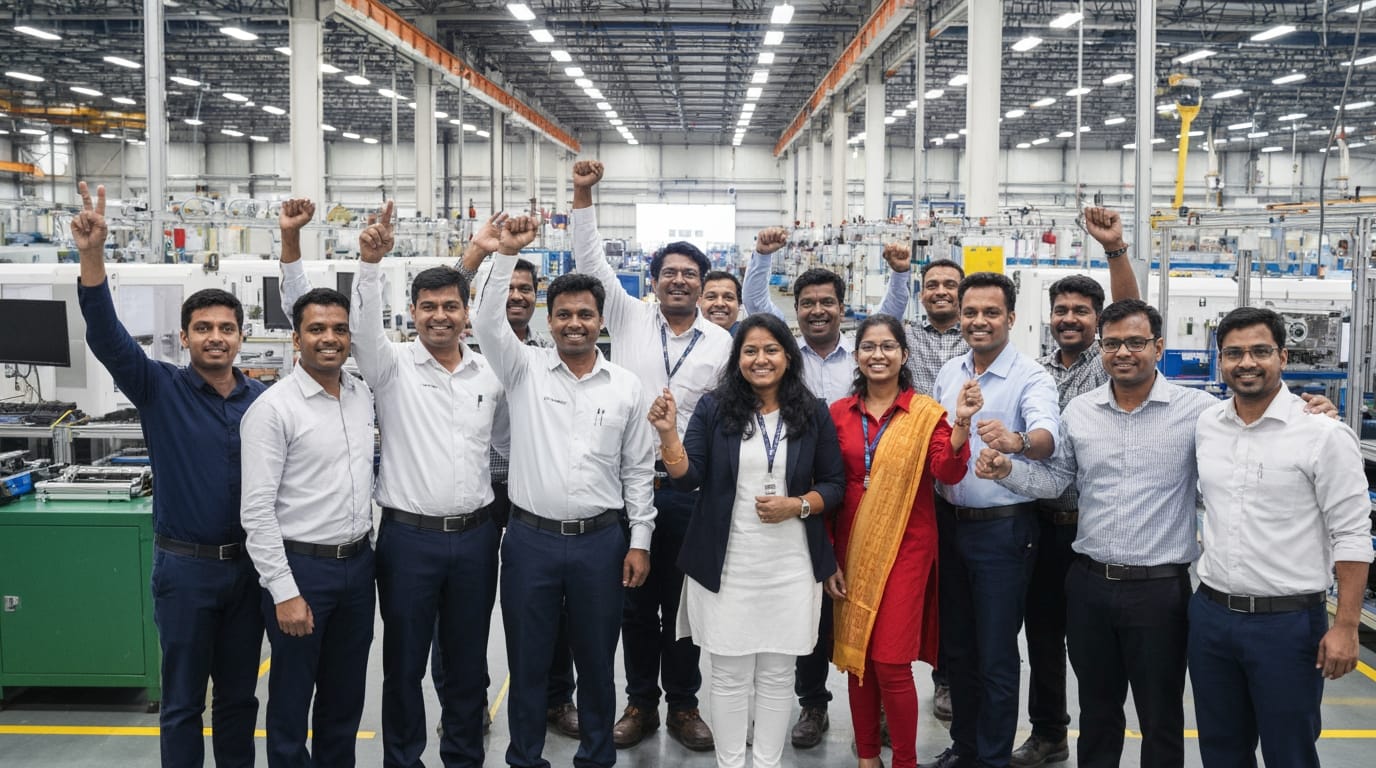
New Delhi, India – In a landmark economic shift, India has officially surpassed Japan to become the world's fourth-largest economy, marking a significant milestone in its rapid growth trajectory. This development, confirmed by the Indian government's end-of-year economic review and corroborated by projections from international financial institutions, underscores India's rising influence on the global stage and signals a profound reordering of the world's economic hierarchy. The South Asian nation, fueled by robust domestic demand, a burgeoning young population, and strategic economic reforms, is now setting its sights on overtaking Germany to claim the third position within the next three years.
A New Economic Order Takes Shape
The announcement positions India's Gross Domestic Product (GDP) at an estimated $4.18 trillion, outstripping Japan's, according to recent assessments. While final annual GDP data for 2025 and 2026 will provide definitive confirmation, the International Monetary Fund (IMF) projects India's GDP to reach $4.51 trillion in 2026, slightly ahead of Japan's anticipated $4.46 trillion. This economic ascent comes amidst a period of sustained high growth and relatively low inflation for India, a combination dubbed a "goldilocks period" by some economists. This achievement follows India's previous milestone in 2022 when it surpassed the United Kingdom to become the fifth-largest economy.
This reordering reflects not only India's dynamic expansion but also the persistent economic challenges faced by Japan. For decades, Japan held its position as a global economic powerhouse, but an aging and shrinking population, coupled with periods of deflation and structural issues, have contributed to its slower growth. The weakening of the Japanese yen has also played a role in its comparative standing when measured in U.S. dollars.
India's Growth Engine: Demographics, Demand, and Digitalization
India's economic surge is underpinned by a confluence of powerful drivers. A key factor is its demographic dividend; with a population that surpassed China's in 2023, India boasts one of the world's youngest and largest workforces, providing both a vast labor pool and a significant consumer market. Nearly 70% of India's GDP is driven by domestic consumption, making it the world's third-largest consumer market.
Government initiatives have also played a crucial role. Extensive infrastructure development programs, encompassing both physical assets like roads and bridges and intangible infrastructure such as digital payments and modernized capital markets, have boosted efficiency and connectivity. Programs like 'Make in India' aim to transform the country into a global manufacturing hub, although the services sector continues to account for a dominant share of the GDP. Furthermore, a strong influx of foreign direct investments (FDI) has fueled growth in key sectors, including finance, banking, insurance, and research and development.
The Reserve Bank of India (RBI) revised India's GDP growth forecast for fiscal year 2025-26 upwards to 7.3%, citing robust domestic demand, rationalization of income tax and Goods and Services Tax (GST), softer crude oil prices, and supportive monetary conditions. High-frequency indicators reflect sustained economic activity, with inflation remaining below the tolerance threshold, unemployment declining, and export performance steadily improving.
Japan's Enduring Economic Headwinds
In contrast to India's accelerated growth, Japan has contended with protracted economic stagnation, often referred to as its "Lost Decades." This period, beginning in the early 1990s, was triggered by the bursting of asset price bubbles, leading to a stock market crash and a debt crisis. Structural impediments, including an aging population and a declining birthrate, have significantly impacted its labor force and domestic demand.
Despite various policy attempts to stimulate growth and combat deflation, Japan's economy has faced challenges in achieving sustained expansion. Issues such as a strong appreciation of the yen in the past, combined with a reluctance of banks to lend to start-ups, have hindered economic dynamism. The country's nominal GDP per capita has stagnated around $40,000 since the 1990s, while its share of the world's nominal GDP decreased from 17.8% in 1995 to 3.6% in 2025.
Global Implications and India's Future Outlook
India's ascension to the fourth-largest economy carries significant global implications, signaling a shift in economic power towards the Indo-Pacific region. This new ranking is likely to enhance India's geopolitical stature and influence in international trade and investment forums. International agencies like S&P Global Ratings and the IMF have consistently projected India to become the third-largest economy by the end of the decade, potentially surpassing Germany by 2027-28 or 2030, with a projected GDP of $7.3 trillion.
However, India's journey is not without its challenges. Despite its impressive aggregate GDP, India's per capita GDP remains significantly lower than advanced economies like Japan and Germany, standing at approximately $2,694 in 2024, compared to Japan's $32,487. This highlights the immense task of ensuring equitable distribution of wealth and creating sufficient quality employment opportunities for its burgeoning youth population. Improvements in port infrastructure and continued policy reforms will also be crucial to sustain its economic momentum and integrate further into global supply chains.
This economic transition underscores a dynamic and evolving global landscape. India's rise reflects the dividends of its demographic profile, strategic investments, and pro-growth policies, positioning it as a pivotal player in shaping the economic future of the 21st century.


