India Chokes: Global Report Ranks Three Indian Cities Among World's Four Most Polluted
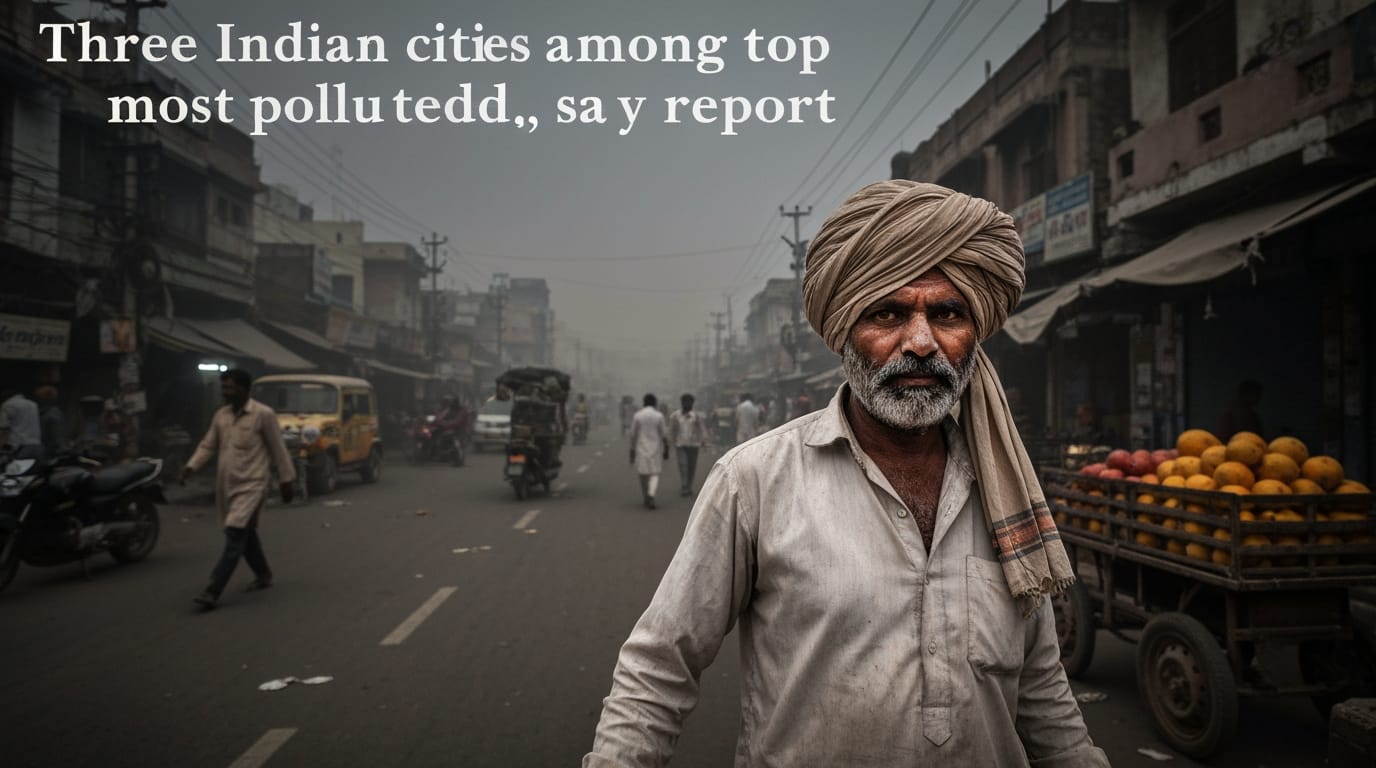
A recent global assessment has cast a stark light on India's escalating air quality crisis, revealing that three of the world's four most polluted cities are located within the nation's borders. The 2025 World Air Quality Report, published by Swiss air quality technology company IQAir, paints a grim picture of deteriorating breathable air across South Asia, placing India at the epicenter of a worsening global emergency. Millions daily contend with air quality that is increasingly hazardous, underscoring an urgent need for robust policy intervention and public health action.
The Epicenter of Pollution: India's Unenviable Dominance
The IQAir report, which meticulously analyzed air quality data from over 9,400 cities across 143 countries, unequivocally positions South Asia as the most severely affected region globally. India, alongside Pakistan and Bangladesh, consistently ranks high in the list of the world's most polluted areas. Alarmingly, all 25 of the planet's most polluted cities are found within these three nations, with India alone claiming three of the top four spots.
Leading this distressing list is Loni, a city situated near Ghaziabad, which has been identified as the world's most polluted city in the 2025 report. This designation highlights the severe extent of the country's struggle with airborne particulate matter. Joining Loni in the top four are Byrnihat, a town strategically located on the Assam-Meghalaya border, and Delhi, the nation's capital. Mullanpur, near Mohali in Punjab, also features prominently among the most critically polluted urban centers globally.
While the 2025 report singles out Loni, it's noteworthy that previous assessments also flagged India's pervasive pollution problem. The 2024 World Air Quality Report by IQAir had identified Byrnihat as topping the list for that year, with Delhi consistently ranking as the most polluted capital city globally. Furthermore, that report indicated that 13 of the world's 20 most polluted cities in 2024 were in India. Overall, India ranked as the world's fifth most polluted country in 2024, a slight improvement from third in 2023, according to IQAir data. However, a separate Air Quality Report 2024 by AQI.in placed India as the third most polluted country, with 125 out of the 145 worst-affected cities globally being Indian. This confluence of data from various sources underscores the persistent and widespread nature of the crisis. A significant finding from the reports is that approximately 35% of Indian cities reported annual PM2.5 levels exceeding ten times the World Health Organization's (WHO) stringent guideline of 5 micrograms per cubic meter. Globally, only 14% of cities manage to meet this critical WHO standard, a benchmark India falls far short of.
Unraveling the Web of Causes: Why India Suffocates
The severe air pollution plaguing these Indian cities is not a singular phenomenon but rather the culmination of a complex interplay of factors, many of which are exacerbated by rapid development and demographic shifts. Fast-growing urban areas contribute significantly to the problem, as unchecked expansion often outpaces the development of sustainable infrastructure. Industrial emissions represent a major polluter, with specific examples like Byrnihat's distilleries, iron, and steel plants being cited as significant contributors to the town's dangerously high pollution levels.
Vehicular exhaust from an ever-increasing number of cars, motorcycles, and commercial vehicles on Indian roads is another critical component. These emissions release fine particulate matter and harmful gases directly into the breathing zones of urban populations. Compounding these issues are seasonal activities, particularly agricultural practices like crop burning, especially in the northern plains. This practice, often seen before the winter planting season, sends vast plumes of smoke across states, significantly deteriorating air quality over large regions.
Construction activities, a constant feature of India's developing urban landscape, also release substantial amounts of dust and particulate matter into the atmosphere. In megacities like Delhi, the problem intensifies during winter months due to unfavorable meteorological conditions that trap pollutants close to the ground, creating hazardous smog. These natural factors, combined with local pollution sources such as firecrackers, particularly during festive seasons, push air quality into critical zones. The synergy of these diverse sources creates an environment where air quality routinely reaches "hazardous" levels, making every breath a potential health risk.
The Human Cost: A Silent Epidemic
The pervasive air pollution in India has profound and alarming implications for public health, transforming the act of breathing into a serious health hazard. Medical experts and public health organizations consistently highlight that exposure to such high levels of fine particulate matter (PM2.5) can lead to a cascade of adverse health outcomes. These range from respiratory illnesses like asthma, bronchitis, and chronic obstructive pulmonary disease (COPD) to cardiovascular diseases, strokes, and even certain types of cancer. Children, the elderly, and individuals with pre-existing health conditions are particularly vulnerable to the devastating effects of prolonged exposure.
The health consequences are so severe that air pollution is estimated to reduce life expectancy in India by an average of 5.2 years. This statistic quantifies the immense burden placed on the population, shortening lives and diminishing the quality of life for millions. To illustrate the gravity of the situation, the 2024 AQI.in report made a startling comparison: India's annual average PM2.5 concentration (48 μg/m3) was equivalent to each individual inhaling pollution similar to smoking 796 cigarettes over the course of a year. This vivid comparison underscores the invisible yet potent threat that ambient air pollution poses to every resident.
The capital city, Delhi, frequently experiences extreme pollution events. In November 2024, the city's Air Quality Index (AQI) soared to a staggering 795, placing it firmly in the 'hazardous' category. Such episodes force school closures, disrupt daily life, and place immense strain on public health infrastructure, as hospitals report spikes in respiratory and cardiac emergencies. The long-term impact on the health and productivity of the workforce, and consequently on the nation's economic development, is immeasurable.
A Call to Action: Bridging the Gap Between Data and Solutions
The consistent reporting of India's alarming air pollution levels underscores the urgent demand for comprehensive and decisive action from policymakers. While India has made commendable progress in collecting air quality data, there remains a significant gap between data collection and the implementation of effective, sustained solutions. The 2025 IQAir report explicitly states that India faces a "worsening air emergency demanding urgent policy, monitoring, and public health action."
Some initiatives are underway, such as Delhi's ambitious target to ensure that 95% of all new vehicles are electric by 2027, a measure aimed at curbing vehicular emissions significantly. However, such localized efforts, while crucial, need to be part of a broader, coordinated national strategy. Experts emphasize that solutions must be multi-pronged, addressing industrial emissions through stricter regulations and cleaner technologies, promoting public transport and electric vehicles, and implementing effective waste management strategies to reduce open burning. Furthermore, addressing agricultural stubble burning through incentives for alternative practices and robust enforcement remains a critical challenge.
The revised pollution limits are technically achievable and necessary, as noted in the reports, indicating that the technology and understanding to combat this crisis exist. What is needed is political will, sustained public awareness campaigns, and community engagement to foster a collective responsibility towards cleaner air. The health and well-being of hundreds of millions of Indians hinge on the rapid transition from acknowledging the problem to implementing transformative solutions that can clear the skies and safeguard future generations.
Conclusion
The recent findings from the 2025 World Air Quality Report serve as a grave reminder of India's precarious position at the forefront of the global air pollution crisis. With three of the world's four most polluted cities—Loni, Byrnihat, and Delhi—situated within its borders, and millions more suffering from dangerously poor air quality, the nation faces an unprecedented public health and environmental challenge. The complex web of industrial activity, vehicular emissions, agricultural practices, and rapid urbanization continues to choke India's cities, diminishing life expectancy and imposing a severe health burden. While data collection efforts have improved, the imperative now lies in translating this awareness into aggressive, coordinated, and sustained action. The future health and prosperity of India's populace depend on a resolute commitment to cleaning the air and ensuring a breathable environment for all.


