India Deepens Sri Lanka Ties Amidst China's Growing Footprint
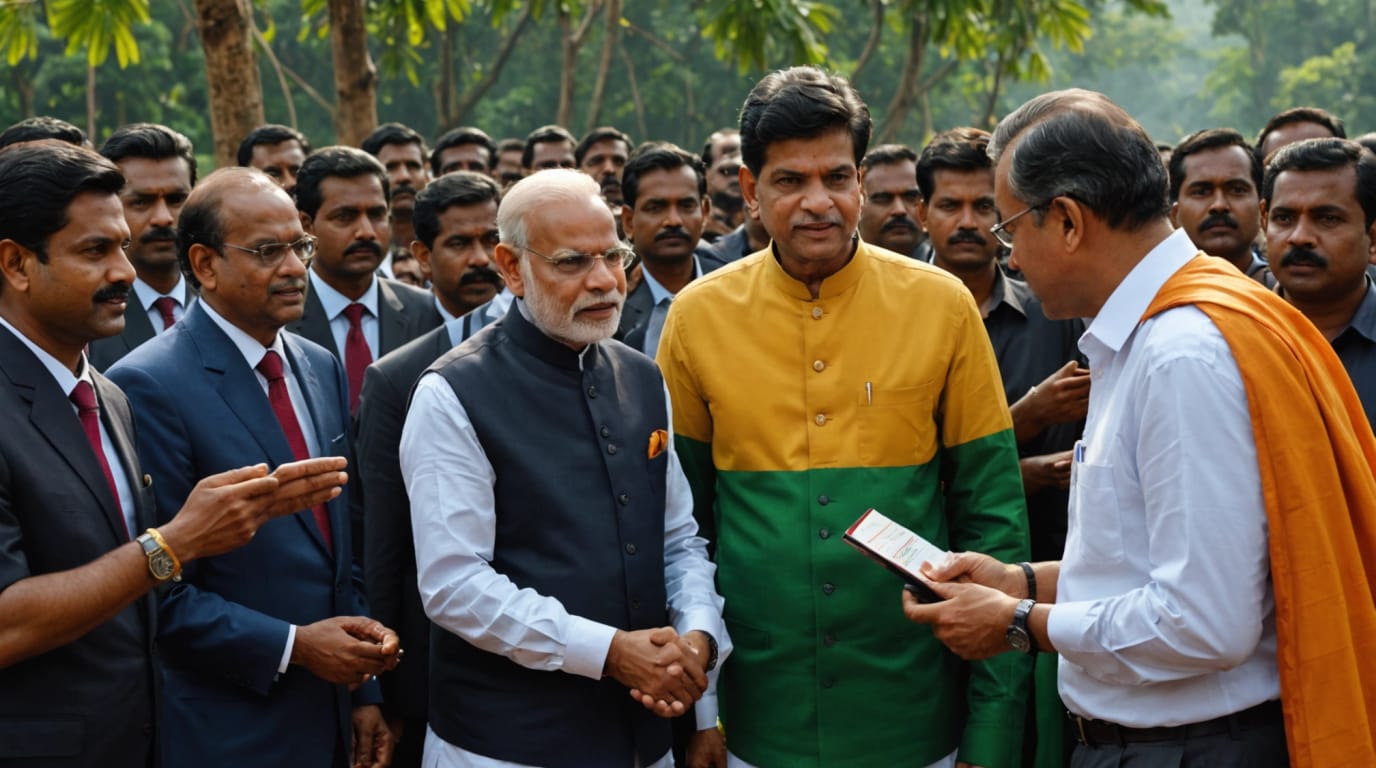
In a move signaling strengthened bilateral relations and strategic alignment, India and Sri Lanka have solidified their partnership through a series of key agreements, marking a new chapter in their shared history. The agreements, finalized during Indian Prime Minister Narendra Modi's recent visit to Colombo, aim to bolster cooperation across various sectors, including defense, energy, digital infrastructure, and trade, amidst growing concerns over China's influence in the Indian Ocean region.
A New Era of Defense Cooperation
A landmark achievement of Modi's visit was the signing of the first-ever framework Memorandum of Understanding (MoU) on defense cooperation between India and Sri Lanka. This agreement institutionalizes joint military exercises, training programs, and high-level exchanges, underscoring the interconnectedness of their security interests. The pact comes nearly four decades after the Indian Peace Keeping Force's (IPKF) intervention in Sri Lanka, an event that strained relations between the two nations for years. This new defense agreement signifies a significant shift, with both countries expressing a commitment to building a stronger security partnership.
Prime Minister Modi highlighted Sri Lanka's sensitivity towards India's security concerns, while Sri Lankan President Anura Kumara Dissanayake reassured that his country's soil would not be used for any activity against India's interests. This commitment addresses India's long-standing concerns about China's increasing presence in Sri Lanka, particularly its access to the island's sea lanes, which India considers vital for its security.
Energy Security and Regional Hub Ambitions
Beyond defense, energy cooperation emerged as a key focus area. The two leaders virtually inaugurated the Sampur solar power project, a joint venture that will contribute to Sri Lanka's energy security. Agreements were also signed for building a multi-product energy pipeline and developing Trincomalee as an energy hub, with the involvement of the United Arab Emirates in a tripartite agreement. These projects aim to diversify Sri Lanka's energy sources and reduce its reliance on any single foreign partner.
The development of Trincomalee as an energy hub holds strategic importance, potentially positioning it as a key player in the Bay of Bengal. India's support for expanding the Kankesanthurai port and constructing an oil pipeline from Nagapattinam in Tamil Nadu to Trincomalee further underscores its commitment to enhancing connectivity and infrastructure development in Sri Lanka.
Economic Partnership and Debt Relief
India has emerged as Sri Lanka's foremost partner in revitalizing its economy, particularly in the wake of the island nation's recent economic crisis. During the crisis in 2022, India extended assistance worth $3.8 billion to Sri Lanka, including petroleum supplies, essential commodities, and foreign exchange support. In the recent visit, Modi announced a support package of approximately 2.4 billion Sri Lankan rupees for social and economic development in the country's eastern provinces.
Recognizing the challenges faced by Sri Lanka, India has also taken steps to provide debt relief. Loans worth over $100 million have been converted into grants, and a bilateral debt restructuring agreement has been finalized, which includes a reduction in interest rates. These measures aim to provide immediate help and relief to the people of Sri Lanka, demonstrating India's commitment to standing by its neighbor during difficult times.
Counterbalancing China's Influence
The deepening of India-Sri Lanka ties is taking place against the backdrop of China's growing influence in the region. Beijing has invested heavily in Sri Lanka through its Belt and Road Initiative, funding infrastructure projects such as the Hambantota port. However, Sri Lanka's economic struggles have raised concerns about its ability to manage its debt and maintain its sovereignty.
India has been wary of China's increasing presence in Sri Lanka, viewing it as a potential threat to its strategic interests in the Indian Ocean. By strengthening its partnership with Sri Lanka, India aims to counterbalance China's influence and reinforce its role as a key ally and security provider in the region.
A Shared Vision for the Future
The recent agreements between India and Sri Lanka reflect a shared vision for a stronger, more prosperous, and secure future. Both countries recognize the importance of deepening their cooperation across various sectors, from defense and energy to trade and culture. By working together, India and Sri Lanka can address common challenges, promote regional stability, and unlock new opportunities for growth and development.
Prime Minister Modi's visit to Sri Lanka and the agreements signed represent a significant step forward in the bilateral relationship. As the two countries move forward, their strengthened partnership is expected to play a crucial role in shaping the geopolitical landscape of the Indian Ocean region. The focus on mutual respect, economic cooperation, and shared security interests provides a solid foundation for a long-term and mutually beneficial relationship between India and Sri Lanka.


