India Defends Russian Oil Imports Amid European Scrutiny, Citing National Interest and Global Stability
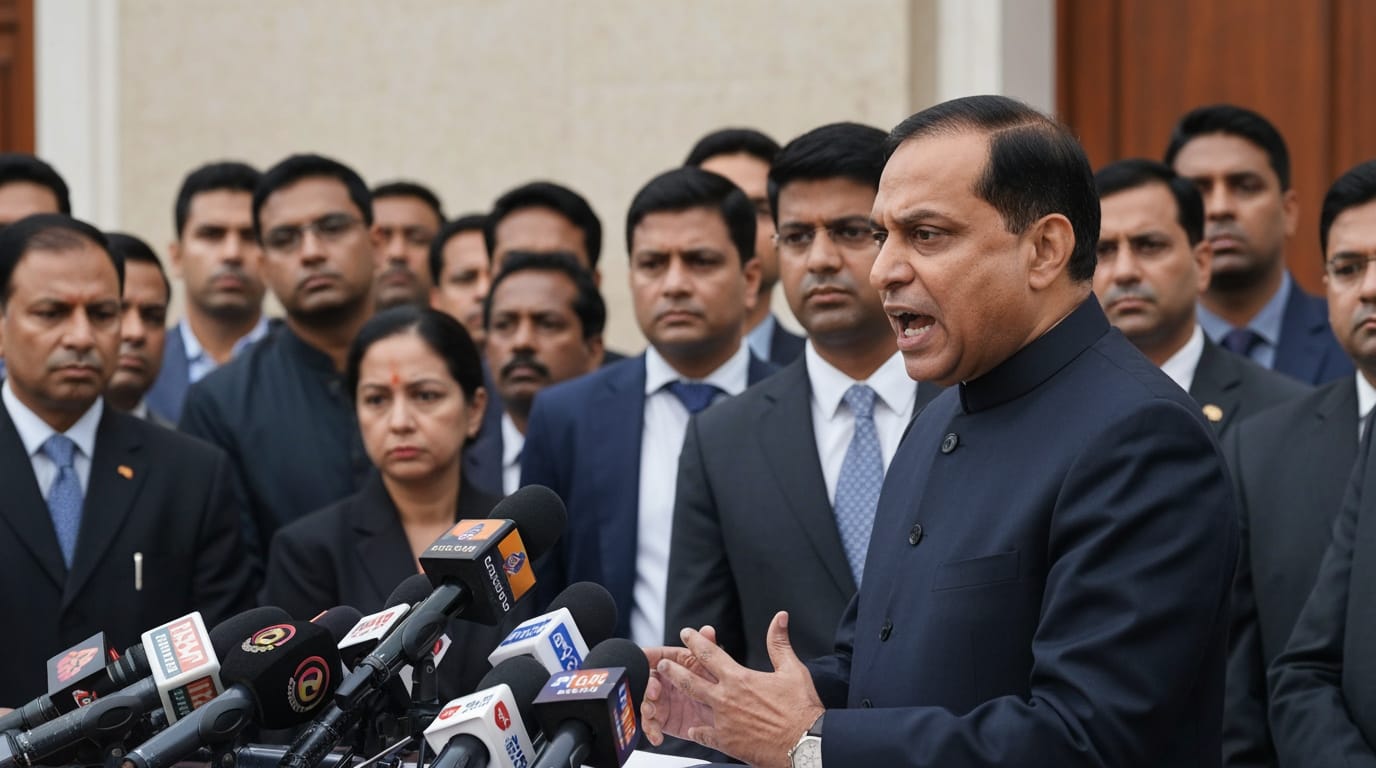
NEW DELHI — India’s Finance Minister, Nirmala Sitharaman, has forcefully defended the nation's continued purchase of discounted Russian oil, pushing back against European criticism and asserting that such decisions are rooted firmly in India's national interest and energy security requirements. The minister emphasized that India's energy import choices are driven by economic logic, not external pressure, a stance consistently articulated by New Delhi since the onset of the Ukraine conflict.
India, the world's third-largest oil importer and consumer, has significantly ramped up its crude oil purchases from Russia following Western sanctions imposed on Moscow over its invasion of Ukraine. This strategic shift, driven by attractive discounts offered by Russia, has reshaped global energy trade flows and ignited a debate over geopolitical allegiances and economic pragmatism.
The Imperative of Energy Security
Before the conflict in Ukraine, Russia constituted a negligible portion, often less than 1-2%, of India's crude oil imports. However, the landscape dramatically altered as Western nations imposed sanctions and sought to reduce their reliance on Russian energy, leading Moscow to offer substantial discounts to other buyers. India seized this opportunity, transforming Russia into its top oil supplier, at times accounting for nearly 36% to 40% of its total crude imports.
Finance Minister Sitharaman and External Affairs Minister S. Jaishankar have consistently articulated that India's primary responsibility is to secure affordable energy for its vast population, which relies on imports for over 85% of its oil needs. "If the fuel is available at a discount, why shouldn't I buy it?" Sitharaman questioned, underscoring the economic rationale behind the country's procurement strategy. This perspective highlights a core tenet of India's foreign policy: prioritizing its developmental needs and maintaining strategic autonomy in a complex global environment.
European Sanctions and the Double Standard Debate
European nations, in response to Russia's actions in Ukraine, have implemented significant measures to curb their energy reliance on Moscow. The European Union, for instance, moved to ban Russian crude oil over several months and refined fuels by the end of 2022, aiming to reduce Russia's revenue streams. While the EU has largely succeeded in reducing its direct oil imports from Russia—from nearly 30% in early 2021 to 2% by mid-2025—some member states, like Hungary and Slovakia, retain exceptions due to their high dependence on pipeline deliveries.
The criticism leveled against India by some European quarters often points to the notion that purchasing Russian oil indirectly funds Russia's war effort. However, Indian officials have countered this by highlighting Europe's own historical dependence on Russian energy and, in some instances, the indirect flow of refined Russian oil products back into Europe via third countries. Jaishankar previously noted that while India's Russian oil purchases were minimal historically, Europe remained a major buyer. This forms the basis of what New Delhi perceives as a "double standard" in international discourse.
Economic Realities and Global Market Stabilization
India's leaders have also argued that their continued purchases of Russian oil have played a role in stabilizing global energy markets. According to India's Minister of Petroleum and Natural Gas, Hardeep Singh Puri, if countries like India had ceased buying Russian oil, prices could have surged significantly, potentially reaching $130 a barrel, thereby exacerbating global inflation. External Affairs Minister S. Jaishankar echoed this, stating that India's decision to buy Russian oil, which was both available and affordable, was also influenced by a specific request from the United States to help stabilize the oil market. This suggests a more nuanced understanding of India's actions within a broader strategy to prevent economic destabilization.
The economic benefits for India have been tangible. The discounted Russian crude has translated into significant savings, estimated to be around $2.5 billion to $2.7 billion annually in some periods, compared to what it would have paid for alternative sources like Iraqi oil. However, recent reports indicate that the discount on Russian oil has narrowed, and in some instances, India has paid a premium, with Russia's share in India's oil import value jumping to nearly 38% in April 2026, accompanied by a 425% increase in premium compared to prior discounts. This evolving price dynamic could influence India's future procurement strategies.
Geopolitical Balancing Act and Future Outlook
India's energy diplomacy reflects its complex geopolitical positioning. As a burgeoning economic power, India seeks to maintain strong relationships with Western nations while preserving its long-standing strategic ties with Russia. This balancing act is evident in its oil trade decisions, where economic pragmatism often intersects with geopolitical considerations. The reported US request for India to continue buying Russian oil underscores the delicate global energy landscape, where preventing market shocks can sometimes override punitive sanctions.
However, the international environment remains fluid. The US has continued to apply pressure on countries trading with Russia, including proposed tariffs and warnings of secondary sanctions, though this has often been tempered by the recognition of global market stability needs. Indian refiners have reportedly reduced intake from sanctioned Russian companies in some recent months and explored alternatives, signaling a degree of adaptability to evolving geopolitical pressures.
In conclusion, India's robust defense of its Russian oil imports is a testament to its commitment to national energy security and economic stability. While facing international scrutiny, New Delhi's leaders consistently frame these decisions through the lens of economic necessity and market realities, rather than as an endorsement of any particular political stance. The ongoing dynamics of global energy markets, coupled with geopolitical pressures, suggest that India's balancing act will continue to be a defining feature of its foreign and economic policy in the foreseeable future.


