India Grapples with Climate Threat as Disrupted Monsoons Unleash Havoc
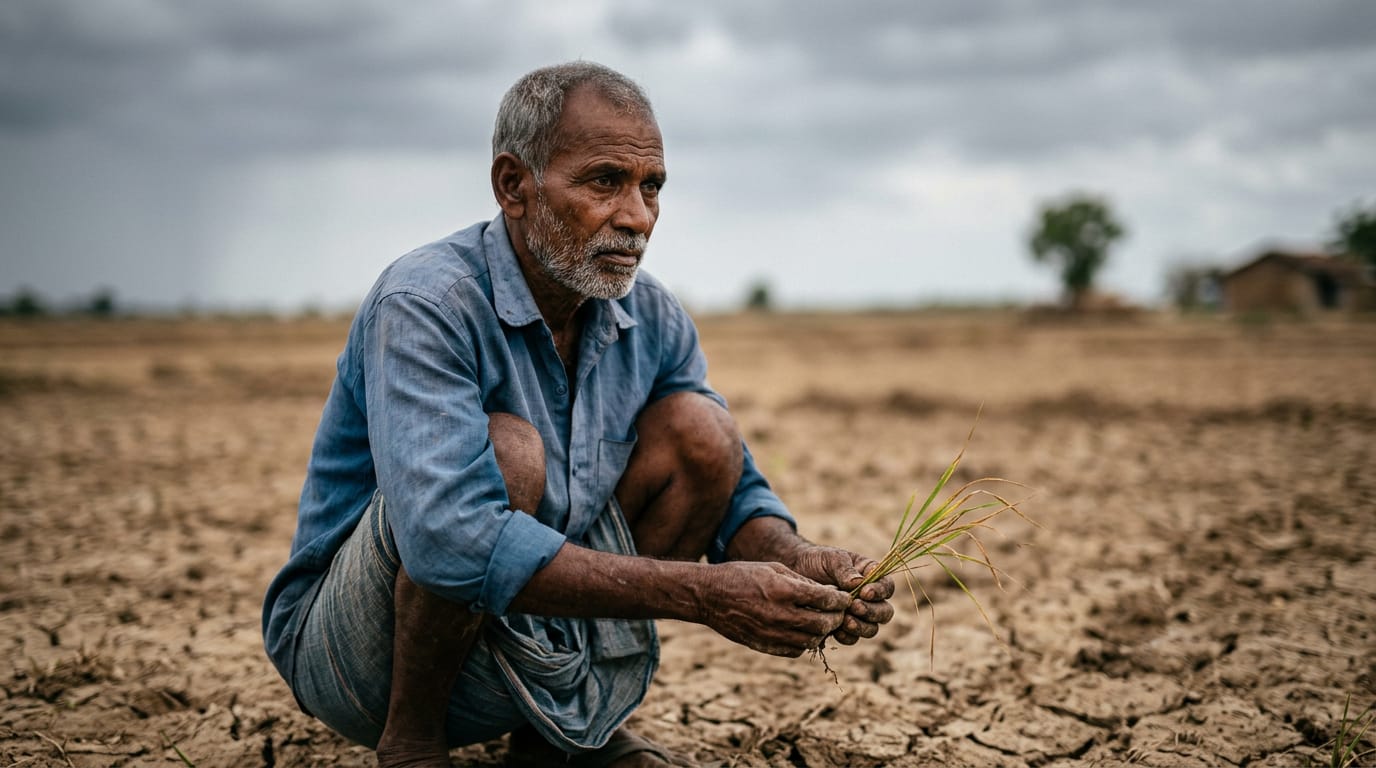
NEW DELHI, India – India, a nation intrinsically linked to the rhythm of its annual monsoon, faces an escalating climate crisis as increasingly erratic rainfall patterns unleash a devastating "dual threat" of intense floods and severe droughts across the subcontinent. This disruption, driven by global warming, is jeopardizing food security, straining infrastructure, and costing countless lives, forcing the country to confront the urgent need for comprehensive adaptation strategies. The traditional, life-sustaining monsoon has transformed into an unpredictable force, challenging the very foundation of India's agricultural economy and the well-being of its nearly two billion people.
The New Reality of Monsoon Disruption
For generations, the monsoon, typically spanning from June to September, has been the lifeblood of India, replenishing water reserves and sustaining agricultural cycles. However, scientific evidence now overwhelmingly indicates a profound shift in this critical weather system. Warmer global temperatures are altering the timing and intensity of South Asia's monsoon rains, leading to more frequent flash floods and prolonged dry spells. A study published in Earth System Dynamics highlights that summer monsoon rainfall in India is becoming stronger and more erratic, with global warming increasing rainfall even more than previously thought. Researchers project that for every degree Celsius of warming, monsoon rainfalls are likely to increase by approximately 5%. This intensified precipitation often falls in short, severe bursts, overwhelming natural and urban drainage systems, even as overall rainfall deficits plague other regions or the same regions at different times. This volatility creates a paradox: regions can experience catastrophic flooding despite a significant annual rainfall deficit, as observed in Assam, which faced massive inundation despite a 30% rainfall deficit overall.
Widespread Impact on Life and Livelihoods
The consequences of this disrupted monsoon cycle are far-reaching and deeply human. Since July 2026, floods and landslides triggered by monsoon rains have claimed more than 100 lives across India, forcing thousands to abandon their homes. States such as Assam, Gujarat, Maharashtra, and Jammu & Kashmir have borne the brunt of this year's extreme weather, experiencing massive inundation and deadly landslides. In Jharkhand, lightning strikes, often associated with intensified thunderstorms, have killed at least 14 farm workers caught in open fields, adding to the over 200 deaths recorded in the state in 2025 from similar causes.
Beyond the immediate devastation, the altered monsoon patterns pose an existential threat to India's agricultural sector, which employs a significant portion of the population and underpins the nation's food security. While crops need water during initial growing periods, excessive rainfall during other stages can severely harm plants, including rice, a staple for the majority of India's population. This makes the Indian economy and food system highly sensitive to volatile monsoon patterns, leading to potential crop failures, reduced yields, and increased economic instability for farmers and consumers alike.
Furthermore, a critical and under-recognized danger is emerging: the "dual threat" of extreme humid heat and catastrophic rainfall. During dry "break" spells of the monsoon, humid heat stress peaks. A recent study noted that the number of days when the "feels-like" temperature exceeds 45 degrees Celsius is approximately ten times higher during the monsoon season than during the dry pre-monsoon period. This humid heat acts as a "silent killer," severely limiting the body's ability to cool itself and posing a deadly risk even at seemingly manageable temperatures. Across large parts of the subcontinent, residents now face a punishing rhythm of either extreme rain or oppressive humid heat almost daily during the monsoon season.
Economic Strain and Environmental Vulnerabilities
The economic ramifications of the disrupted monsoon extend far beyond the agricultural sector. Damage to infrastructure, displacement of communities, and disruptions to supply chains impose significant financial burdens on the nation. Rapid urban growth coupled with shrinking floodplains further amplifies the damage, as existing drainage systems in cities struggle to cope with the sudden deluges, leaving millions exposed to disaster. Experts warn that the increasing frequency of weather extremes challenges the very foundation of economic growth in India.
Moreover, the Himalayan region faces another grave threat: accelerating glacial melt. This melt contributes to the formation of hundreds of high-altitude glacial lakes that are at risk of overflowing, known as Glacial Lake Outburst Floods (GLOFs), which can devastate downstream communities. The combined effects of intense rainfall, landslides, and potential GLOFs create a complex web of environmental vulnerabilities that threaten both human settlements and delicate ecosystems.
The Path Forward: Adaptation and Resilience
Facing this complex and evolving challenge, experts emphasize that current disaster responses in South Asia are predominantly reactive, lacking the long-term planning necessary to build true resilience. There is a pressing need for comprehensive adaptation strategies that move beyond immediate relief efforts to address the root causes and ongoing impacts of climate change. This includes investing in robust early warning systems, climate-resilient infrastructure, and sustainable agricultural practices that can withstand both floods and droughts.
Encouragingly, scientific advancements may offer new tools in this fight. A new study on the Indian monsoon indicates a powerful capability to predict monsoon patterns up to two years in advance. Such breakthroughs in forecasting could provide invaluable lead time for farmers to plan crops, for disaster management agencies to prepare for extreme events, and for urban planners to develop more resilient cities. However, the implementation of such solutions requires significant investment, political will, and coordinated efforts across various sectors.
Confronting an Uncertain Future
India stands at a critical juncture, with its future inextricably linked to its ability to adapt to a rapidly changing climate. The disruption of its foundational monsoon system is not merely an environmental concern but a profound public health, economic, and social crisis. The current trajectory, if unchecked, threatens to push beyond the limits of adaptation. As the world continues to warm, the imperative for India is clear: to transition from reactive measures to proactive, long-term strategies that safeguard its people, economy, and environment against the relentless and intensifying force of climate change. The future of India will hinge on its capacity to innovate, collaborate, and commit to resilience in the face of an increasingly volatile climate.


