India Grapples with Fuel Panic as Iran War Threatens Energy Security
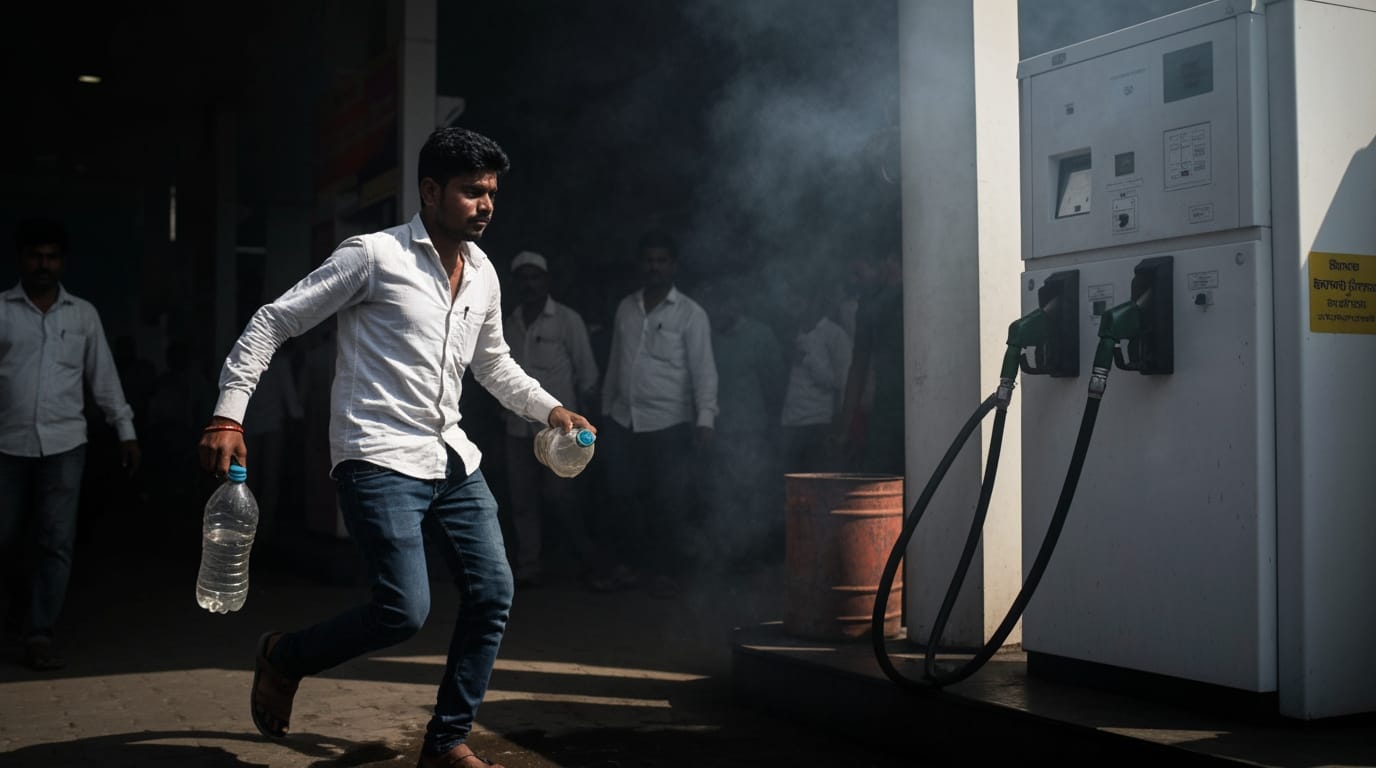
NEW DELHI – Anxious consumers across India are rushing to fuel stations, forming long queues and topping off their tanks, driven by fears of impending fuel shortages and steep price hikes stemming from escalating geopolitical tensions in West Asia involving Iran. The unfolding "Iran war" has sent tremors through global energy markets, directly impacting India's highly import-dependent economy and prompting widespread public concern. This surge in demand at the pumps, particularly evident in cities like Bengaluru, Mumbai, and Parbhani, reflects a palpable anxiety over potential disruptions to critical oil and gas supplies.
Geopolitical Storm Brews Over Crucial Strait
The immediate trigger for the public's concern is the intensifying conflict involving the United States, Israel, and Iran, which has significantly heightened the risk of disruptions to global oil shipments, especially through the Strait of Hormuz. This narrow waterway is an indispensable chokepoint, through which roughly 20 percent of the world's oil and gas passes. For India, the vulnerability is particularly acute, as approximately 50 percent of its crude oil and a staggering 90 percent of its liquefied petroleum gas (LPG) imports traverse this critical maritime route. The fear of a potential closure or severe impediment to traffic in the Strait has propelled global crude oil prices upwards, with Brent crude surging between 40 to 50 percent from late February to mid-March, peaking near $119 per barrel before stabilizing around $108.87 per barrel on March 23. This volatility underscores the precarious balance of international energy supply chains in the face of geopolitical instability.
India's Energy Dependency Exposed
As the world's third-largest oil consumer and a nation that imports roughly 85 percent of its crude oil needs, India is acutely susceptible to any instability in the Middle East. Beyond crude, India is also heavily reliant on imports for liquefied petroleum gas (LPG) and liquefied natural gas (LNG), with 60 to 90 percent of these essential fuels originating from abroad. The rising cost of crude oil translates directly into higher domestic fuel prices, pushing up transportation costs, fueling inflation, and exerting downward pressure on the Indian rupee, which has already depreciated to a record low of INR 92.34 against the US dollar. This inflationary pressure is already impacting various sectors; for instance, the price of an LPG cylinder has increased, affecting household budgets. Furthermore, industries like the auto sector are beginning to report gas shortages, leading to production slowdowns and potential supply chain disruptions. Some restaurant associations and delivery platforms in major cities are even discussing fuel surcharges to cope with rising logistics expenses, while others consider temporary shutdowns due to LPG shortages.
Government Mobilizes Amid Public Reassurances
In response to the deepening crisis, Prime Minister Narendra Modi has addressed Parliament, acknowledging the gravity of the global energy situation and urging the nation to prepare for potential long-term consequences. He stressed that any disruption to the Strait of Hormuz could severely impact India's energy security, shipping, and trade. To coordinate a comprehensive national response, Modi chaired a meeting of the Cabinet Committee on Security and subsequently established seven empowered groups tasked with developing strategies for managing fuel supplies, fertilizers, gas, supply chains, and inflation. The government's multi-pronged approach includes actively exploring and securing gas and crude oil from diverse global sources.
Despite the public's rush to fuel pumps, officials from the Ministry of Petroleum and Natural Gas (MoPNG) and petrol pump operators have consistently reassured citizens that there is no immediate shortage of fuel at retail outlets, urging them to refrain from panic buying. Efforts have been made to bolster domestic LPG production, crack down on hoarding, and promote online bookings for cooking gas. India has also engaged in diplomatic efforts to ensure the safe passage of its energy shipments, successfully securing safe transit for three LPG tankers through the Strait of Hormuz after discussions with Iran, with two additional tankers recently making their way through the strait. Contingency measures also involve maximizing refinery operations and adjusting commercial LPG allocations to maintain supply. While proposals to reduce the quantity of LPG supplied in domestic cylinders were considered, these plans are reportedly being slowed down amid signs of easing tensions.
Strategic Reserves and Future Resilience
India maintains Strategic Petroleum Reserves (SPRs) across three underground locations with a total storage capacity of 5.33 Million Metric Tonnes (MMT). At full capacity, these reserves are designed to cover approximately 9.5 days of the nation's crude oil consumption. However, current figures indicate that these SPRs are approximately 64 percent full, holding around 3.37 MMT of crude, which translates to roughly five days of demand. Complementing these strategic reserves, India's oil marketing companies possess additional storage capacity for crude oil and petroleum products, bringing the total national crude oil storage capacity to 74 days. Plans are also underway to expand India's strategic reserve capacity further. This dual-layered storage strategy is crucial for buffering against short-term supply shocks arising from geopolitical events. Beyond physical reserves, the current crisis is prompting calls for India to accelerate its clean energy transition, diversifying its fuel supply sources and investing in renewable energy and battery storage to enhance long-term energy independence.
Economic Ripple Effects and the Road Ahead
The ongoing geopolitical instability and its direct impact on energy markets are expected to cause supply chain disruptions that could affect corporate earnings in the coming quarters. Even after the Strait of Hormuz eventually reopens, it may take one to two months for supply chains to normalize, and damage to energy infrastructure in the Middle East could further prolong market normalization. While some global markets have shown signs of recovery and crude oil prices have seen some decline, the overall economic impact remains a significant concern. The current crisis serves as a stark reminder of India's inherent vulnerability to global energy market fluctuations and underscores the imperative for continuous strategic planning and agile policy responses to safeguard its economic stability and ensure uninterrupted energy access for its vast population.


