India Greenlights Chandrayaan-5 Mission, Eyes Lunar Landing by 2040
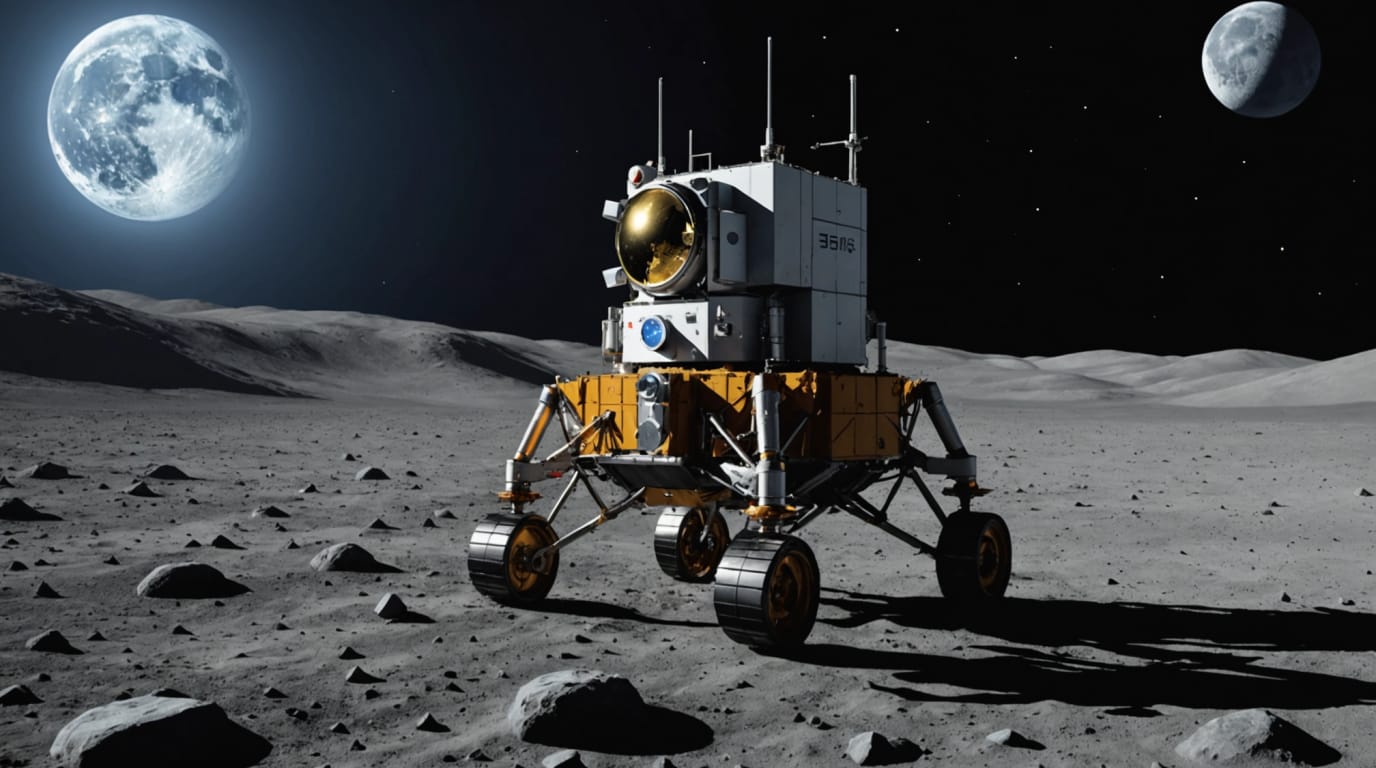
India's ambitious space program has received a significant boost with the government's approval of the Chandrayaan-5 mission. This latest endeavor in lunar exploration aims to further cement India's position as a leading spacefaring nation and pave the way for a potential manned mission to the moon by 2040. The Chandrayaan-5 mission, which will be a collaborative effort with Japan, marks a significant step forward in India's pursuit of advanced lunar studies and technological advancements in planetary research.
Advancing Lunar Exploration
The Chandrayaan program, also known as the Indian Lunar Exploration Programme, has been instrumental in India's lunar exploration efforts. ISRO Chairman V. Narayanan highlighted the program's achievements and future goals, emphasizing the importance of Chandrayaan-5 in furthering the understanding of the moon's surface. Chandrayaan-1, launched in 2008, successfully mapped the moon's surface chemically, mineralogically, and photo-geologically. Chandrayaan-2, launched in 2019, achieved 98% of its objectives, with its orbiter continuing to send valuable images despite a minor setback during the lander's final stages. The Chandrayaan-3 mission achieved a historic milestone by successfully executing a soft landing on the Moon's south pole on August 23, 2023, making India the first country to achieve this feat.
Chandrayaan-5: A Collaborative Mission
Chandrayaan-5 represents a leap forward in terms of technological capabilities and international collaboration. Unlike its predecessor, Chandrayaan-3, which carried a 25-kg rover named 'Pragyan,' Chandrayaan-5 will deploy a significantly larger 250-kg rover to conduct an extensive study of the Moon's surface. ISRO will collaborate with Japan on this mission, marking a strategic push toward advanced lunar studies. While specific details of Japan's role remain undisclosed, the partnership signals a commitment to leveraging international expertise for technological advancements in planetary research. The mission is expected to enhance scientific capabilities and contribute to a deeper understanding of the lunar environment.
Objectives and Advancements
The primary objective of Chandrayaan-5 is to conduct detailed studies of the Moon's surface and composition. The advanced rover will be equipped with state-of-the-art instruments to analyze the lunar soil, rocks, and other surface features. This data will provide valuable insights into the Moon's geological history, its potential resources, and its suitability for future human missions. The mission will also demonstrate the capabilities of a higher-capacity lander, which is an essential element for future landing missions, including potential human landings on the lunar surface.
India's Space Ambitions
The Chandrayaan-5 mission is part of India's broader vision to become a leading player in space exploration. ISRO is simultaneously working on several other ambitious projects, including the Gaganyaan human spaceflight program and the establishment of India's own space station, the Bharatiya Antriksh Station, by 2035. These initiatives demonstrate India's commitment to developing indigenous capabilities in space technology and infrastructure. The government has also approved the Chandrayaan-4 mission, expected to launch in 2027, which will focus on bringing lunar samples back to Earth, a first for India.
Expanding Infrastructure
To support its growing space program, India is also investing in expanding its infrastructure. The foundation stone for India's second spaceport at Kulasekharapattinam, a coastal village in Tamil Nadu, was laid in February 2024. Construction of the Small Satellite Launch Vehicle (SSLV) Launch Complex (SLC) facilities commenced in March 2025. This new spaceport will primarily address the polar launches of the SSLV, which is designed to capture the global launch service market for small satellites weighing up to 500kg. This strategic move will enhance India's capabilities in providing cost-effective launch services for small satellites.
Looking Ahead
The approval of the Chandrayaan-5 mission marks a significant milestone in India's space journey. This collaborative effort with Japan will not only advance lunar science but also pave the way for future human missions to the Moon. With its ambitious space program and growing infrastructure, India is poised to play a leading role in the global space arena. The Chandrayaan-5 mission is a testament to India's commitment to pushing the boundaries of space exploration and inspiring future generations of scientists and engineers. The mission's success will undoubtedly contribute to a deeper understanding of our celestial neighbor and further solidify India's position as a spacefaring nation.


