India Gripped by Controversy: Police Force Against CJP Protesters Under Scrutiny Amidst Calls for Accountability
New Delhi, India – A month after widespread protests led by the youth-centric Cockroach Janata Party (CJP) swept across India, drawing tens of thousands onto the streets to voice grievances over alleged examination irregularities and unemployment, the conduct of law enforcement remains a focal point of intense national debate. Allegations of "excessive force" used by police against demonstrators, including the deployment of pellet guns, tear gas, and even firearms in some instances, have ignited fierce criticism from human rights organizations and the political opposition, prompting India's Supreme Court to initiate a high-powered inquiry into the matter. The controversy highlights a growing tension between the state's efforts to maintain order and citizens' constitutional right to peaceful assembly.
The Genesis of Discontent: A Movement of the Disenfranchised
The protests, primarily concentrated in Delhi and the eastern state of Bihar in late July 2026, were spearheaded by the Cockroach Janata Party (CJP), a Gen Z-led movement that gained traction after a Supreme Court Chief Justice reportedly compared unemployed youth to "cockroaches." What began as a demand for accountability regarding the alleged leak of the national medical entrance test (NEET-UG) quickly broadened into a wider expression of frustration over pervasive unemployment, insufficient opportunities for young people, and growing criticisms of governmental authoritarianism. A significant event that fueled the movement was the forcible removal of activist Sonam Wangchuk from Jantar Mantar on July 18, where he had been on a hunger strike since late June, further galvanizing protesters. On July 20, the CJP called for a "Chalo Sansad" (March to Parliament) in Delhi, intending to bring their demands directly to the nation's legislative body. Thousands of students and unemployed youth converged, aiming to march towards Parliament House, setting the stage for the dramatic confrontations that followed.
Allegations of Unlawful Force and Brutality
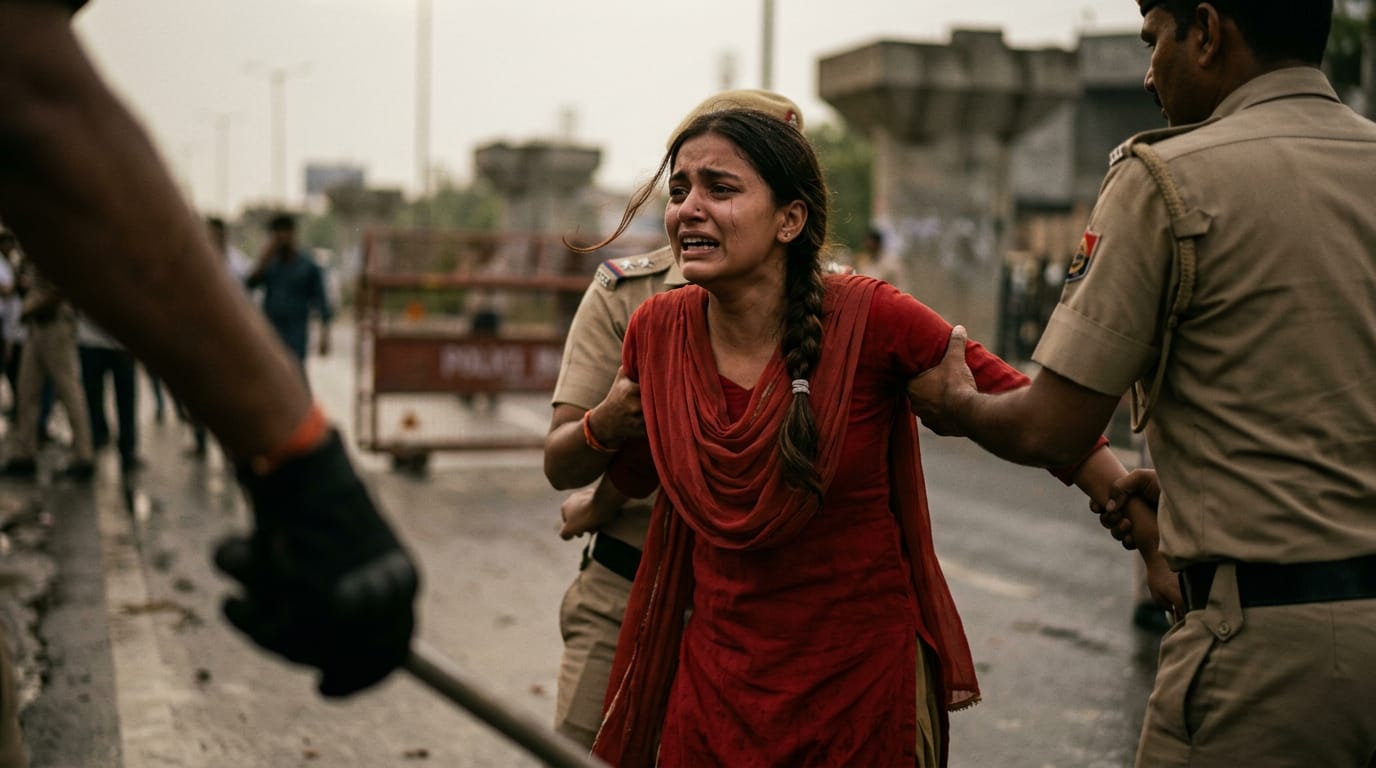
Accounts from protesters, human rights groups, and media reports paint a disturbing picture of the police response to the demonstrations. Amnesty International, in a digital investigation published one month after the primary incidents, confirmed that police in Delhi and Siwan, Bihar, utilized weapons including pellet-firing shotguns, tear gas launchers, grenades, batons, and electric shock devices against protesters between July 20 and July 24. The organization asserted that these methods breached international law, human rights standards, and domestic policing guidelines. Human Rights Watch also documented the use of tear gas and batons to suppress what it largely described as peaceful student and youth protests in New Delhi on July 20.
Eyewitnesses and video evidence, verified by Amnesty International's Evidence Lab, detailed two instances where a police officer unlawfully used lethal force against a crowd in Siwan, Bihar, involving the firing of an AK-47 rifle and pistols, resulting in at least three protesters sustaining gunshot injuries. In Delhi, allegations included male police personnel assaulting female protesters, with one viral video purportedly showing an officer shoving a stick into a female protester's buttocks, sparking widespread outrage. Protesters, including CJP spokespersons, maintained that their demonstrations remained peaceful until police intervention led to chaos and severe injuries. More than 100 youth protesters were reportedly injured in Delhi, with one young woman protester in critical condition. Beyond physical force, authorities also reportedly employed surveillance drones, facial recognition technology to identify and register cases against participants, imposed internet blackouts, and directed GitHub to remove access to "BitChat," a decentralized messaging app popular among student activists.
The Official Narrative: Justification and Defense
Delhi Police, in contrast, have vehemently denied using disproportionate force, characterizing their response as "graded" and "professional" in submissions before the Supreme Court. Officials reported that the protests on July 20 involved an estimated 30,000 to 40,000 individuals, including "rioters and miscreants," facing approximately 5,000 police personnel. According to the police, the demonstrations, initially peaceful, escalated dramatically after protesters breached multiple layers of barricades erected to prevent them from marching towards the high-security Parliament zone. They cited instances of protesters damaging police vehicles, throwing stones and bottles, heckling and attacking personnel, with over 240 police officers reportedly sustaining injuries.
Police further claimed that "elements identified as unconnected to the genuine student or protester body" had infiltrated the protest, including individuals with criminal records, who were identified through facial recognition technology. An internal Delhi Police report submitted to the government noted that more than 100 people facing murder charges and hundreds accused in other serious crimes were identified during the CJP's march. The police maintained that force was only used after repeated warnings were ignored and after protesters resorted to violence, necessitating a calibrated response to control the crowd and protect public property and personnel.
Judicial Intervention and the Path to Accountability
The escalating controversy prompted swift judicial action. The Supreme Court of India, under Chief Justice Surya Kant, underscored the fundamental right to peaceful protest as constitutionally guaranteed, stating unequivocally that "police excess" cannot be justified simply by the presence of agitation. Recognizing the seriousness of the allegations and counter-allegations, the Supreme Court, on August 21, constituted a five-member High-Powered Enquiry Committee (HPEC).
Headed by former Supreme Court Justice R. Subhash Reddy, the committee is tasked with a comprehensive investigation into the police's actions during the CJP-led protests. Its mandate includes examining allegations of excessive use of pellet guns, electric batons, lathi charges, tear gas, and specific claims of violence against women protesters. Crucially, the HPEC will also consider counter-allegations from authorities regarding violence against police personnel and damage to public property. The Supreme Court emphasized the need for a thorough and time-bound probe, with transparent findings, to foster public trust and potentially frame uniform guidelines for peaceful demonstrations nationwide.
Conclusion: A Nation Awaits Answers
The aftermath of the CJP-led protests leaves India grappling with fundamental questions about civil liberties, state power, and accountability. While the resignation of the education minister marked a political consequence of the widespread youth discontent, the human cost of the clashes and the allegations of police brutality continue to resonate deeply across the nation.
The formation of the Supreme Court's inquiry committee offers a glimmer of hope for a fair and impartial assessment of the events of July 2026. As the committee begins its work, tasked with uncovering the truth behind the conflicting narratives, its findings will be pivotal not only for delivering justice to those affected but also for shaping the future of protest and policing in India. The nation awaits a definitive resolution to ensure that the delicate balance between maintaining law and order and upholding democratic rights is preserved.