India Lodges Strong Protest After Iranian Forces Fire on Vessels in Critical Strait of Hormuz
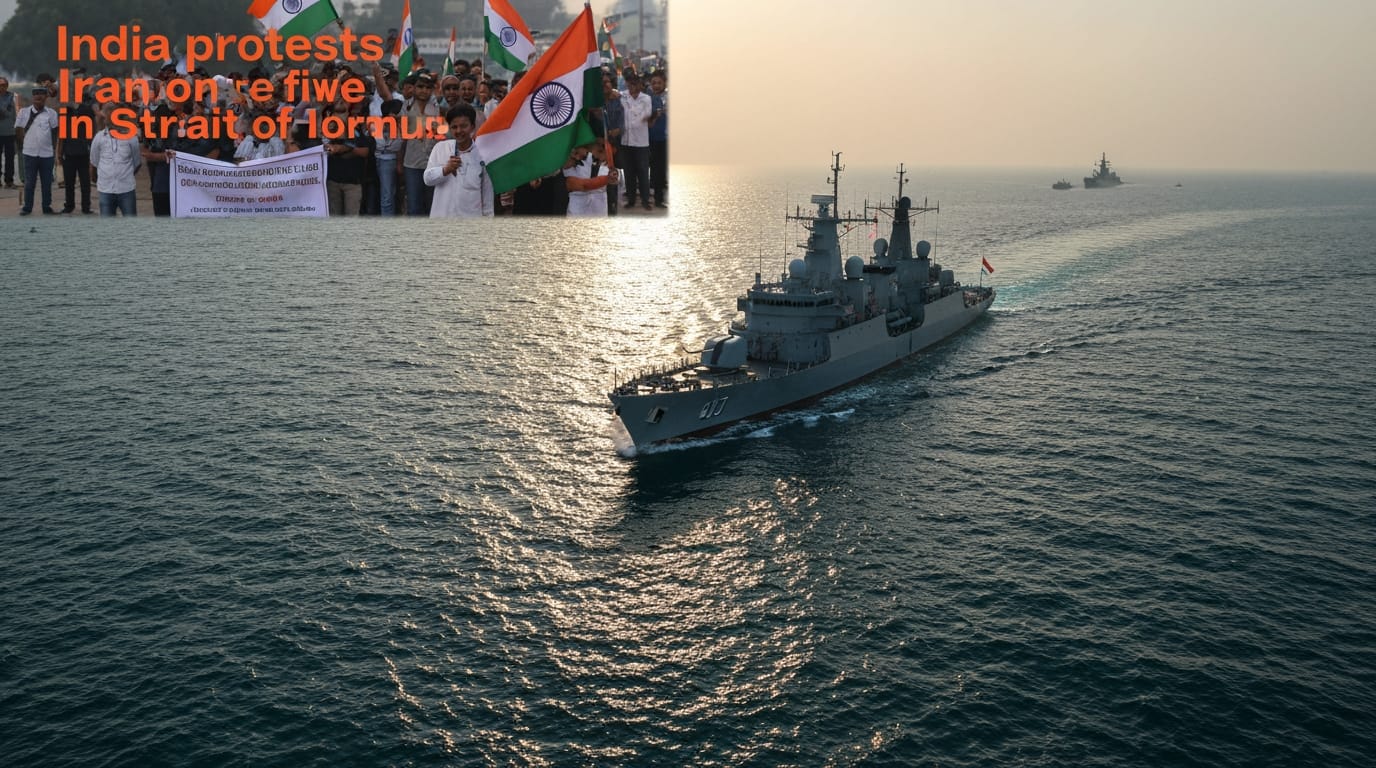
New Delhi, India – India has formally protested to Iran following a concerning incident in the Strait of Hormuz where two Indian-flagged merchant vessels reportedly came under fire from Iranian forces. The diplomatic démarche underscores the escalating tensions in the vital maritime chokepoint and highlights global anxieties over the unhindered flow of international commerce and energy supplies.
The incident occurred on Saturday, April 18, 2026, forcing the Indian-flagged ships, identified as "Jag Arnav" and "Sanmar Herald," to reverse course in the Strait. While no injuries or significant damage to the vessels have been reported, the episode triggered immediate diplomatic action from New Delhi. The Ministry of External Affairs summoned Iranian Ambassador to India, Mohammad Fathali, to convey India's "deep concern" and to press for the unimpeded passage of India-bound shipping through the strategic waterway.
The Incident Unfolds Amidst Heightened Tensions
Reports from maritime monitoring sites, including TankerTrackers.com, indicated that Iranian Revolutionary Guard Corps (IRGC) Navy gunboats were responsible for the firing, forcing the Indian vessels to turn back from their transit through the Strait. The "Sanmar Herald," a Very Large Crude Carrier (VLCC), was reportedly carrying two million barrels of Iraqi oil when it encountered the Iranian forces. This aggressive action took place despite an earlier declaration by Iran's Foreign Minister on Friday, April 17, that the Strait of Hormuz would be "completely open" for all commercial vessels following a two-week ceasefire agreement between the United States and Iran.
However, by Saturday, Iran's joint military command reversed course, announcing the closure of the Strait of Hormuz once again. Tehran justified its renewed restrictions by citing the United States' continued naval blockade of Iranian ports, accusing Washington of "banditry and piracy" and violating the terms of the ceasefire. The IRGC warned that the Strait would remain closed until the US ended its blockade, stating that "no vessel of any kind should move from its anchorage in the Persian Gulf and the Sea of Oman, and approaching the Strait of Hormuz will be considered cooperation with the enemy, and the offending vessel will be targeted." This abrupt shift created significant uncertainty and immediate peril for merchant shipping attempting to traverse the narrow passage. One other Indian-flagged oil tanker, "Desh Garima," managed to cross the Strait successfully on the same day, highlighting the unpredictable nature of passage through the area.
India's Swift Diplomatic Response and Economic Stakes
New Delhi’s diplomatic protest was swift and unequivocal. Foreign Secretary Vikram Misri conveyed to Ambassador Fathali India's "deep concern" over the shooting incident. Emphasizing the paramount importance India places on the safety of merchant shipping and mariners, the Foreign Secretary urged Iran to facilitate the safe passage of India-bound vessels across the Strait. This call is particularly significant as India, the world's third-largest energy consumer, relies heavily on the Strait of Hormuz for its energy security, with a substantial portion of its oil and gas imports transiting through this waterway.
India has consistently advocated for the "safe and unimpeded" transit of maritime shipping and has previously deplored attacks on commercial vessels as "completely unacceptable." At the United Nations General Assembly earlier in the week, India's Permanent Representative, Ambassador Harish Parvathaneni, stressed that disruptions to maritime traffic in the Strait directly threaten India's energy and economic security. He reiterated that targeting commercial shipping and endangering civilian crew members or impeding freedom of navigation and commerce through the Strait is unacceptable, calling for international law to be fully respected. The Iranian ambassador assured Indian officials that these concerns would be promptly conveyed to authorities in Tehran.
The Geopolitical Crucible of the Strait of Hormuz
The Strait of Hormuz, a narrow sea passage separating Iran and Oman, connects the Persian Gulf with the Gulf of Oman and the Arabian Sea. At its narrowest, it is just 21 nautical miles wide, with two two-mile-wide navigable channels for inbound and outbound shipping. Its strategic significance cannot be overstated: approximately 20% to 25% of the world's seaborne oil trade and a considerable share of liquefied natural gas (LNG) shipments pass through it annually. In 2025, nearly 15 million barrels per day of crude oil, representing almost 34% of global crude oil trade, transited the Strait, with the bulk destined for Asian markets, including India and China.
Any disruption in this chokepoint has profound consequences for global energy markets, potentially leading to significant fluctuations in oil prices and widespread economic fallout. Since the commencement of the US-Israeli war against Iran on February 28, 2026, and Iran's subsequent imposition of restrictions, traffic through the Strait has dramatically decreased, with some reports indicating a 95% reduction. This broader conflict has seen Iran launch missile and drone attacks and warnings against passage, alongside a US naval blockade of Iranian ports.
Implications for Global Stability and Commerce
The latest incident involving Indian vessels underscores the volatile nature of the Strait of Hormuz and the precarious balance of regional power. Iran’s actions are a direct response to perceived violations of a ceasefire agreement and the ongoing US blockade, indicating a willingness to escalate tensions to achieve its objectives.
For India, a country deeply reliant on the unimpeded flow of energy resources, the targeting of its flagged vessels represents a direct threat to its economic stability and national interests. The diplomatic push by New Delhi highlights the international community's urgent need for de-escalation and adherence to international maritime law to ensure the safety of global shipping lanes. The continued uncertainty in the Strait of Hormuz threatens not only energy supply chains but also raises the specter of broader geopolitical instability, impacting economies worldwide. The coming days will be critical in determining whether diplomatic efforts can restore stability and ensure the safe passage that underpins global trade.


