India Navigates Geopolitical Crosscurrents as Putin Visit Tests Delhi's Balancing Act
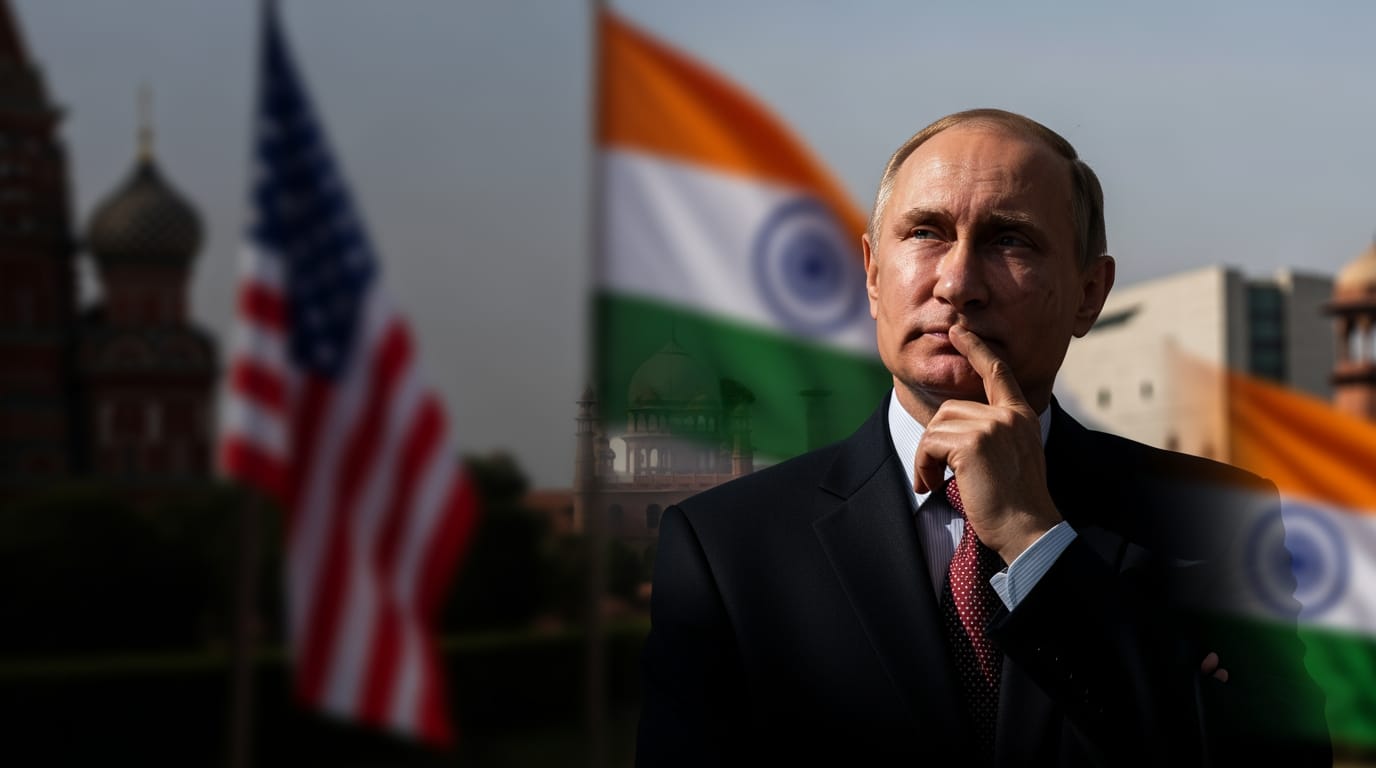
NEW DELHI, India – Russian President Vladimir Putin's recent state visit to India has underscored New Delhi's enduring commitment to its "Special and Privileged Strategic Partnership" with Moscow, even as it faces escalating pressure and scrutiny from the United States. The two-day visit, marked by a warm reception from Prime Minister Narendra Modi, served as a powerful reaffirmation of deep-seated historical ties in critical sectors, particularly defense and energy, forcing India to once again perform a delicate geopolitical balancing act on the world stage.
The visit, the 23rd India-Russia annual summit, saw leaders from both nations engage in extensive discussions covering a wide array of bilateral cooperation. While the immediate agenda focused on bolstering economic and strategic partnerships, the broader context of Russia's ongoing conflict in Ukraine and the Trump administration's punitive measures against nations engaging with Moscow loomed large. New Delhi's decision to host Putin, his first visit since the 2022 full-scale invasion of Ukraine, sends an unequivocal message about its independent foreign policy stance, albeit one that carries significant implications for its burgeoning relationship with Washington.
Reinforcing a "Special and Privileged Strategic Partnership"
During the high-profile visit, India and Russia reiterated their commitment to strengthening cooperation across diverse domains, from advanced defense technologies to energy security and the mobility of skilled labor. Defense ties, a cornerstone of their nearly eight-decade relationship, took center stage. Key agreements included a $2 billion lease for a nuclear-powered submarine, finalizing a decade of negotiations and enhancing India's naval capabilities, particularly for training purposes. Deliveries of Russia's advanced S-400 Triumf missile defense systems, part of a $5.43 billion deal signed in 2018, were also a significant talking point, with three of the five contracted squadrons already delivered. India is now reportedly considering acquiring additional S-400 regiments, a move that could significantly bolster its air defense architecture. Further discussions delved into niche technologies, industrial collaboration, and the advancement of joint ventures like the BrahMos missile program, which has accrued over 58,000 crore rupees in deals.
Economically, both nations are pushing to elevate their bilateral trade volume from the current $68.7 billion to an ambitious target of $100 billion by 2030. This includes efforts to increase Indian exports of pharmaceuticals, agricultural products, and textiles to Russia, alongside securing long-term supplies of fertilizers from Moscow. Energy cooperation remains pivotal, with India significantly increasing its imports of discounted Russian crude oil. From a mere 2.5% of its total crude purchases before 2022, Russian oil now accounts for nearly 36%, making India the world's second-largest buyer.
The Enduring Legacy of India-Russia Ties
The robust relationship between India and Russia is deeply rooted in history, tracing back to the Cold War era when the Soviet Union emerged as a crucial ally for India. This partnership, officially designated as a "Special and Privileged Strategic Partnership" in 2010, has withstood numerous geopolitical shifts. Russia continues to be India's primary supplier of military hardware, a dependency that New Delhi has sought to diversify in recent years but remains substantial. The Inter-Governmental Commission on Military Technical Cooperation, established in 2000 and renewed for 2021-2031, institutionalizes this defense collaboration, encompassing supply, co-development, maintenance, and after-sales support.
Beyond military and economic considerations, the relationship is fortified by shared geopolitical perspectives, particularly a mutual interest in fostering a multipolar world order. This aligns with India's long-standing foreign policy doctrine of strategic autonomy, which originated as non-alignment during the Cold War. At that time, India sought to avoid entanglement in the bipolar dynamics of the US and Soviet blocs, aiming to preserve its freedom of action internationally. While the terminology has evolved from "non-alignment" to "strategic autonomy" and even "multi-alignment," the core principle of pursuing national interest without being beholden to any single power remains central to Indian diplomacy.
Washington's Scrutiny and Mounting Pressure
President Putin's visit comes at a sensitive juncture for India-US relations, which have seen considerable strain under the Trump administration. Washington has expressed significant concerns over New Delhi's continued and deepening engagement with Moscow, particularly its substantial purchases of discounted Russian oil and advanced military equipment like the S-400 systems. In a bid to pressure India, the US has reportedly imposed 50% tariffs on Indian exports, specifically targeting New Delhi's acquisition of Russian crude, which the US argues helps finance Russia's war efforts in Ukraine. President Trump has openly questioned the rationale behind India's oil purchases, while simultaneously acknowledging that the US itself imports Russian nuclear fuel.
The threat of sanctions under the Countering America's Adversaries Through Sanctions Act (CAATSA) for defense deals with Russia, particularly concerning the S-400 systems, remains a persistent concern. The US has previously sanctioned NATO ally Turkey and China's Equipment Development Department over similar procurements, setting a precedent that raises alarm for India. This pressure extends beyond defense, potentially jeopardizing ongoing negotiations for a crucial trade agreement between India and the US, seen as vital for boosting Indian exports. Experts suggest that too much alignment with Russia could indeed complicate or delay such a deal.
India's Strategic Autonomy in a Volatile World
Despite the palpable pressure from Washington, India has steadfastly maintained its right to pursue an independent foreign policy, emphasizing that its strategic partnerships are not zero-sum games. India's foreign policy is driven by its national interests and its long-cherished principle of strategic autonomy. This principle, articulated by Prime Minister Modi's government, asserts India's prerogative to cultivate diverse relationships with global powers without allowing external dictates to influence its decisions.
New Delhi's calibrated stance on the Ukraine war exemplifies this approach. While calling for a cessation of hostilities, India has notably refrained from condemning Russia or participating in Western sanctions, carefully preserving its relationship with Moscow. This balancing act allows India to maintain crucial defense and energy ties with Russia while simultaneously deepening its strategic partnership with the US and other Western nations, particularly in the context of countering China's growing influence. India views its diversified foreign policy as a necessary hedge against global unpredictability, ensuring that it can navigate a complex international landscape and secure its interests from multiple sources.
The Enduring Tightrope Walk
President Putin's visit to New Delhi underscores the persistent complexities of India's foreign policy and its commitment to strategic autonomy in an increasingly multipolar and volatile world. While strengthening its deep-rooted ties with Russia across critical sectors, India simultaneously faces the intricate challenge of managing its rapidly evolving relationship with the United States. New Delhi's capacity to maintain robust engagements with both Moscow and Washington, despite their diverging geopolitical interests, will continue to define its foreign policy trajectory. India's pursuit of its national interest necessitates this delicate tightrope walk, as it seeks to leverage various partnerships to enhance its security, economic growth, and influence on the global stage.


