India Navigates Global Power Dynamics Amidst Praises from Moscow and Washington
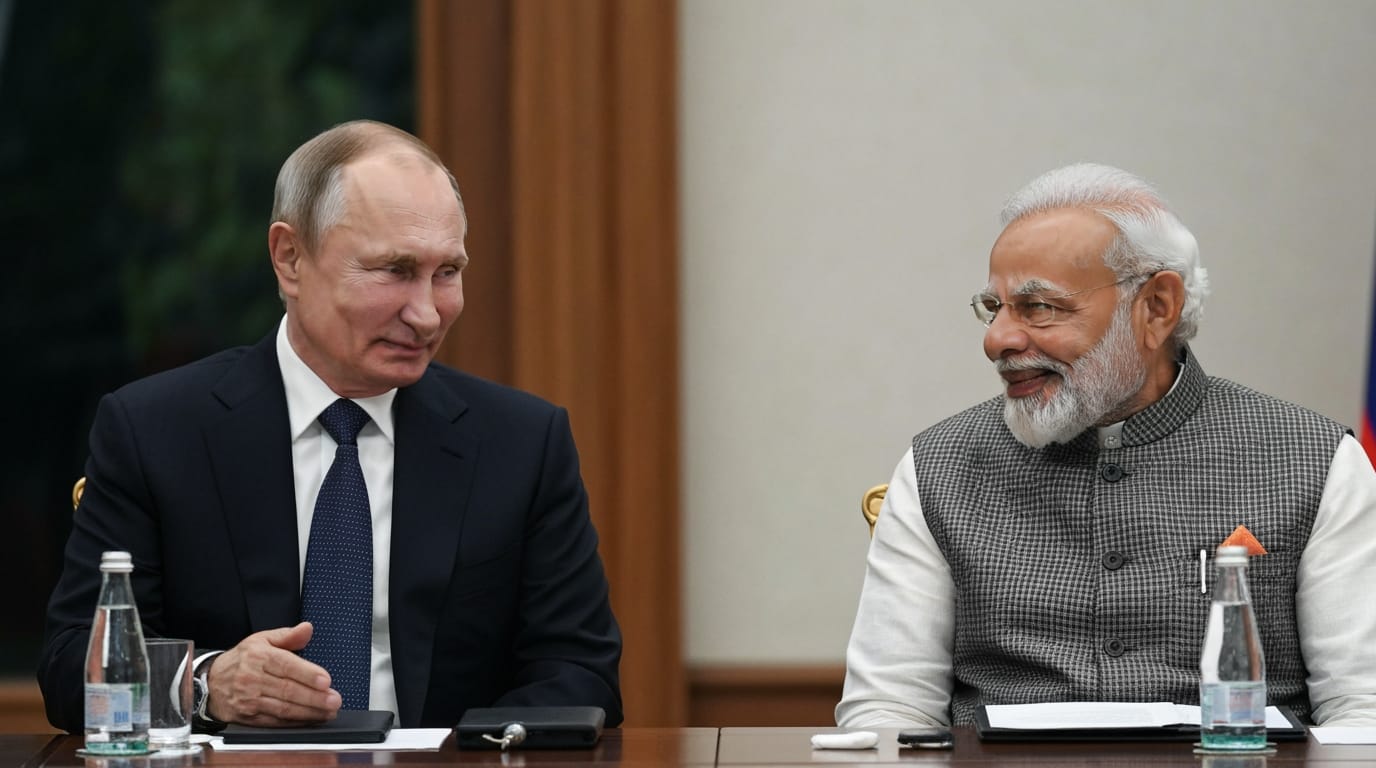
New Delhi finds itself at the heart of a complex geopolitical landscape, deftly balancing its deep-rooted strategic partnership with Russia while simultaneously forging stronger ties with the United States. Recent statements from Russian President Vladimir Putin, hailing Delhi as a "reliable partner," and former U.S. President Donald Trump, calling Prime Minister Narendra Modi a "good friend," underscore India's critical position in the evolving global order. This intricate diplomatic dance reflects India's unwavering commitment to strategic autonomy, a policy that allows it to pursue its national interests on a multipolar stage.
The Enduring Moscow-Delhi Axis
Russian President Vladimir Putin recently lauded India's independent foreign policy and impressive economic growth, dismissing Western efforts to influence India-Russia cooperation as "futile and damaging to global stability." Speaking in St. Petersburg, Putin emphasized the "special privileged strategic partnership" between the two nations, a bond with deep historical roots dating back to the Cold War era. This relationship has consistently been a cornerstone of India's foreign policy, spanning political, security, trade, and defense sectors.
Cooperation between India and Russia remains robust, particularly in the critical areas of defense and civil nuclear energy. Russia has long been a primary supplier of military equipment to India, a relationship that has evolved into joint research, development, and production of advanced defense technologies. The Kudankulam Nuclear Power Plant in Tamil Nadu stands as a testament to their collaboration in the civilian nuclear sector, with plans for additional reactors to meet India's growing energy demands.
Economically, bilateral trade between India and Russia has witnessed significant expansion, reaching approximately $68 billion in 2024-25, up from around $13 billion in 2021. Both nations aim to elevate this figure to $100 billion by 2030. This trade, however, is heavily weighted towards Indian imports of Russian crude oil, petroleum products, and fertilizers. Putin highlighted the energy sector as a strong pillar of their relationship, indicating continued collaboration in hydrocarbons and investment projects. Russia's support for India's permanent seat on the United Nations Security Council further underscores the depth of their strategic alignment.
Forging Closer Ties with Washington
Concurrently, India has been actively cultivating a strategic partnership with the United States. Former U.S. President Donald Trump, during recent discussions, praised Prime Minister Narendra Modi, referring to him as a "good friend" and expressing confidence in the progress of ongoing trade negotiations between the two nations. These remarks come amid sustained efforts to strengthen economic ties, with both sides working towards a comprehensive Bilateral Trade Agreement (BTA) after concluding an interim deal. Trump did, however, note past trade imbalances, stating that India previously "took advantage" of the U.S., but asserted that the situation has now reversed.
The U.S.-India strategic partnership is rooted in shared democratic values and a commitment to a rules-based international order. Cooperation spans defense, technology, trade, education, and people-to-people connections. Initiatives such as the Initiative on Critical and Emerging Technologies (iCET) aim to bolster collaboration in areas like semiconductors, space, artificial intelligence, and defense co-production. The U.S. has also expressed support for India's emergence as a leading global power and its greater role in international institutions, including a permanent seat on the UN Security Council.
Despite the burgeoning cooperation, certain challenges persist, including trade disputes and a residual "strategic mistrust" from historical periods. However, both nations have demonstrated a commitment to overcoming these hurdles, recognizing the mutual benefits of a stronger partnership, particularly in addressing regional security concerns and promoting stability in the Indo-Pacific.
India's Pragmatic Multi-Alignment
India's foreign policy is characterized by a "flexible foreign policy approach" or "multi-alignment," allowing it to maintain strong relations with multiple global powers without being tethered to a single bloc. This approach is deeply rooted in India's historical non-alignment, adapted to the complexities of a multipolar world. India's strategic calculus is driven by a pragmatic assessment of its national interests, including energy security, diverse defense procurement, and economic growth.
The ongoing conflict in Ukraine has particularly highlighted India's delicate balancing act. While Western nations, including the U.S., have urged India to reduce its reliance on Russian oil and defense equipment, New Delhi has largely refrained from condemning Moscow outright. Instead, India has maintained high-level diplomatic engagement with both sides, prioritizing its energy security by continuing to import discounted Russian crude oil, which now accounts for a significant portion of its imports.
This strategic autonomy, often described as a "multipolar manoeuvre matrix," enables India to leverage its unique position to secure concessions and assurances from both Washington and Moscow, thereby shaping regional security architecture to its advantage. Experts acknowledge that while this approach presents its own set of challenges, it underscores India's growing agency on the international stage and its determination to chart an independent course.
A Nation on the Rise
India's ability to engage simultaneously and meaningfully with both Russia and the United States reflects its increasing global stature and its sophisticated diplomatic strategy. As one of the world's fastest-growing major economies and a nation with a burgeoning population, India is asserting its role as a significant player in international affairs.
The simultaneous praise from Russian President Putin and former U.S. President Trump is not merely a diplomatic nicety; it is an acknowledgment of India's growing geopolitical weight and its unwavering pursuit of a foreign policy rooted in national interest. Navigating the intricate web of global power dynamics, India continues to demonstrate that a balanced, multi-aligned approach is not only viable but essential for a rising power in the 21st century. This strategy, while complex, allows India to pursue economic prosperity, enhance its defense capabilities, and contribute to global stability, all while upholding its long-standing commitment to strategic independence.


