India Unveils Record Budget, Fueling Infrastructure Boom and Bolstering Defense Capabilities
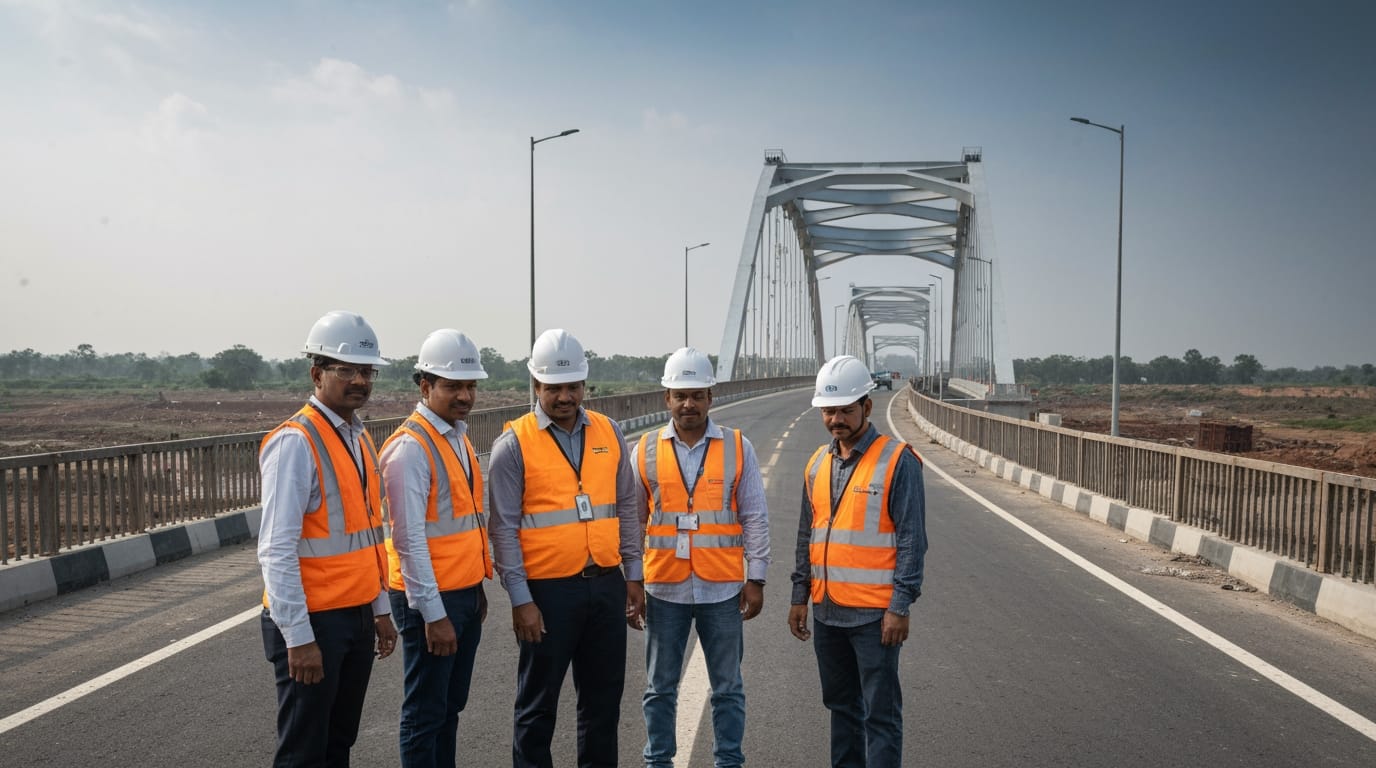
New Delhi, India – India has announced an ambitious record-setting budget for the upcoming fiscal year, allocating unprecedented funds toward both infrastructure development and national defense. The strategic financial outlay underscores the nation's dual focus on accelerating economic growth and solidifying its security posture amidst a dynamic global landscape. This significant budgetary commitment aims to propel India towards its vision of becoming a developed nation and a major global economic power.
Fueling Economic Ambition: The Infrastructure Juggernaut
The Union Budget for Fiscal Year 2026-27 earmarks a record 12.2 trillion rupees (approximately $133.08 billion) for infrastructure outlays, building on a sustained increase in capital expenditure over recent years. This represents a substantial rise from the 11.21 trillion rupees budgeted for the current fiscal year, which itself was a record allocation. This investment is a cornerstone of the government's "Viksit Bharat" (Developed India) vision and its aim to achieve a US$5 trillion economy by 2025.
The expanded capital expenditure is strategically directed across critical sectors including roads, railways, urban transport, energy, and digital infrastructure. Initiatives such as the PM Gati Shakti National Master Plan play a pivotal role in integrated infrastructure development, coordinating efforts across various ministries to enhance efficiency and connectivity. This integrated approach supports the creation of multimodal logistics parks, strengthens domestic and cross-border supply chains, and fosters the development of industrial parks. The government also plans to provide 1.5 trillion rupees in 50-year interest-free loans to states for large-scale urban infrastructure projects, further decentralizing development efforts.
Analysts are optimistic about the economic impact, noting that public expenditure on infrastructure has a high multiplier effect, estimated to generate 2.5 to 3.5 times its value in GDP growth over the medium term. Beyond direct economic benefits, these investments are anticipated to create substantial employment opportunities, improve logistics, boost productivity, and enhance India's overall global competitiveness. The government's emphasis extends to leveraging transport infrastructure like metros and airports for broader economic development, particularly in Tier 2 and Tier 3 cities.
Bolstering National Security: A Modernized Defense
Concurrently, the budget outlines a significant increase in defense spending, with an allocation of approximately ₹7.84 lakh crore (around US$94 billion) for FY 2026-27. This marks a substantial 15.2% increase over the previous fiscal year's allocation of ₹6.81 lakh crore (approximately US$78.3-78.8 billion). This upward trajectory in defense expenditure reflects a consistent pattern, with the budget growing by 30% over the last three years, reaching ₹6.22 lakh crore in 2024-2025 from ₹5.25 lakh crore in 2022-2023.
A critical component of this defense budget is the enhanced capital outlay for military modernization. For FY 2026-27, the military has been allocated ₹2.19 lakh crore for modernization, an increase of 21.84% from the ₹1.8 lakh crore in FY 2025-26. This capital is intended to fund major acquisitions, bolster jointness and integration initiatives, and venture into new domains such as cyber, space, artificial intelligence, machine learning, and robotics. The focus on "Aatmanirbhar Bharat" (self-reliant India) in defense production is also prominent, with 75% of capital procurement targeted from domestic industries to reduce dependence on foreign suppliers and strengthen the private sector. Exemptions on basic customs duty for components used in aircraft manufacturing and raw materials for maintenance, repair, and overhaul by defense units further support this domestic push.
Geopolitical Imperatives and Domestic Drivers
The substantial increases in both infrastructure and defense budgets are deeply intertwined with India's evolving geopolitical landscape and its domestic aspirations. The heightened defense spending is a direct response to a complex and challenging security environment, characterized by persistent tensions along the Line of Actual Control with China, ongoing asymmetric threats from Pakistan, and broader global instability. The government emphasizes the need for continuous military readiness across multiple fronts. This strategic allocation underscores India's commitment to safeguarding its sovereignty and asserting its regional influence.
On the domestic front, the massive infrastructure drive is integral to sustaining India's economic momentum, positioning it as one of the world's fastest-growing major economies. The investments are designed to not only facilitate trade and industry but also to improve the quality of life for citizens by providing better connectivity, urban facilities, and access to essential services. The budget aims to spur private investment and domestic demand, recognizing the crucial role of public capital expenditure in catalyzing broader economic activity.
Balancing Growth and Security: Challenges and Opportunities
While the record budgets signal strong intent, they also present challenges. In the defense sector, a significant portion of the budget, nearly 23.6% in FY 2025-26, is allocated to pensions, which can limit funds available for new acquisitions and modernization efforts. Analysts suggest that restructuring the military's pension-heavy spending is crucial to further concentrate on acquiring advanced weapons systems needed for contemporary warfare. Despite this, the capital outlay for new equipment remains on an upward trajectory.
For infrastructure, despite the substantial investments, India still faces a significant financing gap, estimated to exceed 5% of its GDP. Addressing this gap will require continued diversification of funding sources, including expanding alternative mechanisms like the Toll-Operate-Transfer (TOT) model and encouraging private sector participation. The government's focus on creating an Infrastructure Risk Guarantee Fund aims to strengthen risk management for private developers, fostering greater private investment.
These budgetary decisions, however, also open vast opportunities. The emphasis on domestic defense production not only enhances self-reliance but also stimulates indigenous industry and technological innovation. Similarly, the infrastructure push is attracting private capital and encouraging the development of financial instruments like Infrastructure Investment Trusts (InvITs), which are increasingly drawing interest from global institutional investors.
Conclusion
India's record budget for infrastructure and defense represents a determined strategic pivot, demonstrating the nation's resolve to achieve both economic prowess and robust national security. By channeling substantial resources into these critical areas, New Delhi aims to fortify its economic foundations, generate widespread prosperity, and ensure its territorial integrity and strategic autonomy in an increasingly complex world. This dual approach is central to India's long-term vision of emerging as a stable and influential global power.


